The first thing you ever read was not a page. It was the sound of the front door. The way it opened told you everything the evening would hold, whether to drift toward him or press yourself into the background of the house and wait for the weather to pass.
The Alphabet Nobody Taught You
Every child whose father was unpredictable, absent, or simply sealed inside himself learned a private system of signs. The angle of his shoulders when he walked in. Whether he set his keys down or dropped them. The half-second pause before he answered a question. You were reading all of it before you could read a sentence, running calculations no child should have to run, arriving at conclusions faster than you knew how to name them.
This was not intuition. It was training. Repetition across thousands of ordinary evenings until the signs became automatic, until your nervous system did the reading before your mind caught up. Children who grow up in households where a parent's mood is the primary weather learn to scan their environment with a precision that would impress a clinician. They become, without meaning to, extraordinarily attuned.
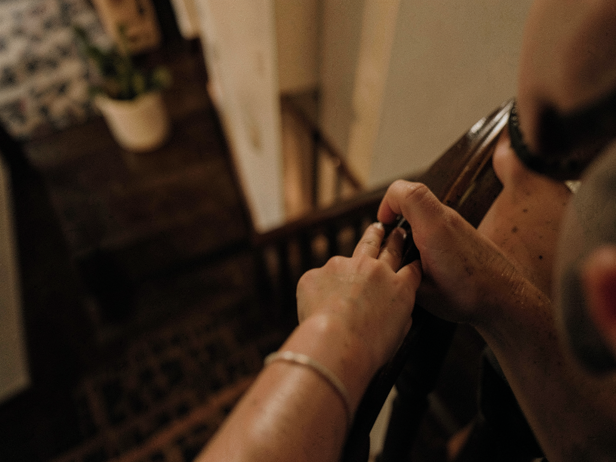
![Childhood's Lingering Gaze]()
Childhood's Lingering Gaze
Image credit : AI
The quiet anticipation of a child, a silent witness to the echoes of growing up with an unpredictable parent.
What That Attunement Cost You
The skill had a price that only showed up later. You became someone who reads rooms before entering them. Who monitors a partner's tone for the first sign of shift. Who cannot fully rest in any space where another person's mood is unresolved. The vigilance that kept you safe at seven is the same vigilance that exhausts you at thirty-four, because it never learned to switch off. It was never given a reason to.
There is a particular loneliness in this. You are often the most perceptive person in a room and the least able to trust what you perceive, because the data you collected as a child was always in service of managing someone else's emotional state, never your own. You learned to read him. Nobody taught you to read yourself.
The Father He Could Not Say He Was
Some fathers were frightening. Some were simply gone, physically present but behind a wall that had no door. Some showed up in fragments: the version who taught you to ride a bicycle with a patience that stunned you, and the version who made the house feel like a place to be survived. Children do not get to choose which version they get on a given evening. They only get to read the signs and adjust.
What is strange, and what takes years to understand, is that you loved all of it. The man and the weather he brought. You loved him in the way children love, without conditions, without the option of not loving him, with a loyalty so complete it bent you into shapes that still haven't fully straightened. The footstep-reading was not only fear. It was also longing. The vigilance was also hope: maybe tonight the door will open differently.
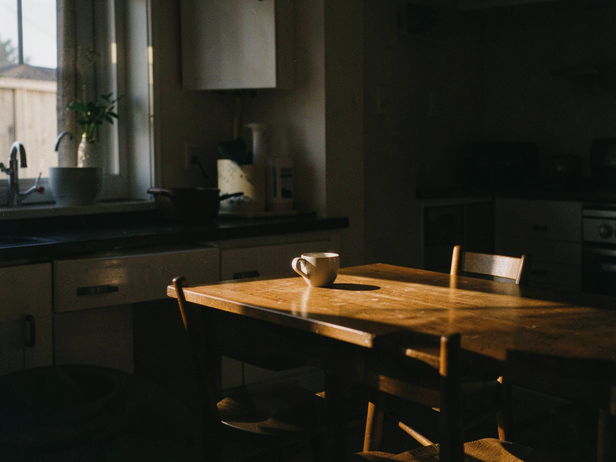
![Empty Chair, Lingering Light]()
Empty Chair, Lingering Light
Image credit : AI
The quiet aftermath, a reminder of growing up with an unpredictable parent. The light fades, but the feeling remains.
What You Carry Into Every Room Now
You walk into a meeting and you already know who in the room is tense before a word is spoken. You sense a shift in a friend's voice over a phone call and you are already bracing. You are, by almost any measure, extraordinarily good at reading people. Colleagues notice it. Partners depend on it. And underneath it, quietly, is an eight-year-old standing at the top of the stairs, listening for footsteps, deciding in less than a second what kind of evening this will be.
The question that eventually arrives, not all at once, but in pieces, usually in the middle of something unrelated, is whether you are reading the room you are actually in, or the room you grew up in. Whether the tension you sense is real or remembered. Whether the person in front of you is who they are, or a silhouette your nervous system has been waiting to recognise for decades.
The Moment You Stop Translating
Healing from this kind of childhood fluency is not about forgetting the language. You do not unlearn it. What shifts, slowly, is the belief that you must act on every reading. That the scan is always urgent. That safety is always provisional.
Some people reach this through years of therapy, through relationships that held steady long enough to prove the vigilance unnecessary, through the slow accumulation of evidence that the door opening is just a door opening. Some reach it through their own children, watching a small person learn to trust a room, and understanding for the first time what it would have meant to be allowed to do the same.
The footsteps you learned to read were his. The ones worth learning to trust, finally, are your own.