He ate in the palace. He slept under its roof. His counsel shaped wars, saved lives, and went completely unheeded. Vidura was the wisest man in Hastinapura and also, by the logic of the household, the one whose word carried the least weight when it mattered most. That particular combination, deep belonging and structural exclusion, is not something the Mahabharata invented. It describes a person in almost every Indian joint family alive today.
The one who sees clearly and is thanked for it later
Vidura told Dhritarashtra, more than once, that the dice game would end in ruin. He told him before the game that Shakuni was a cheat. He said it plainly, without softening it into a question. Dhritarashtra listened the way people listen to someone they love but cannot fully respect, with warmth and without action. The counsel was heard. The counsel was not followed. And when the war came and the sons were dead and the kingdom was ash, nobody remembered Vidura as the one who had been wrong.
In a joint family this is the aunt who told everyone the business partnership would collapse. The uncle who said the wedding was too rushed. The cousin who noticed the accounts didn't add up. They are not ignored because they are foolish. They are ignored because they occupy a position that makes being right uncomfortable for the people around them. Listening to them would require admitting that someone outside the inner circle of authority saw something those inside it missed. That is a harder concession than it sounds.
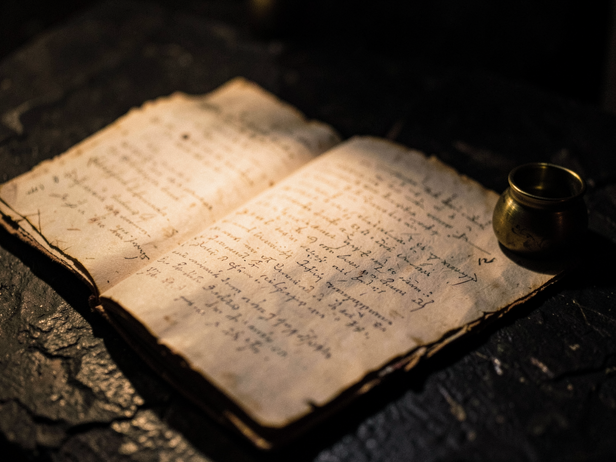
![Ancient Manuscript's Fading Wisdom]()
Ancient Manuscript's Fading Wisdom
Image credit : AI
The weight of untold stories rests on these ancient leaves, a silent testament to the Vidura Mahabharata family role and its enduring lessons.
The position that has no clean name
Vidura was the son of Vyasa and a palace maid. Half-brother to Dhritarashtra and Pandu, but not quite their equal. Respected enough to be kept close, different enough to be kept slightly apart. The Mahabharata is precise about this. His birth is not a secret. It is simply a fact that the family holds in one hand while extending the other in welcome.
Joint families carry this structure without naming it. There is the son-in-law who is treated as family until a property decision comes up, and then he is reminded, gently, that he married in. There is the daughter who moved back after a divorce and is loved completely but consulted last. There is the younger sibling who is brilliant and trusted and somehow never in the room when the big decisions are made. The position does not require cruelty to maintain itself. It requires only a shared, unspoken agreement about who the family's centre of gravity is, and who orbits it.
What loyalty looks like when it is not returned in kind
When the Pandavas were sent into exile, Vidura sheltered Yudhishthira. When Kunti needed someone she could trust, it was Vidura she turned to. He gave without being asked and without attaching conditions. He did not withdraw his loyalty when the family failed to protect him, or when Dhritarashtra, under Duryodhana's pressure, briefly exiled him from the palace he had served his whole life.
This is the part that is hardest to read, because it is the part that is most recognisable. The person in this role in a family tends to be the one who shows up when there is a crisis, who drives the elderly parent to the hospital at two in the morning, who organises the function nobody else had time to organise. They do it not because the family has earned it from them but because they have decided, at some level, that this is what belonging means for them. The family accepts the service with genuine gratitude and genuine blindness to the cost.
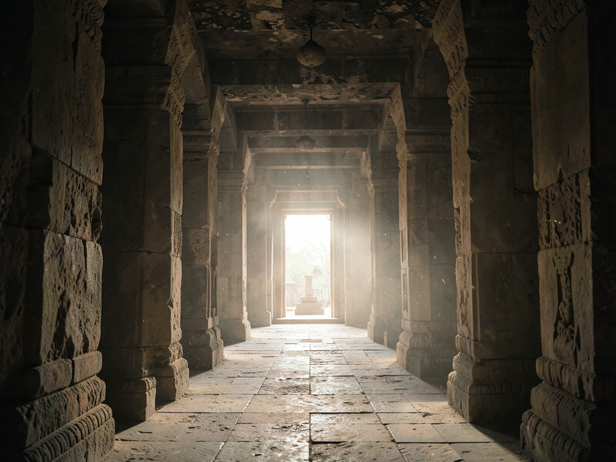
![Temple Corridor Morning Light]()
Temple Corridor Morning Light
Image credit : AI
I observe the quiet grandeur of this temple corridor, a space that evokes a sense of belonging and timelessness.
Why the family cannot do without him and cannot quite include him
Hastinapura needed Vidura. Not just for his counsel, for his moral presence. He was the proof that the palace had a conscience. When he was there, Dhritarashtra could tell himself that the right voice was being heard, even if he chose not to follow it. Vidura's existence in the household gave everyone else permission to proceed.
A joint family uses the person in this position the same way. They are the one who can be pointed to when the family needs to believe it is fair, or open, or modern. They are present at the wedding photographs. They are mentioned warmly in conversations with outsiders. Their presence is real. Their power is not. And the family is not being cynical about this, they genuinely love this person. The structure simply does not know how to translate that love into the thing the person actually needs, which is to be heard before the decision is made, not consoled after it.
What Vidura chose, and what it cost
Vidura did not leave the palace out of anger. He left, twice, out of integrity. The first time, when Dhritarashtra exiled him, he walked into the forest without drama. The second time, near the end, he left because the grief in the palace had become something he could not help and could not bear to witness. He died in the forest, in meditation, having transferred his life force to Yudhishthira in a moment the Mahabharata describes with extraordinary tenderness. He was not bitter. He was spent.
The person in this role in a living family rarely leaves so cleanly. More often they stay, because leaving would mean admitting that the belonging was conditional, and they are not ready to admit that. Or they pull back slowly, attending fewer gatherings, calling less often, being less available for the two-in-the-morning crises, and the family notices only when the absence has become a pattern. By then the conversation about why is too large to have easily.
Vidura's story does not resolve into a lesson about what the family should have done differently. It holds the whole arrangement without judgment: the love that was real, the exclusion that was structural, the loyalty that cost more than anyone calculated, and the wisdom that arrived too early to be useful. Every large Indian family has someone who recognises themselves in that sentence. They have probably never said so out loud.