The first wedding is fine. You eat well, you dance without self-consciousness, you mean it when you say the bride looks beautiful. By the fourth, you have memorised the sequence: the relatives who clock your ringless hand before your face, the aunts who pivot from congratulating the couple to appraising you in the same breath, the moment during the pheras when someone leans over and whispers, "Your turn next," as if that is comfort and not a small, precise pressure applied to a bruise.
The Question That Follows You Across Four Mandaps
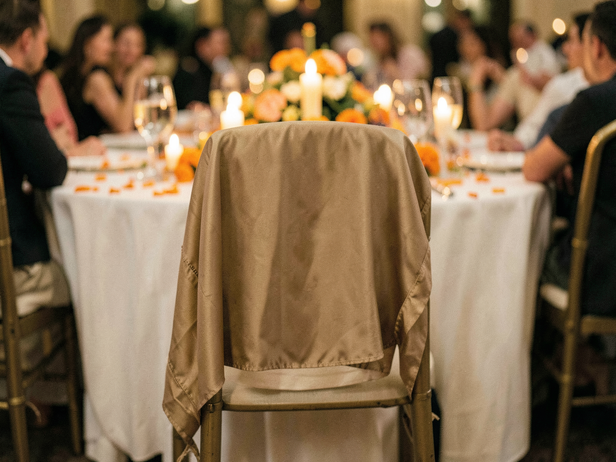
![Solitary Seat at Celebration]()
Solitary Seat at Celebration
Image credit : AI
A poignant reminder of the solitary guest at a joyous Indian wedding, a quiet moment amidst the festivity.
You are not sad about being unmarried. That is the part nobody believes. You have a life you have built carefully, with work you care about and friendships that hold weight and a flat that is yours in the way that matters. What you are is tired, not of weddings, but of being the answer to someone else's rhetorical question. Every "still single?" is not really a question. It is a mirror being held up and angled so you see only the thing that is missing. The exhaustion is not existential. It is social, and it is relentless, and it accumulates across four celebrations in fourteen days in a way a single wedding never quite manages.
What Loneliness Looks Like When It Is Surrounded by People
There is a specific texture to being alone in a crowd that has organised itself into pairs. You notice it at the dinner table, where seating assumes a plus-one you do not have. You notice it on the dance floor, where the choreographed family dances have a logic that does not include you. You notice it most in the quiet moment after the ceremony, when the couple is being photographed and everyone around you reaches for the hand nearest to them and you reach for your phone. None of this is tragedy. But it is real, and pretending it is not real, performing delight through all four evenings without a single moment of acknowledgement, is its own kind of work.
The Particular Cruelty of the Well-Meaning
![Wedding Night Vignette]()
Wedding Night Vignette
Image credit : AI
A quiet moment amidst the celebration. Attending weddings alone can offer unique perspectives.
The relatives who mean harm are easy. You have a face for them, a deflection ready, a smile that ends the conversation. The ones who cost more are the ones who mean well: the cousin who says "I just want you to be happy" with such genuine feeling that you cannot tell her the sentence assumes you are not; the married friend who squeezes your shoulder and says "it will happen" as though your life is a delayed delivery. Their care is real. The framework it arrives in, that your current life is a waiting room, is the thing that sits wrong. You do not say this. You smile, you squeeze back, you move toward the buffet.
What You Actually Learn, Going Four Times in Two Weeks
By the third wedding you stop managing your face and start watching instead. What you see is not a room full of people who have figured something out. You see people at varying distances from their own doubts, most of them performing certainty they do not entirely feel, many of them looking at you with something that is not quite pity and not quite envy but contains elements of both. The unmarried guest is a kind of screen onto which a room projects its anxieties about choice. You did not ask for this role. But once you see it clearly, it stops feeling like a verdict and starts feeling like information, about them, about the particular theatre of the Indian wedding, about how much of what passes for concern is actually discomfort with someone who has not yet confirmed the expected sequence. The fourth wedding, you dance first and you dance longer. Not because anything has been resolved. Because the music is good and the night is warm and you are, in fact, here.