There is usually a moment, years in, when she realises she cannot remember choosing this. She is sitting across from her father at the shop counter, or reviewing the accounts her mother never learned to read on a screen, or fielding a supplier call at 9 p.m. on a Saturday, and the question arrives without warning: when did this become mine?
The Assumption That Looked Like Trust
Nobody sat her down and said: you will run this. It happened through accumulation. She was there when a decision needed making. She was reliable when the cousin wasn't. She understood the books, or the inventory, or the client relationships, and so gradually the weight settled onto her shoulders the way sediment settles, slowly, without drama, until one day it is simply the ground she stands on. What the family calls trust, she experiences as foregone conclusion. The decision was made without her being invited to the table where decisions were made.
![Hands on Legacy]()
Hands on Legacy
Image credit : AI
The weight of family obligation and personal freedom rests here, a silent sacrifice.
What the One Who Left Gets
Her brother is in Pune now, or Bengaluru, or abroad. He calls on birthdays. He arrives for Diwali with gifts and opinions about how the business should modernise, delivered with the confidence of someone who has not had to implement anything. The family receives him warmly. His distance is read as ambition. Her presence is read as nothing at all, it is simply the expected state of things. She does not get credit for staying because staying was never understood as a choice. You do not thank someone for breathing.
The Gratitude That Never Comes
The cruelest part is not the workload. It is the invisibility. Gratitude requires the acknowledgment that something was given up. For the family to thank her, they would first have to admit that she sacrificed something real, a career she might have built elsewhere, a city she might have loved, a version of herself she never got to try. That admission would make them complicit. So instead, her contribution is absorbed into the texture of ordinary life, and ordinary life does not get thanked. She is not a daughter who stayed. She is just the person who is there.
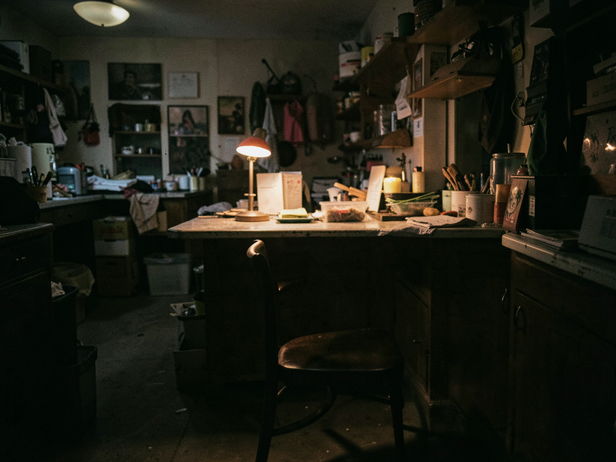
![The Unseen Watch]()
The Unseen Watch
Image credit : AI
The weight of family obligation often goes unacknowledged, a silent vigil kept in the dim light.
The Permission She Was Never Given to Go
Leaving is not simply a logistical act. It requires the family to release her, to say, openly, that the business can survive without her, that her life is hers to spend. Families that have built their identity around the business rarely say this, because saying it would mean confronting what they asked of her. So the door stays technically open and functionally sealed. If she raises it, she is being selfish. If she stays silent, she is consenting. The conversation never happens because everyone in the room is afraid of what it would surface.
What She Is Allowed to Feel
She is allowed to feel proud. She is allowed to feel tired, as long as she does not say so in a way that makes anyone uncomfortable. She is not allowed to feel resentful, because resentment implies she had a right to something she didn't get. She is not allowed to grieve the other life, because grieving it would mean admitting it existed. The emotional range available to her is narrow and managed, and she has been managing it for so long that she sometimes cannot tell the difference between acceptance and exhaustion. The two have the same face after enough years.