He gets the good chair. The one facing the television, the one with the armrest that works. Someone brings him tea without being asked, and the biscuits come out of the tin that is otherwise kept for visitors. This is not performance. It is a form of love that has learned to look like hospitality because it does not quite know what else to do with him.
What He Is Allowed to Be
He is allowed to be comfortable. That is the first and most consistent permission. The house rearranges itself slightly when he arrives, the volume on the television drops, the argument that was running in the kitchen pauses, someone changes out of their house clothes. He is welcome, genuinely, but welcome in the way a place is made ready, not in the way it is shared.
He is allowed opinions on neutral ground. Cricket. The traffic on the highway. Whether the new building going up at the corner is a good idea. He is asked about his work in the way people ask about work when they want to know that things are fine, not when they want to understand what he actually does. He can be funny. A son-in-law who makes the mother-in-law laugh has solved something important.
He is allowed to help in visible ways. He can drive to the hospital. He can carry things, fix things, make calls that require a man's voice on the other end, a category that still exists in more Indian households than anyone says out loud. He can pay, and this is received with a particular kind of gratitude that is also a kind of relief. His usefulness is welcome. His presence is welcome. His interiority is a different matter.
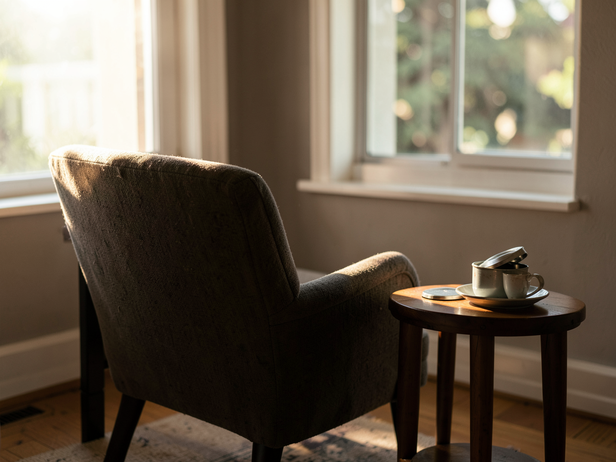
![Afternoon Solitude by the Window]()
Afternoon Solitude by the Window
Image credit : AI
A quiet moment, perhaps contemplating my place as a jamai in this family.
The Room He Does Not Enter
There is always a room. Sometimes it is literal, the back bedroom where the women sit after dinner, where the real conversation happens, where someone finally says what they have been holding since morning. More often it is not a room at all. It is a register. A frequency the family switches to when the thing being discussed is the thing that actually matters.
The conversation about the daughter's unhappiness does not happen in front of him, even when he is the reason for it and even when he is not. The conversation about money, real money, the kind that involves fear, stops or changes shape. The conversation about the mother's health, the father's mood, the brother's marriage, the grandmother's will: these are managed around him, not with him. He is protected from the family's difficulty the way a guest is protected. The guest does not need to know that the host is exhausted.
This is not malice. It is a structure that formed before he arrived and that his arrival did not change, because the structure is not about him. The family has a self that predates him and will outlast any version of him. He married into the photograph, but he is not in the negative.
The Grief He Is Never Handed
When something goes wrong in her family, he is told. He is not asked to carry it. There is a difference, and it is felt most clearly at the edges, at the hospital at two in the morning, at the funeral where he stands slightly to the side of the cluster of people who are allowed to fall apart, at the family meeting where decisions are made and he is present but not consulted, because consulting him would mean including him in something the family is not sure he has earned.
Earning it is the unspoken project. Some men never complete it. Some complete it only after a decade, after a crisis handled well, after the moment where he did the thing no one asked him to do and the family quietly reclassified him. A few complete it the first year, because something in them understood that the way in was not through the front door, which was always open, but through the back, where the real work of the house happens and where no one thinks to invite you.
The grief is the invitation. When they hand him the difficult thing, the phone call he has to make, the decision that cannot be deferred, the parent who needs to be told something hard, that is when the guest category quietly ends. Not announced. Not celebrated. Just ended.
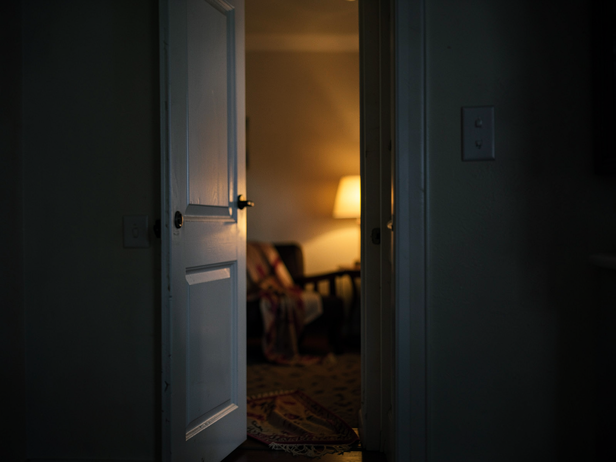
![Doorway to Warmth]()
Doorway to Warmth
Image credit : AI
A glimpse into a welcoming space, where a dupatta on a chair suggests the presence of a jamai.
What She Watches
She watches all of it. She is the one who knows exactly which conversations stopped when he walked in and which ones continued. She is the one who reads her mother's face when he says something her mother will not correct him on. She is the one who translates, constantly, in both directions, softening what her family means so he does not feel excluded, softening what he needs so her family does not feel accused.
She has been doing this translation since before the wedding. She will do it for years. It is one of the quiet labours of her position that nobody names, because naming it would require the family to admit that they have not fully let him in, and require him to admit that he has not fully arrived.
The marriage lives in the gap between those two admissions. Most marriages do.
The Slow Permission
What changes, when it changes, is not dramatic. He stops being offered the good chair because everyone has forgotten that it used to be offered. He is included in the argument, which means he is trusted with the family's ugliness. Someone calls him when the news is bad, before they have decided how to frame it. The mother-in-law says something sharp to him, the way she would to a son, and does not apologise, the way she would not to a son.
These are not small things. They are the family saying, without saying: you are no longer the version of you we were being careful around. You are just you, and we are just us, and this is what that looks like when we stop performing for each other.
The good crockery goes back in the cupboard. That is when he knows.