She is seven the first time she notices the pause before the question. The relative is smiling, voice soft, hand perhaps on her cheek. The words that follow are not cruel. That is the part no one talks about.
Do You Know Who Your Real Parents Are?
The question arrives in so many forms it becomes a genre. "Real parents." "Biological mother." "Original family." Sometimes it is asked directly of her. Sometimes it is asked of her parents while she stands close enough to hear. The word "real" is the wound inside the question, though the person asking would be genuinely confused to hear that. They meant biological. They said real. She heard: the people raising you are a substitute. She filed that away at seven and has been carrying the folder since.
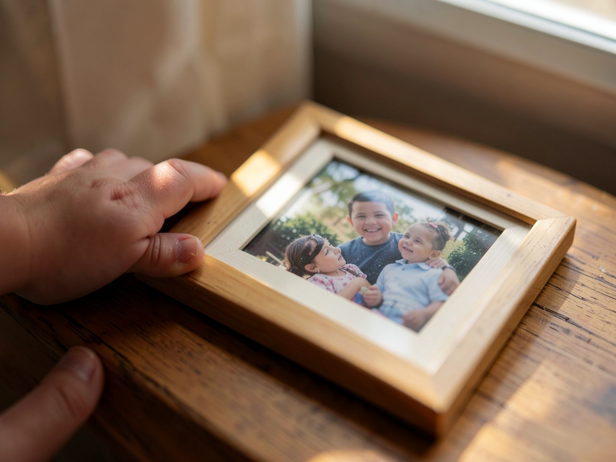
![Morning Light on Memory]()
Morning Light on Memory
Image credit : AI
A gentle touch, a framed memory. Growing up adopted in India brings unique stories.
Don't You Feel Lucky?
Lucky is a complicated thing to be asked to feel on cue at a birthday party. The question assumes a before and an after, a rescue and a gratitude debt she is expected to carry visibly. What it does not ask is whether she is loved, whether she is happy, whether she had a good week at school. It skips past her as a person and lands on her as a narrative. She knows she is supposed to say yes. She says yes. Inside the yes is something she has not yet found the words for, and may not for another decade.
Do Your Parents Treat You the Same as a Real Child?
This one is asked of her parents more than of her, but she is always in the room. It contains a hypothesis: that adoption is performance, that love across biology is effortful in a way the asker would like confirmed or denied. Her mother's face does something complicated in the half-second before she answers. The child sees it. She has learned to watch for it. She does not know what to do with what she sees, so she watches the floor instead.
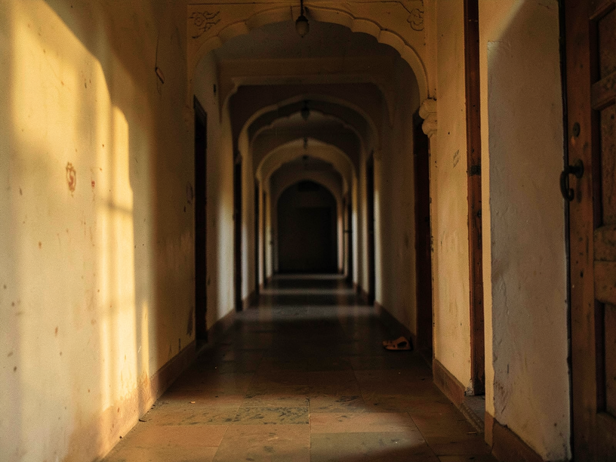
![Shadows and Solitude]()
Shadows and Solitude
Image credit : AI
A quiet moment in a traditional Indian home, where a pair of sandals hints at a story of adoption in Indian families.
Which State Are You From? You Don't Look Like Them.
Sometimes the question is geographic. Sometimes it is about her skin, her features, the way her nose sits differently from her father's. The observation is offered as curiosity, occasionally as a compliment, "such striking features", and she understands that the person means no harm. What they have done, without knowing it, is mark her as the visible exception in her own family photograph. She will think about this when the photograph is framed and hung. She will stand in front of it sometimes and look.
Will You Try to Find Them When You're Older?
This question is usually asked by someone who considers themselves progressive, someone who has read something about identity and roots and believes they are opening a door for her. What they do not consider is that she has not decided yet. That the not-deciding is itself a position she is allowed to hold. That asking the question forces her to perform a relationship with an idea she may not be ready to have. She is twelve. She is sixteen. She is twenty-three. The question follows her across her ages like a homework assignment no one ever collects.