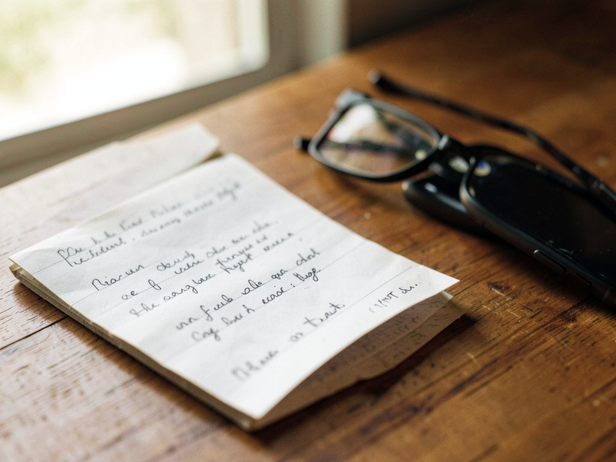
She has written the steps on a piece of paper already. The phone brightness. The way to get back to the home screen. The difference between the red button and the green one. The paper is folded twice and kept near the charger, and she has consulted it and still she calls you. This is the first thing worth sitting with: she is not confused about the phone.
The Question Underneath the Question
![Morning Study Session]()
Morning Study Session
Image credit : AI
A quiet moment of learning, bridging generations. This scene evokes the emotional bond with aging parents.
What she is confused about is whether you will come. Whether you will stay long enough to let her ask the same thing twice without the particular tightening around your eyes that you think she cannot read. She has been reading that expression since before you had language for it. She knows exactly when you are about to say "I just showed you this."
The lesson is a door she has found that still opens. You come through it. You sit close. For twenty minutes, or thirty, the geometry of the house rearranges itself into something that resembles the years when she was the one who knew things and you were the one leaning in to watch.
What Impatience Actually Costs
There is a particular kind of hurt that does not announce itself. She will not tell you that the way you took the phone from her hands, not roughly, just efficiently, the way you do everything now, landed somewhere tender. She will say thank you. She will offer you something to eat. She will walk you to the door with the same face she has always had at doors.
But she will hesitate a little longer before she calls the next time. She will try the folded paper again first. She will ask your father, or your sibling, or she will simply not send the photograph she wanted to send. The cost of your impatience is not an argument. It is a small, quiet retreat that you will not notice until the calls have thinned to almost nothing and you find yourself wishing she would ask.
The Reversal She Is Navigating
![Steaming Tea, Late Afternoon Light]()
Steaming Tea, Late Afternoon Light
Image credit : AI
A moment of quiet reflection. The warmth of tea and the fading light evoke a sense of peace, perhaps a moment before connecting with loved ones.
For most of your life, competence lived on her side of the room. She knew which documents to carry to which office. She knew how to read a fever by touch. She knew the name of the vegetable the vendor was trying to pass off as something else. Now there is an entire world, the one that increasingly runs everything, where she is the one who does not know, and you are the one who does, and neither of you has been given a script for this.
What she wants from the lesson is not to become fluent. She is not trying to edit videos or navigate a map. She wants to be able to send you a photo of something that made her think of you without having to ask your permission to do it. She wants that much autonomy back. The phone is just where that particular want has landed.
How to Actually Be There
Let her hold the phone. Do not take it from her to demonstrate, point instead, let her finger find the button, let her feel the small click of getting it right. When she asks the same question she asked last time, understand that she is not asking because she forgot. She is asking because the answer, when it comes from you without irritation, is its own thing. It is contact.
Stay a little past the lesson. Drink the tea she made before you arrived because she knew you were coming. Let the conversation drift to something else, something she heard, something she is thinking about, something small that she would not have texted because she does not yet trust herself with texts. That is the part she prepared for. The phone was just how she got you into the chair.
The hour you spend beside her with the brightness settings and the forwarding and the mute button is not a chore interrupted by tenderness. It is the tenderness. The rest is just interface.