
Marilyn Monroe Effect: Why Men Obsess Over Women Who Don’t Need Them
Riya Kumari | Jan 08, 2026, 16:47 IST

Marilyn Monroe
Image credit : AI
This article is not about beauty, fame, or charisma. It is about the psychological mechanics of desire, how attraction is triggered, why mystery outperforms availability, and how Marilyn Monroe embodied the Siren archetype so completely that people are still thinking about her decades later. What follows is not surface-level seduction advice, but a deep breakdown of how desire actually works in the human mind.
Most people misunderstand attraction because they misunderstand desire itself. They think desire responds to availability, to reassurance, to clarity. It doesn’t. Desire is not fed by answers; it is fed by tension. Marilyn Monroe was not powerful because she demanded attention. She was powerful because she left space - space for fantasy, projection, longing. She didn’t chase desire. She became the environment in which desire activated itself. This is the Siren archetype at its purest form: not seduction as action, but seduction as atmosphere. Not possession, but pursuit.
The Siren’s Real Weapon: Unfinished Signals
![Eye contact method]()
The Siren does not reveal herself fully because full revelation ends imagination. Marilyn understood, instinctively and later consciously that the human brain is wired to complete what it cannot finish. Marilyn did this by offering partial access - never full emotional or sensual closure. Desire lives in anticipation, not reward. When something is fully available, dopamine drops. When it is almost available, dopamine spikes. This is why her presence created obsession rather than comfort. The brain releases more dopamine during anticipation than during satisfaction. Dopamine is not the pleasure chemical; it is the seeking chemical. When something is just out of reach, the brain loops back to it.
She was never chaotic, never rushed. Her movements mirrored arousal rhythms: slower speech, deliberate pauses, controlled motion. Faster movement signals nervousness or need. Slower movement signals control. Control reads as value. Even her eye contact followed a deliberate pattern used in intimacy research: eye → eye → lips → back to eyes. This sequence simulates closeness without touch, creating embodied tension. The body reacts before the mind explains. She keeps the reward system engaged without allowing it to complete its cycle. The Siren does not promise fulfillment. She promises possibility.
Innocence + Danger: Why the Brain Cannot Let Go
![Marilyn Monroe]()
One of Marilyn’s most powerful effects came from contradiction. This duality activates two competing instincts in the male brain: the desire to protect and the desire to pursue. These instincts are usually triggered separately. When they activate together, the brain struggles to categorize the person - so it keeps returning to them. The mind doesn’t know whether to move closer gently or urgently, so it keeps circling.
Her voice retained a baby-like softness - slightly breathy, while her appearance signaled adult sexuality. This combination activated two conflicting instincts simultaneously:
She looked as though she inspired desire.
That mismatch created a forbidden quality. This is why her voice felt intimate even in crowded rooms. It simulated closeness. It made listeners feel chosen. She did not raise her voice to command attention. She lowered it so attention had to come to her.
She allowed projection. Psychological theory shows that when a figure does not over-define themselves, observers project their own fantasies onto them. Marilyn was not being known; she was being imagined. Men were responding less to who she was and more to what she represented. Fantasy is more powerful than reality because fantasy belongs to the observer. Marilyn never stole that from them. She rarely offered emotional transparency. Emotional opacity sustains curiosity. When people cannot fully read you, their minds stay engaged. Fantasy survives where explanation ends. She remained slightly out of reach even when present.
Performance Is Not Inauthentic, It Is Targeted Stimulus Design
![Marilyn]()
There is a comforting myth that true magnetism should be effortless. Marilyn shattered that myth quietly, in front of mirrors. She rehearsed expressions. She practiced posture. She refined her walk. She studied how light fell on her face, how angles shaped perception, how stillness amplified attention. She understood something most people resist: femininity, when left to chance, is inconsistent. When trained, it becomes powerful. Her posture - chin up, shoulders back, signaled openness without submission. Her movements invited attention without begging for it.
She could disappear in plain clothes, then activate Marilyn when she chose. That switch alone created scarcity. What people felt was not effort. It was presence - complete, attuned, aware. This ability to switch on and off created scarcity, which increases perceived value. What can be activated selectively feels intentional. What is always present feels background. She paid attention without over-giving it. People felt seen, but not consumed. That balance creates attachment rather than saturation. Attraction rises when attention is felt, not flooded. She placed herself strategically in rooms, not to dominate, but to be unavoidable. Desire responds to structure more than chaos.
When Persona Becomes Survival
![Marilyn Sad]()
What made Marilyn mesmerizing was also what made her fragile. Her public persona was not merely an image, it was a replacement self, built to receive the love she feared her real self might not. This split between Norma Jean and Marilyn created emotional depth that people sensed but could not articulate. Depth is seductive because it suggests layers. She appeared adored while quietly searching for acceptance. That paradox leaked through her presence.
Insecurity can intensify attraction because the object feels precious, breakable, rare. People pursue what feels like it could disappear. Her need for validation did not repel others. It made them lean in. This creates a paradox: the more she sought validation, the more others pursued her. Many people unconsciously do this, constructing versions of themselves that perform desirability rather than inhabit worth. Marilyn did it consciously and paid the price for it. People didn’t just want her. They wanted to save, understand, possess, and be chosen by her. She did not just attract attention. She stayed in people’s minds.
Desire Is Sustained by What You Do Not Resolve
Marilyn Monroe teaches a truth most people resist: attraction does not come from clarity, effort, or availability. It comes from pacing, restraint, and psychological tension. The Siren does not convince. She invites. She understands that when people don’t fully get you, their minds return to you. When mystery remains intact, desire stays alive. It is about understanding how the human nervous system responds to fantasy, contrast, and absence. Marilyn was not unforgettable because she was visible. She was unforgettable because she was never fully finished in the minds of others. She was powerful because she was never fully known. And that is why she still lingers, long after explanation fails, long after the image fades.
The Siren’s Real Weapon: Unfinished Signals
Eye contact method
Image credit : AI
The Siren does not reveal herself fully because full revelation ends imagination. Marilyn understood, instinctively and later consciously that the human brain is wired to complete what it cannot finish. Marilyn did this by offering partial access - never full emotional or sensual closure. Desire lives in anticipation, not reward. When something is fully available, dopamine drops. When it is almost available, dopamine spikes. This is why her presence created obsession rather than comfort. The brain releases more dopamine during anticipation than during satisfaction. Dopamine is not the pleasure chemical; it is the seeking chemical. When something is just out of reach, the brain loops back to it.
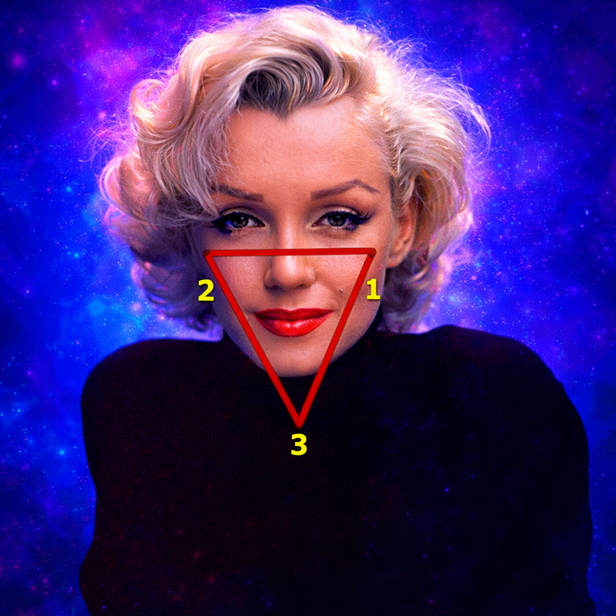
She was never chaotic, never rushed. Her movements mirrored arousal rhythms: slower speech, deliberate pauses, controlled motion. Faster movement signals nervousness or need. Slower movement signals control. Control reads as value. Even her eye contact followed a deliberate pattern used in intimacy research: eye → eye → lips → back to eyes. This sequence simulates closeness without touch, creating embodied tension. The body reacts before the mind explains. She keeps the reward system engaged without allowing it to complete its cycle. The Siren does not promise fulfillment. She promises possibility.
Innocence + Danger: Why the Brain Cannot Let Go

Marilyn Monroe
Image credit : AI
One of Marilyn’s most powerful effects came from contradiction. This duality activates two competing instincts in the male brain: the desire to protect and the desire to pursue. These instincts are usually triggered separately. When they activate together, the brain struggles to categorize the person - so it keeps returning to them. The mind doesn’t know whether to move closer gently or urgently, so it keeps circling.
Her voice retained a baby-like softness - slightly breathy, while her appearance signaled adult sexuality. This combination activated two conflicting instincts simultaneously:
- the protective instinct associated with vulnerability and youth
- the sexual instinct associated with curves, movement, and visual maturity
She looked as though she inspired desire.
That mismatch created a forbidden quality. This is why her voice felt intimate even in crowded rooms. It simulated closeness. It made listeners feel chosen. She did not raise her voice to command attention. She lowered it so attention had to come to her.
She allowed projection. Psychological theory shows that when a figure does not over-define themselves, observers project their own fantasies onto them. Marilyn was not being known; she was being imagined. Men were responding less to who she was and more to what she represented. Fantasy is more powerful than reality because fantasy belongs to the observer. Marilyn never stole that from them. She rarely offered emotional transparency. Emotional opacity sustains curiosity. When people cannot fully read you, their minds stay engaged. Fantasy survives where explanation ends. She remained slightly out of reach even when present.
Performance Is Not Inauthentic, It Is Targeted Stimulus Design

Marilyn
Image credit : AI
There is a comforting myth that true magnetism should be effortless. Marilyn shattered that myth quietly, in front of mirrors. She rehearsed expressions. She practiced posture. She refined her walk. She studied how light fell on her face, how angles shaped perception, how stillness amplified attention. She understood something most people resist: femininity, when left to chance, is inconsistent. When trained, it becomes powerful. Her posture - chin up, shoulders back, signaled openness without submission. Her movements invited attention without begging for it.
She could disappear in plain clothes, then activate Marilyn when she chose. That switch alone created scarcity. What people felt was not effort. It was presence - complete, attuned, aware. This ability to switch on and off created scarcity, which increases perceived value. What can be activated selectively feels intentional. What is always present feels background. She paid attention without over-giving it. People felt seen, but not consumed. That balance creates attachment rather than saturation. Attraction rises when attention is felt, not flooded. She placed herself strategically in rooms, not to dominate, but to be unavoidable. Desire responds to structure more than chaos.
When Persona Becomes Survival

Marilyn Sad
Image credit : AI
What made Marilyn mesmerizing was also what made her fragile. Her public persona was not merely an image, it was a replacement self, built to receive the love she feared her real self might not. This split between Norma Jean and Marilyn created emotional depth that people sensed but could not articulate. Depth is seductive because it suggests layers. She appeared adored while quietly searching for acceptance. That paradox leaked through her presence.
Insecurity can intensify attraction because the object feels precious, breakable, rare. People pursue what feels like it could disappear. Her need for validation did not repel others. It made them lean in. This creates a paradox: the more she sought validation, the more others pursued her. Many people unconsciously do this, constructing versions of themselves that perform desirability rather than inhabit worth. Marilyn did it consciously and paid the price for it. People didn’t just want her. They wanted to save, understand, possess, and be chosen by her. She did not just attract attention. She stayed in people’s minds.
Desire Is Sustained by What You Do Not Resolve
Marilyn Monroe teaches a truth most people resist: attraction does not come from clarity, effort, or availability. It comes from pacing, restraint, and psychological tension. The Siren does not convince. She invites. She understands that when people don’t fully get you, their minds return to you. When mystery remains intact, desire stays alive. It is about understanding how the human nervous system responds to fantasy, contrast, and absence. Marilyn was not unforgettable because she was visible. She was unforgettable because she was never fully finished in the minds of others. She was powerful because she was never fully known. And that is why she still lingers, long after explanation fails, long after the image fades.