The most successful lander ever to touch the surface of Venus lasted 127 minutes. That was Venera 13, a Soviet spacecraft, in 1982. It was also one of the shortest natural deaths any spacecraft has ever had, and by the standards of Venus exploration, it was a triumph.
A Surface That Crushes Steel
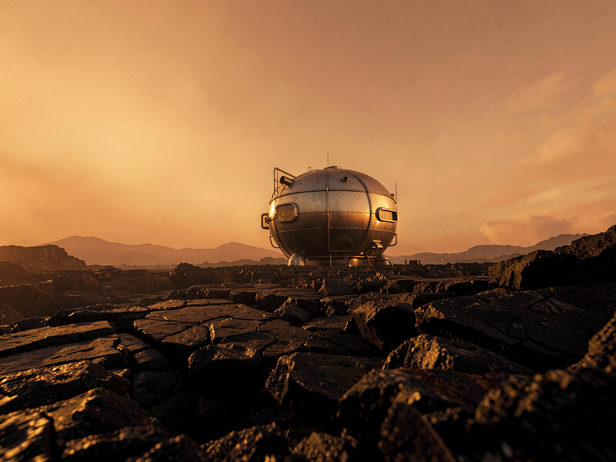
The atmospheric pressure on Venus at ground level is 92 times the pressure at sea level on Earth. That is roughly equivalent to being 900 metres underwater in an ocean. The Venera probes were built like deep-sea bathyspheres, thick titanium shells, pressure-sealed, with only minutes of operational life engineered into them before the heat and pressure would win. Most lasted between 23 and 127 minutes after landing. Some failed during descent. None survived long enough to be called a long-term mission.
The surface temperature hovers around 465 degrees Celsius, day and night, pole to equator. Venus rotates so slowly, one Venusian day is longer than a Venusian year, that its dark side has no meaningful cooling period. The thick atmosphere, composed mostly of carbon dioxide with clouds of sulphuric acid, traps heat so efficiently that Venus is hotter than Mercury, despite being nearly twice as far from the Sun. This is the most extreme runaway greenhouse effect in the solar system, and it has been running for hundreds of millions of years.
![Titanium Vessel on Alien Surface]()
Titanium Vessel on Alien Surface
Image credit : AI
I see a titanium pressure vessel on Venus's surface, a testament to exploration missions like Venera.
What the Venera Cameras Saw
The images Venera 9 and 10 sent back in 1975 were the first photographs ever taken from the surface of another planet. Scientists expected something like a sandy, worn landscape, ancient and smoothed by time. What they got was sharp, angular rock, fractured slabs sitting at odd angles, with almost no erosion visible. The rocks looked geologically young, not billions of years old. This was the first hint that Venus might still be volcanically active.
Venera 13 went further. It carried a colour camera, a microphone, and a soil drill. The images showed flat, dark basaltic rock stretching to the horizon under an orange sky, the thick atmosphere filters sunlight into an amber haze. The sky at the surface is not black. It glows, dimly, like an overcast afternoon in a city with a permanent smog. The drill confirmed the rock was similar in composition to oceanic basalt on Earth. The microphone picked up wind. On Venus, wind at the surface is slow, around a metre per second, but the dense atmosphere means even slow wind carries significant force.
Volcanoes, Coronae, and a Planet That May Still Be Alive
Venus has more volcanoes than any other planet in the solar system, over 1,600 major ones identified, and many thousands of smaller features. Whether any are currently active was debated for decades. In 2023, researchers reanalysing Magellan radar data from the early 1990s found direct evidence of a volcanic vent that changed shape over eight months, strongly suggesting an eruption in progress. The European Space Agency's Venus Express mission had earlier detected heat spikes consistent with fresh lava flows.
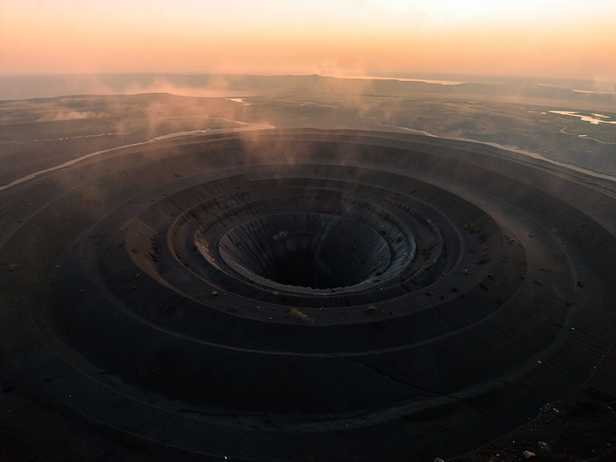
The surface is also marked by structures found nowhere else: coronae, which are large circular or oval features formed when hot material rises from the mantle, pushes the crust upward, then collapses. They range from a few dozen kilometres across to over 2,000 kilometres. Artemis Corona, one of the largest, sits near the south pole and is roughly the size of the Indian subcontinent. Tesserae, highly deformed, ancient highland terrain, are another feature unique to Venus, and their origin is still not fully understood. Some researchers think they may be the closest thing Venus has to continents.
![Volcanic Corona Landscape]()
Volcanic Corona Landscape
Image credit : AI
I witness a massive volcanic corona on Venus, a testament to its intense geological activity and extreme environment.
Why Engineers Cannot Simply Build a Better Lander
The engineering problem on Venus is not just heat or pressure in isolation, it is both simultaneously, combined with corrosive sulphuric acid in the upper atmosphere and the impossibility of using conventional electronics above roughly 120 degrees Celsius. Standard silicon chips fail. Batteries discharge faster. Lubricants break down. Every system that makes a spacecraft function has a thermal ceiling well below what Venus demands at the surface.
NASA's DAVINCI mission, planned for the early 2030s, will drop a probe through the atmosphere to study its composition during descent. It is not designed to survive landing for long. A separate concept, LLISSE, the Long-Lived In-Situ Solar System Explorer, has been in development for years, aiming to use high-temperature electronics based on silicon carbide to survive on the surface for weeks rather than minutes. It has not yet been approved for a full mission. ISRO has also studied a Venus orbiter mission, Shukrayaan-1, which would study the atmosphere and surface from above, avoiding the landing problem entirely while still contributing to understanding what drives Venus's extreme climate.
What Venus Tells Us About Earth
Venus and Earth formed from the same material in the same part of the solar system at roughly the same time, around 4.5 billion years ago. They are almost identical in size, mass, and bulk composition. At some point, their histories diverged completely. Earth retained liquid water, developed plate tectonics, and became habitable. Venus lost its water, possibly within the first billion years, and its surface was reshaped by volcanism into what exists today.
Understanding exactly when and why that divergence happened is one of the central questions in planetary science, because the answer has direct implications for how common habitable planets are elsewhere. Venus is the closest thing in the solar system to a controlled experiment in planetary climate gone wrong. Every lander that died on its surface in 127 minutes or less sent back data that is still being analysed. The planet that killed them is still the best evidence we have for what Earth could have become, and for what a greenhouse effect, taken to its conclusion, actually looks like from the inside.