The first time a new rocket engine fires, it does so bolted to a test stand, surrounded by cameras, sensors, and engineers watching from a bunker. No payload. No astronaut. No countdown crowd. Just controlled combustion and a wall of instruments recording everything that happens in the next few seconds, and everything that goes wrong.
The Test Stand Is the Most Important Structure in Rocketry
A rocket engine produces thrust by burning propellant at pressures that would collapse a car engine in milliseconds. Liquid oxygen and liquid hydrogen, or liquid oxygen and kerosene, meet in a combustion chamber at temperatures exceeding 3,000 degrees Celsius. The turbopumps that force propellant into that chamber spin at tens of thousands of revolutions per minute. Every one of those components, the injector plate, the turbopump seals, the regenerative cooling channels running through the nozzle wall, is operating at or near its material limit every time the engine runs.
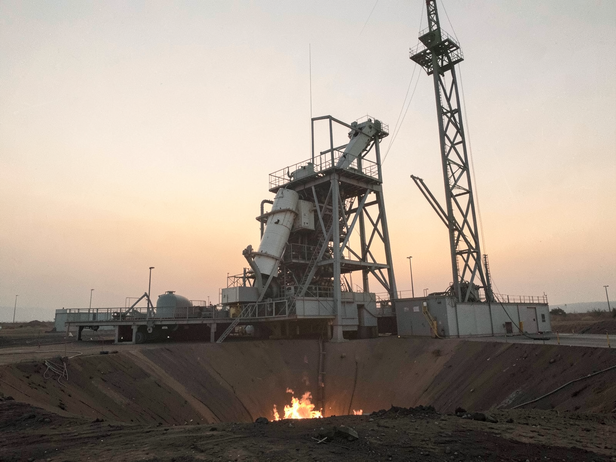
A test stand holds the engine fixed to the ground and routes its exhaust into a flame trench or a water-cooled deflector. The stand at Stennis Space Center in Mississippi, where NASA tested the Space Shuttle Main Engine and now tests the RS-25 engines for the Space Launch System, is rated to absorb the full thrust of multiple engines simultaneously. ISRO's liquid propulsion test facility at Mahendragiri in Tamil Nadu serves the same function for the Vikas engine family that powers the GSLV and PSLV. The stand does not just hold the engine, it captures every measurement the engine produces: chamber pressure, propellant flow rates, thrust vector, turbopump speed, temperature at dozens of points along the engine wall.
![Dawn at Rocket Test Stand]()
Dawn at Rocket Test Stand
Image credit : AI
I witness the imposing rocket engine ground test stand at dawn, a silent giant awaiting its fiery test.
What One Test-Fire Actually Measures
A single hot-fire test, even one lasting only a few seconds, generates more diagnostic data than months of simulation. Combustion instability, the phenomenon where pressure oscillations inside the chamber amplify instead of damping out, cannot be fully predicted by computational models. It has to be observed in real flame. The F-1 engine that powered the Saturn V's first stage took years to tame because of combustion instability, and the engineers who solved it did so by running the engine, watching it oscillate, changing the injector geometry, and running it again.
Modern engines carry the same problem. The RS-25 accumulated over a million seconds of test time before it flew on the Shuttle. SpaceX ran the Merlin engine through hundreds of test-fires at their facility in McGregor, Texas, before it flew on Falcon 1. The Raptor engine, which powers Starship, has been tested at McGregor in configurations that deliberately push it past its rated chamber pressure to find where it fails, because finding the failure point on the ground, bolted to a stand, is the entire point.
Duration Tests and the Difference Between a Second and a Full Mission
Early tests in a new engine's development are short: five seconds, ten seconds, enough to confirm the engine starts cleanly and reaches stable combustion. But a rocket engine must run for the full duration of its flight, the Space Shuttle Main Engine burned for about 500 seconds per mission. Qualification testing requires demonstrating that the engine can run that long, repeatedly, without degradation.
This is where duration tests come in. An engine is fired for its full mission duration, allowed to cool, inspected, and fired again. The inspection between firings is where engineers find the cracks that only appear after thermal cycling, the expansion and contraction of metal through thousands of degrees, and the wear patterns in turbopump bearings that no simulation predicted. ISRO's CE-20 cryogenic engine, which powers the upper stage of the LVM3 and was critical to the Chandrayaan-3 mission, went through this cycle of test, inspect, and retest at Mahendragiri before it was certified for flight. The engine that eventually sent the Vikram lander toward the Moon's south pole had already accumulated significant test time on the ground.
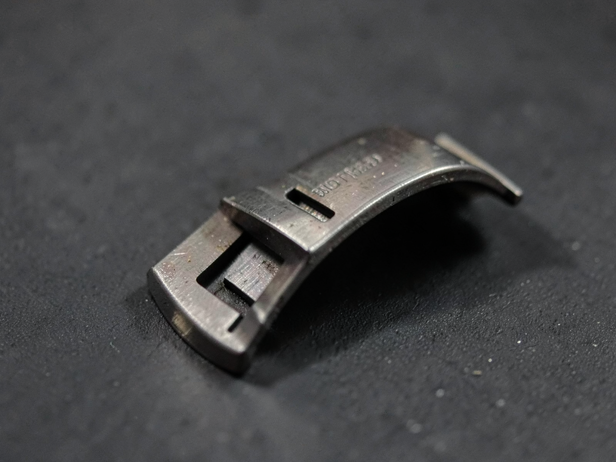
![Turbopump Rotor Detail]()
Turbopump Rotor Detail
Image credit : AI
Examining the precision of a turbopump rotor blade, essential for rocket engine testing. The deep shadow emphasizes its complex form.
Abort Scenarios and Controlled Failure
Some tests are designed to fail. Engineers deliberately introduce a fault, a valve that closes early, a propellant mixture ratio pushed outside its nominal band, to verify that the engine's shutdown system responds correctly and that the failure does not cascade. A turbopump that fails gracefully, shutting the engine down before the chamber pressure spikes to a destructive level, is a turbopump whose failure mode is understood. An untested failure mode on a crewed vehicle is not an acceptable risk.
NASA's abort system testing for the Orion capsule involved deliberately triggering a launch abort while the engine was at full thrust, confirming the escape system could pull the crew module away fast enough. The engine itself was fired in conditions that simulated the aerodynamic and thermal environment of an abort at maximum dynamic pressure. These tests are not expected to end with a functioning engine. They are expected to end with data.
Why the Engine That Flies Is Not Always the Engine That Was Tested
Here is the detail that surprises most people outside the industry: the specific engine that accumulates thousands of seconds of test time on the stand is often not the engine that flies. For expendable rockets, a flight engine is inspected after manufacture, acceptance-tested with a short hot-fire to confirm it meets specification, and then shipped. The long-duration qualification testing is done on a separate engine, or several, of the same design, to prove the design is sound.
For reusable engines, the picture changes. SpaceX refurbishes and reflights Merlin engines that have already flown, and the test program must account for the cumulative wear of multiple flights. The Shuttle's RS-25 engines were removed, inspected, and refurbished between flights, with test data from the ground program informing what inspectors looked for. The engines flying on SLS today are heritage RS-25s that flew on the Shuttle, now acceptance-tested again before being expended, used once and not recovered, on missions that cost far more than the engines themselves.
The ground test program is not a formality that happens before the real work begins. It is where the engine earns the right to fly, one firing at a time, each one narrowing the gap between what engineers believe about the machine and what the machine actually does.