The first American astronauts were selected in 1959 from a pool of military test pilots. The logic was sound: test pilots were already comfortable with machines that could kill them, already trained to read instruments under stress, already cleared at the highest security levels. Space, in that framing, was an extreme flight problem.
The Moment the Criteria Changed
NASA's fourth astronaut group, selected in 1965, was the first to include scientist-astronauts, six men chosen not for flight hours but for doctoral-level research credentials. The shift was not enthusiastically received inside the agency. Several of the new scientist-astronauts waited years for a seat. One of them, geologist Harrison Schmitt, had to earn his own pilot wings just to become credible to the culture around him. He flew on Apollo 17 in 1972, becoming the only professional scientist to walk on the Moon, and in the final hours before leaving the lunar surface he spotted orange soil that turned out to be ancient volcanic glass, a find a geologist was trained to notice and a test pilot might have walked past.
![Vintage Mission Control Glow]()
Vintage Mission Control Glow
Image credit : AI
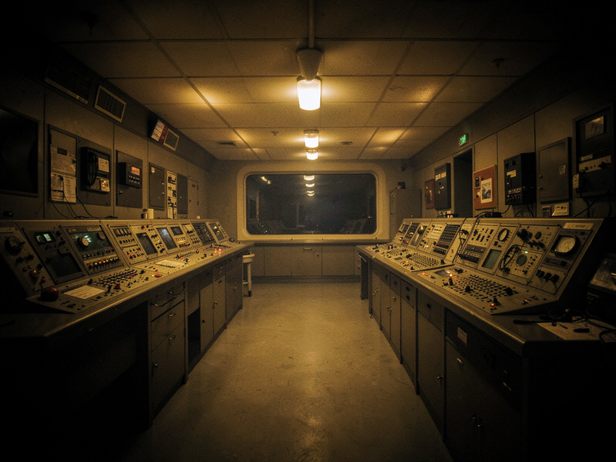
I stand in a vintage mission control room, a silent testament to early space exploration research missions.
What Scientists Brought That Pilots Could Not
The difference was not courage or composure, test pilots and scientists both have those in abundance. The difference was the question each type of person asked when they looked out the window. A pilot assessed the vehicle's relationship to its environment. A scientist assessed the environment itself. On Skylab in 1973 and 1974, physician-astronaut Joseph Kerwin conducted the first medical experiments on how the human body adapts to weightlessness, including observations that would have been impossible without someone trained to interpret what they were seeing at a cellular level. The data from those missions still informs how ISRO, NASA, and ESA plan long-duration missions today, including the protocols being developed for Gaganyaan.
The Shuttle Era and the Specialist Role
The Space Shuttle program formalised the change. NASA created the mission specialist role specifically to carry researchers, physicists, biologists, chemists, astronomers, who would operate experiments rather than fly the vehicle. Between 1981 and 2011, shuttle crews carried materials science experiments that could only be run in microgravity, deployed and repaired the Hubble Space Telescope (a task requiring both engineering judgment and scientific understanding of what the telescope was for), and ran continuous life sciences research that built the evidence base for everything from pharmaceutical development to bone-density treatment on Earth. The crew of STS-61 in 1993, which performed the first Hubble servicing mission, included Story Musgrave, a surgeon and scientist who had pressed for years to understand the telescope's optics well enough to fix them in orbit. Five spacewalks across eleven days. It worked.
![Basalt Rock Study]()
Basalt Rock Study
Image credit : AI
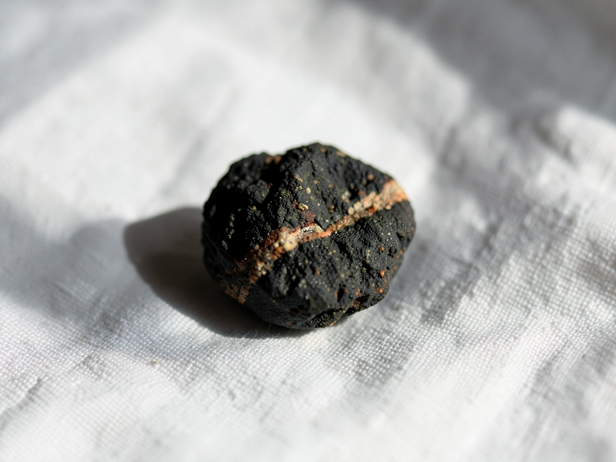
Examining a basalt rock sample, a key element in understanding geological history and potential for future space exploration research missions.
The International Space Station as a Laboratory
The ISS, continuously inhabited since November 2000, is the clearest expression of what the shift in selection criteria made possible. The station runs more than 200 active experiments at any given time across biology, physics, Earth observation, and materials science. This would not be achievable with crews selected purely for their ability to manage a vehicle. The station's research has contributed to treatments for muscle-wasting diseases, to new understanding of fluid dynamics, and to the development of protein crystal structures used in drug design. ESA astronaut Samantha Cristoforetti, an engineer and pilot, has conducted experiments on water recycling systems relevant to long-duration Mars missions. JAXA astronaut Koichi Wakata has run combustion experiments whose results are being applied in cleaner engine design on the ground.
Where India Stands in This Story
ISRO's Gaganyaan programme, India's first crewed spaceflight mission, initially selected four Indian Air Force test pilots as astronaut-trainees, a reflection of the same early logic NASA used in 1959. One of them, Group Captain Shubhanshu Shukla, is scheduled to fly to the ISS as part of the Axiom Space Ax-4 mission in 2025, where he will conduct microgravity experiments including studies on seed germination and muscle physiology. The experiment list is a direct descendant of the scientist-astronaut argument made sixty years ago: the vehicle gets you there, but what you do once you arrive depends on knowing what to look for. As Gaganyaan matures and ISRO develops its own space station plans, the question of whether to widen astronaut selection to include research scientists will be one the agency cannot avoid for long. Harrison Schmitt's orange soil is a persuasive argument for the answer.
The test-pilot era produced extraordinary people and genuine heroism. What it could not produce, on its own, was a reason to stay. Scientists gave spaceflight a purpose that outlasted the race.