The first thing a private spaceflight passenger learns is that the word passenger is misleading. SpaceX's Crew Dragon, Blue Origin's New Shepard, and the Axiom missions to the International Space Station all require their paying flyers to function as crew members in an emergency, which means the training begins not with weightlessness simulations but with fire suppression, pressure-loss protocols, and how to seal a hatch under stress.
What the Training Actually Covers
The preparation timeline varies by mission profile. A suborbital Blue Origin flight involves roughly a day of ground training: cabin familiarisation, harness procedures, emergency egress, and a rehearsal of the eleven-minute flight sequence. An orbital mission is a different scale entirely. The Axiom Space passengers who flew to the ISS in 2022 trained for roughly fifteen weeks. That block included emergency medical response, Russian Soyuz familiarisation (the ISS escape vehicle), spacesuit donning under time pressure, and hours inside a Dragon simulator running failure scenarios. Centrifuge runs built tolerance for the g-forces of ascent and re-entry, which reach around 4g on the way up and can spike higher on return. The centrifuge does not simulate weightlessness; it simulates the parts of spaceflight that feel like being sat on by something large.
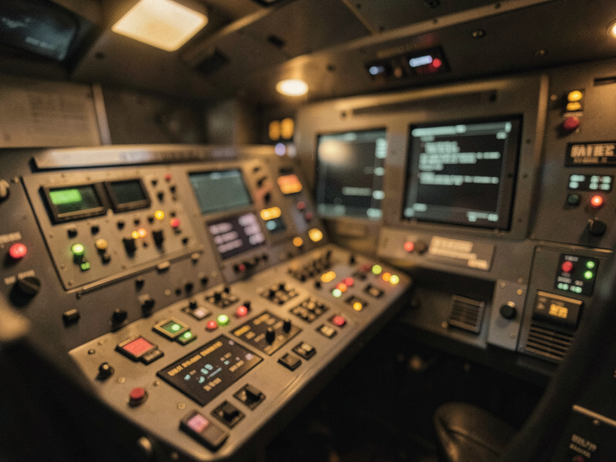
![Spacecraft Cockpit Interior]()
Spacecraft Cockpit Interior
Image credit : AI
I'm preparing for private spaceflight training, focusing on the intricate controls of this simulator.
The Body's Response to Microgravity
Within hours of reaching orbit, fluid shifts toward the head. The face puffs. The sinuses fill. Many passengers describe the sensation as hanging upside down indefinitely, which is biomechanically close to accurate. Space motion sickness affects roughly two-thirds of first-time flyers, typically peaking in the first forty-eight hours. NASA's flight surgeon data from decades of ISS operations shows the pattern is consistent regardless of fitness level on the ground; the inner ear simply has no reference frame for a world with no floor. Bone density begins measurable decline within days, and muscle follows. On short missions of a week or less, these changes are minor and reverse on return. On longer stays, the ISS crew exercise two hours a day specifically to slow that loss. Private passengers on short orbital missions do not carry that obligation, but they are not exempt from the biology.
What They Actually Do Once They Arrive
The Axiom-1 crew, which docked with the ISS in April 2022, carried a defined science programme. The four passengers conducted over twenty-five experiments during their seventeen days aboard, covering cancer cell behaviour in microgravity, seed germination studies, and material science tests. This is not unusual. Private missions increasingly carry legitimate research payloads because it justifies the cost to sponsors and satisfies the ISS's own requirements for commercial access. Between experiments, the practical texture of orbital life fills the hours: eating from sealed pouches, sleeping in a bag tethered to a wall, learning to use the toilet, a procedure that takes training on the ground and patience in orbit. The cupola window on the ISS, a seven-paned dome pointing toward Earth, is where most passengers spend whatever unscheduled time they have. Photographs taken from that window have become one of the more consistent outputs of private spaceflight: not data, not press releases, but images of the Indian Ocean at night, or the Himalayan range from 400 kilometres up, taken by someone who paid to be there and cannot quite believe they are.
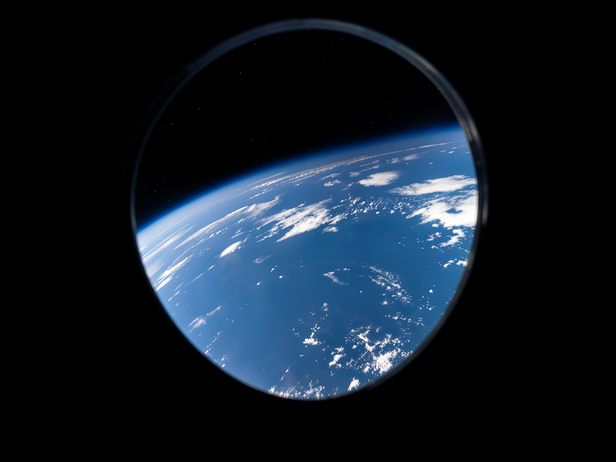
![Earth's Curve from Orbit]()
Earth's Curve from Orbit
Image credit : AI
My view of Earth's curve during private spaceflight training, a breathtaking sight.
India's Position in This Story
India is not yet a private spaceflight market in the passenger sense, but it is building the infrastructure that will eventually underpin one. ISRO's Gaganyaan programme, targeting its first crewed flight with Indian astronauts, is developing the orbital systems and crew training frameworks that commercial operators will eventually use. Group Captain Shubhanshu Shukla is scheduled to fly to the ISS as part of the AXIOM-4 mission, making him the first Indian to reach the station. His preparation follows the same arc as any Axiom passenger: ISS systems training, emergency procedures, a defined research programme. The difference is that he arrives as a government astronaut, not a ticket-holder. The ticket-holder era for Indian passengers is a question of when, not whether, and the answer depends largely on how quickly Gaganyaan matures and whether a domestic commercial launch market follows it.
The Gap Between the Brochure and the Experience
Private spaceflight is sold, understandably, on the view. The overview effect, the cognitive shift that astronauts describe when seeing Earth as a single object with no borders, is real, documented across decades of crew reports, and appears to affect private passengers in the same way. What the brochure does not foreground is the nausea of day one, the disorientation of sleeping when there is no night, the physical effort of moving through a module in three dimensions when every surface is both floor and ceiling. Jared Isaacman, who commanded the Inspiration4 all-civilian orbital mission in 2021, described the physical adjustment as more demanding than any simulation suggested. The view, he said, was worth it. The body took longer to agree.