Bibha Chowdhuri walked into Homi Bhabha's laboratory in Kolkata in 1945 with a physics degree from Calcutta University and a method for reading particle tracks in photographic emulsions that few researchers in India had mastered. What she brought to the Cosmic Ray Research Unit was not just technical skill but precision, the ability to trace the path of a charged particle through a gelatin plate and say, with confidence, what had passed through it.
What the Emulsions Showed
Cosmic ray research in the 1940s depended on photographic emulsions carried to altitude, Himalayan stations, high-altitude balloons, mountain observatories, where the upper atmosphere thinned enough for secondary particles to leave clean tracks. Bibha Chowdhuri's work involved exposing these plates, developing them, and reading the resulting trails under a microscope with the patience the method demanded. The tracks recorded collisions happening at energies no laboratory accelerator could yet reach. In 1949, she and D.M. Bose published findings in Nature suggesting the existence of what would later be confirmed as the pi-meson, or pion, a particle that carries the strong nuclear force between protons and neutrons. Cecil Powell at Bristol had published similar work the same year, with better resources, a larger team, and the institutional weight of a European laboratory behind him. Powell received the Nobel Prize in Physics in 1950. Bose and Chowdhuri's parallel contribution was noted by specialists and then, for most purposes, forgotten.
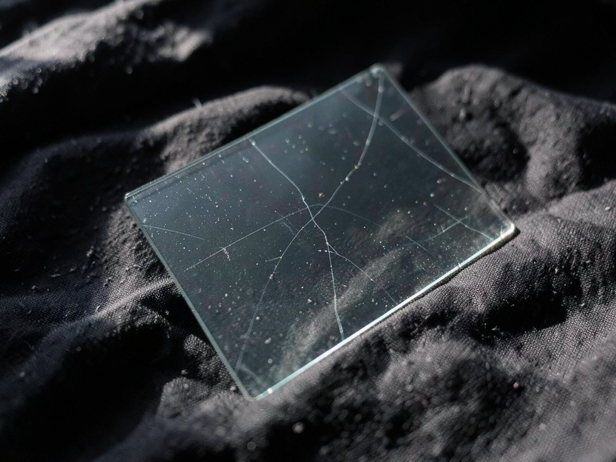
![Silver Tracks on Glass]()
Silver Tracks on Glass
Image credit : AI
Examining faint particle tracks on a glass plate, a testament to early cosmic ray research history.
The Structural Reasons a Name Gets Lost
The disappearance was not a single act of erasure. It was the accumulated effect of several ordinary pressures. Funding for Indian cosmic ray research was thin and intermittent. The Calcutta laboratory lacked the emulsion-manufacturing infrastructure Powell's team had access to, which meant results came slower and with less statistical volume. Publication in Nature carried weight, but the 1949 paper listed Bose as the senior author, as seniority conventions required, and Chowdhuri's individual contribution was not separately documented in the literature that followed. She left active research in the early 1950s. The field moved on. When historians of science began reconstructing the pion discovery decades later, the Bristol work was the version with the institutional paper trail. The Bose-Chowdhuri result sat in the archive, correctly dated, correctly cited in specialist histories, and almost entirely absent from the public account of how the pion was found.
What the Record Actually Shows
The 1949 Nature paper is not disputed. Physicists who have examined the original plates and the methodology have described the work as technically sound and the conclusion as independent of Powell's, meaning Chowdhuri and Bose reached the same result through their own observations, not by following Bristol's lead. The International Astronomical Union named a star after her in 2019: HD 86081, a yellow-white dwarf in the constellation Hydra, now formally carries the name Bibha. The IAU's naming is a cultural recognition, not a scientific revision, but it is the kind of signal that pulls a name back into circulation. The Breakthrough Prize Foundation has also cited her work in its historical accounts of particle physics. Neither restores a Nobel. What they do is put her name in the sentence where it belongs.
![Dawn at Himalayan Research Station]()
Dawn at Himalayan Research Station
Image credit : AI
I witness the dawn light illuminating a remote Himalayan research station, a testament to scientific endeavor.
The Indian Cosmic Ray Tradition She Came From
Bibha Chowdhuri did not work in isolation from a broader Indian scientific tradition. D.M. Bose had himself been a student of C.V. Raman's circle, and the Calcutta school of physics had been doing serious experimental work since the 1920s. Homi Bhabha's own contributions to cosmic ray theory, the Bhabha-Heitler cascade theory of electron-photon showers, were published in 1937 and are fully part of the mainstream history of particle physics. The infrastructure Bhabha built eventually became TIFR. What the Chowdhuri case illustrates is that the Calcutta laboratory, working with fewer resources and less international visibility than its European counterparts, was producing results that sat at the same frontier. That those results were credited unevenly is a problem of documentation and institutional power, not of scientific quality. The particle Chowdhuri helped identify is now part of every undergraduate physics curriculum. The name attached to its discovery in those textbooks is Powell's.
The pion did not wait for credit to be assigned before doing its work inside every atomic nucleus. What the Chowdhuri case adds to the history of cosmic ray research is a clearer picture of where the frontier actually was in 1949, not only in Bristol, but also in a laboratory in Kolkata, where a physicist read particle tracks in photographic emulsions and wrote down what she saw.