
4 Hanuman Temples With Akhand Jyoti Burning for 150+ Years
Nidhi | Feb 24, 2026, 16:39 IST

Akhand Jyoti
Image credit : Ai
For more than 150 years, a sacred flame has continued to burn inside some of India’s most powerful Hanuman temples. Known as the Akhand Jyoti, this eternal flame symbolizes unwavering faith, protection, and divine presence. From Rajasthan to Varanasi and the hills of Shimla, these temples preserve a tradition that has survived generations. Discover four Hanuman temples where the flame never went out and why devotees believe witnessing this jyoti brings strength, blessings, and spiritual reassurance.
“मनोजवं मारुततुल्यवेगं जितेन्द्रियं बुद्धिमतां वरिष्ठम्।
वातात्मजं वानरयूथमुख्यं श्रीरामदूतं शरणं प्रपद्ये॥”
Fast as the mind, powerful as the wind, and unwavering in devotion to Lord Rama — that is how Hanuman is remembered. But what if devotion could be seen, not just felt? What if faith had a visible form that never dimmed, never surrendered, never went out?
Across India, in certain Hanuman temples, a single flame has been burning continuously for more than 150 years. Through monsoons, storms, colonial rule, independence, modern chaos, and changing generations — the Akhand Jyoti still burns. Not as a spectacle, but as a quiet witness to centuries of prayer.
These are not just temples. They are places where time pauses in front of a flame.
![Hanuman ji]() In the heart of Rajasthan’s Churu district stands the revered Salasar Balaji Temple. The idol here is believed to have appeared in 1754, discovered by a farmer in a nearby village and later established at Salasar.
In the heart of Rajasthan’s Churu district stands the revered Salasar Balaji Temple. The idol here is believed to have appeared in 1754, discovered by a farmer in a nearby village and later established at Salasar.
For generations, an Akhand Jyoti has been maintained inside the temple complex. The flame is fueled continuously with pure ghee and guarded with deep ritual discipline. Priests follow a strict schedule to ensure the lamp never flickers out. It is not treated as a decorative ritual object but as a sacred responsibility.
Lakhs of devotees visit during the Chaitra and Ashwin Purnima fairs. Many believe that praying before this eternal flame brings strength in times of crisis and clarity in moments of confusion. The uninterrupted jyoti has become a symbol of enduring protection and collective faith.
Founded by the saint Tulsidas in the 16th century, the Sankat Mochan Hanuman Temple in Varanasi carries immense spiritual weight. The name itself means remover of troubles, and devotees arrive with the belief that Hanuman listens here.
The Akhand Jyoti in this temple has been burning for decades, sustained by systematic rituals and community devotion. The temple is deeply connected with the recitation of the Hanuman Chalisa and the Sundarkand. The eternal flame stands as a silent companion to these chants.
In a city known as one of the oldest living cities in the world, the flame feels almost like a guardian of continuity. It reminds visitors that while life brings endless change, divine presence remains steady.
Mehandipur Balaji Temple in Rajasthan’s Dausa district is known across India for its association with spiritual healing and relief from negative influences. Devotees come seeking inner strength and freedom from unseen fears.
The Akhand Jyoti here has been kept alive for more than a century. The temple maintains strict ritual protocols, ensuring the flame remains untouched and uninterrupted. Priests work in shifts, and the sanctity of the lamp is carefully preserved.
In a temple where faith is intense and emotions run deep, the steady flame offers reassurance. It represents stability in the middle of personal storms. Many devotees say that just standing before the jyoti brings a sense of grounding.
![Shimla: Devotees throng Jakhu Hanuman temple in large numbers on Hanuman Jayanti]() Perched high above Shimla on Jakhu Hill, this temple is linked to the Ramayana legend in which Hanuman paused here while searching for the Sanjeevani herb.
Perched high above Shimla on Jakhu Hill, this temple is linked to the Ramayana legend in which Hanuman paused here while searching for the Sanjeevani herb.
The Akhand Jyoti maintained at this hilltop temple holds special significance because of the harsh Himalayan weather. Winters are cold and winds can be strong, yet the flame continues under careful supervision.
Maintaining an eternal flame in such conditions requires vigilance and dedication. The temple staff ensures the lamp is protected from wind and temperature fluctuations. For visitors climbing the hill, the sight of the steady flame feels deeply symbolic. It suggests resilience. It suggests that faith, like the flame, can endure even in difficult climates.
वातात्मजं वानरयूथमुख्यं श्रीरामदूतं शरणं प्रपद्ये॥”
Fast as the mind, powerful as the wind, and unwavering in devotion to Lord Rama — that is how Hanuman is remembered. But what if devotion could be seen, not just felt? What if faith had a visible form that never dimmed, never surrendered, never went out?
Across India, in certain Hanuman temples, a single flame has been burning continuously for more than 150 years. Through monsoons, storms, colonial rule, independence, modern chaos, and changing generations — the Akhand Jyoti still burns. Not as a spectacle, but as a quiet witness to centuries of prayer.
These are not just temples. They are places where time pauses in front of a flame.
1. Salasar Balaji Temple, Rajasthan

Hanuman ji
Image credit : Ai
For generations, an Akhand Jyoti has been maintained inside the temple complex. The flame is fueled continuously with pure ghee and guarded with deep ritual discipline. Priests follow a strict schedule to ensure the lamp never flickers out. It is not treated as a decorative ritual object but as a sacred responsibility.
Lakhs of devotees visit during the Chaitra and Ashwin Purnima fairs. Many believe that praying before this eternal flame brings strength in times of crisis and clarity in moments of confusion. The uninterrupted jyoti has become a symbol of enduring protection and collective faith.
2. Sankat Mochan Hanuman Temple, Varanasi
The Akhand Jyoti in this temple has been burning for decades, sustained by systematic rituals and community devotion. The temple is deeply connected with the recitation of the Hanuman Chalisa and the Sundarkand. The eternal flame stands as a silent companion to these chants.
In a city known as one of the oldest living cities in the world, the flame feels almost like a guardian of continuity. It reminds visitors that while life brings endless change, divine presence remains steady.
3. Mehandipur Balaji Temple, Rajasthan
The Akhand Jyoti here has been kept alive for more than a century. The temple maintains strict ritual protocols, ensuring the flame remains untouched and uninterrupted. Priests work in shifts, and the sanctity of the lamp is carefully preserved.
In a temple where faith is intense and emotions run deep, the steady flame offers reassurance. It represents stability in the middle of personal storms. Many devotees say that just standing before the jyoti brings a sense of grounding.
4. Jakhu Hanuman Temple, Shimla
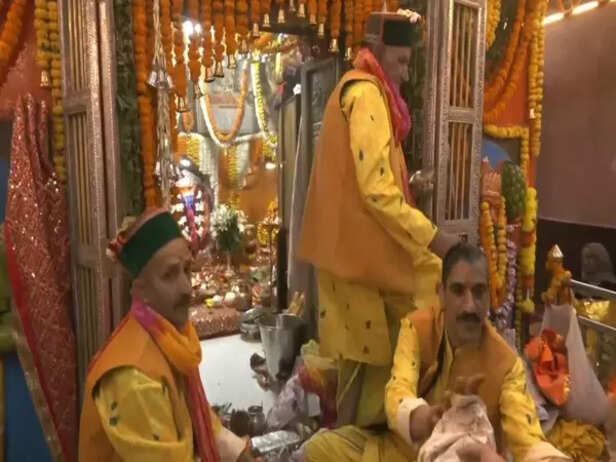
Shimla: Devotees throng Jakhu Hanuman temple in large numbers on Hanuman Jayanti
Image credit : ANI
The Akhand Jyoti maintained at this hilltop temple holds special significance because of the harsh Himalayan weather. Winters are cold and winds can be strong, yet the flame continues under careful supervision.
Maintaining an eternal flame in such conditions requires vigilance and dedication. The temple staff ensures the lamp is protected from wind and temperature fluctuations. For visitors climbing the hill, the sight of the steady flame feels deeply symbolic. It suggests resilience. It suggests that faith, like the flame, can endure even in difficult climates.