
4 Radha Temples in India Where People Go for Love, Healing, and Peace
Nidhi | Jan 10, 2026, 16:10 IST

Radha
Image credit : Ai
Radha is revered in Vaishnava tradition as the embodiment of divine love, emotional depth, and inner healing. Across India, temples dedicated to Radha Rani are visited by devotees seeking peace of mind, clarity in relationships, and spiritual balance. This article explores four powerful Radha temples where devotion is believed to calm the heart and refine the soul. Rooted in history and philosophy, these sacred spaces highlight Radha’s role in Radha-Krishna devotion and the timeless significance of bhakti as a path to healing and inner peace.
“राधा हृदयं कृष्णः कृष्णस्य हृदयं राधा।
राधा कृष्णमयो लोको राधा कृष्णमयी दिशा॥”
Radha is the heart of Krishna and Krishna is the heart of Radha. The world moves within their union and every direction carries their presence.
This ancient Vaishnava understanding explains why Radha is not worshipped merely as a companion of Krishna but as the living principle of love itself. Where Krishna represents the divine truth, Radha represents the human capacity to feel it deeply. Across India, temples dedicated to Radha draw devotees who are not seeking miracles alone. They seek emotional healing, inner calm, clarity in relationships, and peace that goes beyond ritual.
1.
![Radha Rani Temple, Barsana]()
Radha Rani Temple
Perched atop Bhanugarh Hill in Barsana, this temple is considered the most intimate shrine of Radha. According to Vaishnava tradition, Barsana is Radha’s birthplace and the spiritual center of her divine energy. The temple is not grand because of its architecture alone but because of what it represents. Radha here is worshipped as the source of devotion itself.
The philosophy associated with this temple emphasizes surrender rather than desire. Devotees believe Radha governs the emotional realm of the human heart. This is why people come here when they feel emotionally exhausted, misunderstood, or wounded by relationships. The prayers offered here focus on humility, self awareness, and the ability to love without attachment.
The rituals of Barsana are deeply symbolic. Radha is worshipped as the one who softens the ego and refines intention. The temple atmosphere is calm yet powerful, making it a place where people seek healing not by asking for solutions but by finding emotional balance and acceptance.
![Radha Kund Temple, Vrindavan, Uttar Pradesh]()
Radha Vallabh Temple
The Radha Vallabh Temple stands apart from most Krishna temples because Radha is placed at the spiritual center. There is no idol of Radha here. Instead, a symbolic crown represents her presence. This reflects the theological belief that Radha is beyond form and is experienced through devotion rather than seen.
Founded by the Radha Vallabha Sampradaya in the sixteenth century, this temple teaches a philosophy where love precedes worship. Krishna is seen as Radha’s beloved, not the other way around. This subtle reversal shifts the focus from power to emotion and from achievement to feeling.
People come here seeking peace of mind and emotional clarity. The temple traditions emphasize inner stillness, contemplation, and refined emotion. Devotion here is gentle and introspective, which is why many people feel mentally calm after spending time in its quiet courtyards.
The absence of ritual excess allows visitors to reflect on their own emotional state. The temple reminds devotees that healing often begins when one stops demanding answers and starts listening inwardly.
Govind Dev Ji Temple
Located within the City Palace complex of Jaipur, the Govind Dev Ji Temple holds a special place in Radha Krishna worship. Radha and Krishna are worshipped together here as rulers of both spiritual and worldly life. Historically, this temple was patronized by the Jaipur royal family, which shaped its orderly and disciplined devotional culture.
This temple attracts devotees seeking balance between material responsibilities and emotional well being. Radha here symbolizes harmony. She represents the ability to remain emotionally grounded while engaging fully with life.
The daily darshan schedule follows a precise rhythm that aligns with the natural flow of the day. This structure gives devotees a sense of stability and routine, which many find deeply calming. The presence of Radha beside Krishna emphasizes companionship, mutual respect, and emotional partnership.
People often visit this temple when they seek peace in family life, healing in partnerships, and clarity in decision making. The spiritual atmosphere encourages discipline of emotion rather than suppression of it.
![West Bengal: Janmashtami celebrations at ISKCON Mayapur, devotees immerse in devotion of Krishna]()
ISKCON Mayapur
Mayapur is considered the birthplace of Chaitanya Mahaprabhu, who is revered as the combined form of Radha and Krishna. The Radha Madhava Temple here reflects the philosophy that devotion is meant to be lived, not isolated within temple walls.
This temple draws people seeking emotional renewal and inner peace through community based devotion. The teachings here emphasize chanting, humility, and service as paths to healing. Radha is seen as the embodiment of compassion and unconditional love.
The spiritual environment of Mayapur encourages simplicity and emotional honesty. Devotees are taught that inner peace comes from aligning one’s emotions with higher values rather than chasing external validation.
Many visitors describe a sense of emotional lightness after spending time here. The focus on collective devotion and spiritual discipline helps people let go of anxiety, resentment, and emotional fatigue.
राधा कृष्णमयो लोको राधा कृष्णमयी दिशा॥”
Radha is the heart of Krishna and Krishna is the heart of Radha. The world moves within their union and every direction carries their presence.
This ancient Vaishnava understanding explains why Radha is not worshipped merely as a companion of Krishna but as the living principle of love itself. Where Krishna represents the divine truth, Radha represents the human capacity to feel it deeply. Across India, temples dedicated to Radha draw devotees who are not seeking miracles alone. They seek emotional healing, inner calm, clarity in relationships, and peace that goes beyond ritual.
1. Radha Rani Temple , Barsana
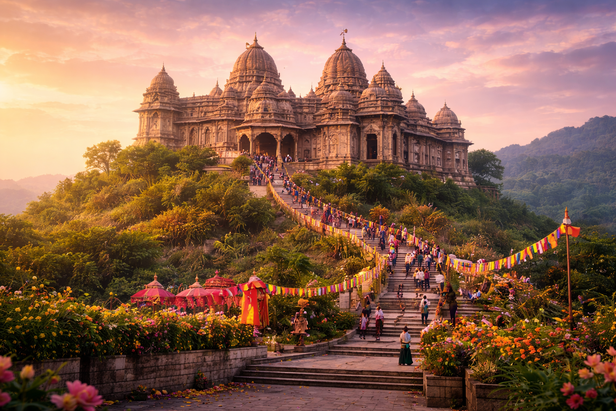
Radha Rani Temple, Barsana
Image credit : Ai
Radha Rani Temple
Perched atop Bhanugarh Hill in Barsana, this temple is considered the most intimate shrine of Radha. According to Vaishnava tradition, Barsana is Radha’s birthplace and the spiritual center of her divine energy. The temple is not grand because of its architecture alone but because of what it represents. Radha here is worshipped as the source of devotion itself.
The philosophy associated with this temple emphasizes surrender rather than desire. Devotees believe Radha governs the emotional realm of the human heart. This is why people come here when they feel emotionally exhausted, misunderstood, or wounded by relationships. The prayers offered here focus on humility, self awareness, and the ability to love without attachment.
The rituals of Barsana are deeply symbolic. Radha is worshipped as the one who softens the ego and refines intention. The temple atmosphere is calm yet powerful, making it a place where people seek healing not by asking for solutions but by finding emotional balance and acceptance.
2. Radha Vallabh Temple, Vrindavan
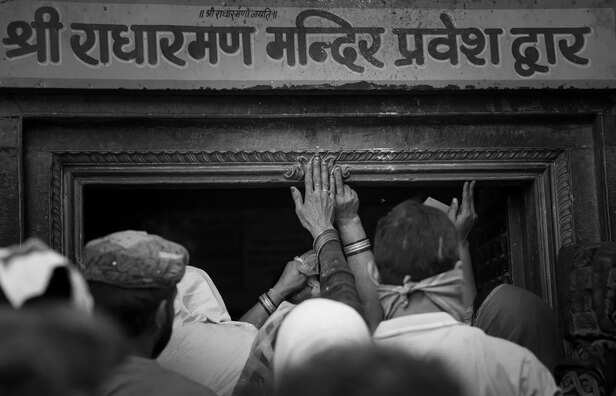
Radha Kund Temple, Vrindavan, Uttar Pradesh
Image credit : Pexels
Radha Vallabh Temple
The Radha Vallabh Temple stands apart from most Krishna temples because Radha is placed at the spiritual center. There is no idol of Radha here. Instead, a symbolic crown represents her presence. This reflects the theological belief that Radha is beyond form and is experienced through devotion rather than seen.
Founded by the Radha Vallabha Sampradaya in the sixteenth century, this temple teaches a philosophy where love precedes worship. Krishna is seen as Radha’s beloved, not the other way around. This subtle reversal shifts the focus from power to emotion and from achievement to feeling.
People come here seeking peace of mind and emotional clarity. The temple traditions emphasize inner stillness, contemplation, and refined emotion. Devotion here is gentle and introspective, which is why many people feel mentally calm after spending time in its quiet courtyards.
The absence of ritual excess allows visitors to reflect on their own emotional state. The temple reminds devotees that healing often begins when one stops demanding answers and starts listening inwardly.
3. Govind Dev Ji Temple, Jaipur
Located within the City Palace complex of Jaipur, the Govind Dev Ji Temple holds a special place in Radha Krishna worship. Radha and Krishna are worshipped together here as rulers of both spiritual and worldly life. Historically, this temple was patronized by the Jaipur royal family, which shaped its orderly and disciplined devotional culture.
This temple attracts devotees seeking balance between material responsibilities and emotional well being. Radha here symbolizes harmony. She represents the ability to remain emotionally grounded while engaging fully with life.
The daily darshan schedule follows a precise rhythm that aligns with the natural flow of the day. This structure gives devotees a sense of stability and routine, which many find deeply calming. The presence of Radha beside Krishna emphasizes companionship, mutual respect, and emotional partnership.
People often visit this temple when they seek peace in family life, healing in partnerships, and clarity in decision making. The spiritual atmosphere encourages discipline of emotion rather than suppression of it.
4. ISKCON Mayapur Radha Madhava Temple
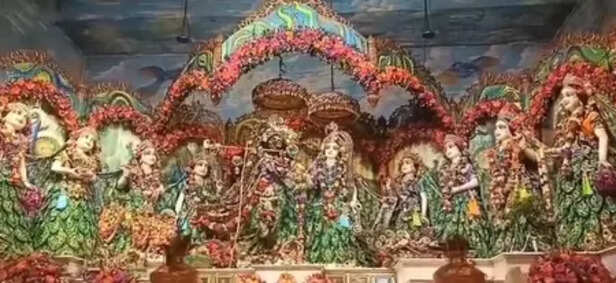
West Bengal: Janmashtami celebrations at ISKCON Mayapur, devotees immerse in devotion of Krishna
Image credit : IANS
ISKCON Mayapur
Mayapur is considered the birthplace of Chaitanya Mahaprabhu, who is revered as the combined form of Radha and Krishna. The Radha Madhava Temple here reflects the philosophy that devotion is meant to be lived, not isolated within temple walls.
This temple draws people seeking emotional renewal and inner peace through community based devotion. The teachings here emphasize chanting, humility, and service as paths to healing. Radha is seen as the embodiment of compassion and unconditional love.
The spiritual environment of Mayapur encourages simplicity and emotional honesty. Devotees are taught that inner peace comes from aligning one’s emotions with higher values rather than chasing external validation.
Many visitors describe a sense of emotional lightness after spending time here. The focus on collective devotion and spiritual discipline helps people let go of anxiety, resentment, and emotional fatigue.