
4 Temples That Reappeared After Being Lost
Nidhi | Mar 10, 2026, 12:50 IST

Temples
Image credit : Ai
Across history, several temples disappeared due to invasions, natural disasters, or changing civilizations, only to be rediscovered centuries later. From ancient ruins hidden in forests to sacred shrines revived through archaeological discoveries, these temples reveal how faith and history survive even when structures are lost. Here are four remarkable temples that mysteriously reappeared after being forgotten for centuries.
“न हि सत्यं न च धर्मो न श्रद्धा न च साधनम्।
यत्र देवालयो नास्ति तत्र नास्ति शुभं फलम्॥”
This ancient Sanskrit verse reminds us that a sacred space is not just stone and architecture. A temple carries memory, devotion, and the spiritual identity of generations. Yet history shows that many temples were once lost to time. Some disappeared beneath forests, rivers, sand, or ruins. And then, centuries later, they reappeared.
Across India, there are temples that vanished from the world only to be rediscovered again. Their return often feels less like an archaeological discovery and more like destiny revealing itself at the right moment.
These temples tell fascinating stories about faith surviving time, geography, and history itself.
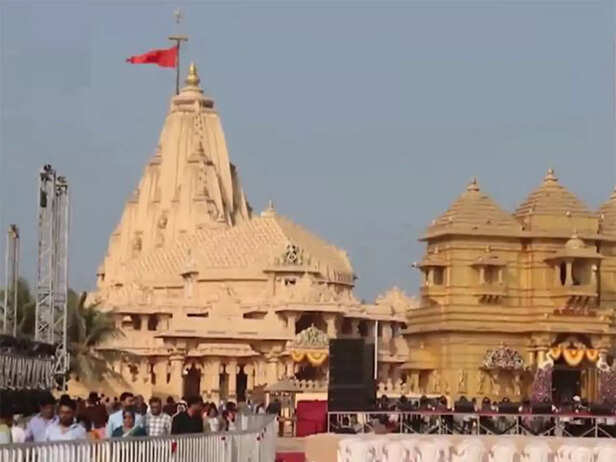
![From temple's sanctity to prasad counters, Somnath Temple Trust empowers 363 women]() The Somnath Temple in Gujarat is one of the most famous examples of a temple that repeatedly disappeared and reappeared in history.
The Somnath Temple in Gujarat is one of the most famous examples of a temple that repeatedly disappeared and reappeared in history.
Somnath is believed to be the first of the twelve Jyotirlingas of Lord Shiva. Ancient scriptures mention that the temple originally existed thousands of years ago and was rebuilt several times across different eras.
However, repeated invasions during medieval times destroyed the temple multiple times. Over centuries the original structure vanished and the site became a ruin.
What brought Somnath back was not just reconstruction but rediscovery through historical texts, local memory, and archaeological references. In the twentieth century, the temple was rebuilt again after India’s independence, guided by ancient descriptions and historical records.
Today the Somnath Temple stands on the same sacred coastline where it once existed centuries ago. Its reappearance symbolizes the resilience of faith and the continuity of spiritual tradition.
High in the Himalayas, the Kedarnath Temple has long been one of the most remote and mysterious shrines dedicated to Lord Shiva.
While the temple itself was built more than a thousand years ago and associated with the Pandavas and Adi Shankaracharya, there were long periods when the shrine was effectively lost to the outside world.
Extreme weather, glaciers, and landslides often made the region inaccessible for decades or even centuries in earlier times. Historical accounts suggest that there were periods when pilgrimage routes vanished and the temple remained hidden within the harsh Himalayan terrain.
The temple’s rediscovery came through renewed pilgrimage routes and efforts by saints and local communities who revived the sacred path.
Even in modern times, Kedarnath reminds people how fragile access to sacred spaces can be. The devastating floods of 2013 temporarily isolated the temple again, yet the shrine survived and reemerged as a symbol of divine protection.
Today Kedarnath continues to stand against extreme natural conditions, reminding pilgrims that some sacred places reveal themselves only to those who seek them.
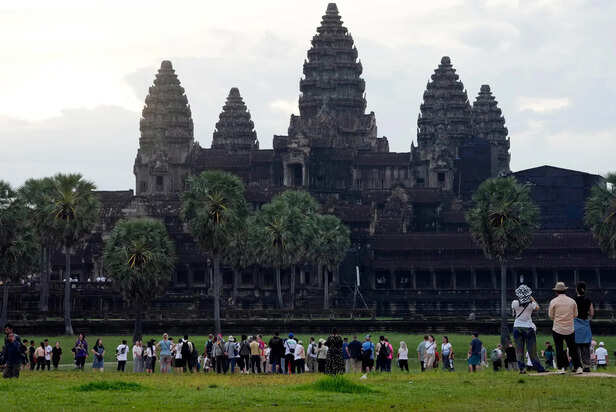
![A night bus from Cambodia's top tourist destination plunges off a bridge, killing 16 passengers]() Though located in Cambodia, Angkor Wat is one of the largest Hindu temples ever built and holds deep cultural connections to Indian civilization.
Though located in Cambodia, Angkor Wat is one of the largest Hindu temples ever built and holds deep cultural connections to Indian civilization.
Constructed in the twelfth century by King Suryavarman II, the temple complex was dedicated to Lord Vishnu and represented the cosmic mountain of Hindu cosmology.
Over time the powerful Khmer Empire declined. Cities were abandoned, and the massive temple complex slowly disappeared under dense tropical forests. For centuries Angkor Wat remained hidden from much of the world.
Local monks and villagers knew about the temple, but globally it remained forgotten until European explorers rediscovered it in the nineteenth century.
The rediscovery revealed a breathtaking architectural wonder with intricate carvings depicting scenes from the Ramayana and Mahabharata.
Today Angkor Wat stands as a reminder that even the largest temples can vanish into nature, only to reappear when the world is ready to rediscover them.
The Martand Sun Temple in Kashmir represents one of the most remarkable examples of a lost temple rediscovered through historical research.
Built during the eighth century by King Lalitaditya Muktapida of the Karkota dynasty, the temple was dedicated to Surya, the Sun God.
For centuries the temple was one of the most important religious centers in the region. However historical invasions led to the destruction of the temple complex. Over time the structure fell into ruins and much of its importance faded from public awareness.
Archaeological studies later brought attention back to the site. Excavations and research revealed the temple’s grand design, combining Kashmiri architecture with Gandharan and Gupta influences.
Today the ruins of the Martand Sun Temple stand as a powerful reminder of ancient India’s architectural brilliance. Though the temple is no longer active, its rediscovery restored its place in history and cultural memory.
यत्र देवालयो नास्ति तत्र नास्ति शुभं फलम्॥”
This ancient Sanskrit verse reminds us that a sacred space is not just stone and architecture. A temple carries memory, devotion, and the spiritual identity of generations. Yet history shows that many temples were once lost to time. Some disappeared beneath forests, rivers, sand, or ruins. And then, centuries later, they reappeared.
Across India, there are temples that vanished from the world only to be rediscovered again. Their return often feels less like an archaeological discovery and more like destiny revealing itself at the right moment.
These temples tell fascinating stories about faith surviving time, geography, and history itself.
1. Somnath Temple Rediscovered Through Ancient Records
From temple's sanctity to prasad counters, Somnath Temple Trust empowers 363 women
Image credit : ANI
Somnath is believed to be the first of the twelve Jyotirlingas of Lord Shiva. Ancient scriptures mention that the temple originally existed thousands of years ago and was rebuilt several times across different eras.
However, repeated invasions during medieval times destroyed the temple multiple times. Over centuries the original structure vanished and the site became a ruin.
What brought Somnath back was not just reconstruction but rediscovery through historical texts, local memory, and archaeological references. In the twentieth century, the temple was rebuilt again after India’s independence, guided by ancient descriptions and historical records.
Today the Somnath Temple stands on the same sacred coastline where it once existed centuries ago. Its reappearance symbolizes the resilience of faith and the continuity of spiritual tradition.
2. Kedarnath Temple Found Again After Centuries of Isolation
While the temple itself was built more than a thousand years ago and associated with the Pandavas and Adi Shankaracharya, there were long periods when the shrine was effectively lost to the outside world.
Extreme weather, glaciers, and landslides often made the region inaccessible for decades or even centuries in earlier times. Historical accounts suggest that there were periods when pilgrimage routes vanished and the temple remained hidden within the harsh Himalayan terrain.
The temple’s rediscovery came through renewed pilgrimage routes and efforts by saints and local communities who revived the sacred path.
Even in modern times, Kedarnath reminds people how fragile access to sacred spaces can be. The devastating floods of 2013 temporarily isolated the temple again, yet the shrine survived and reemerged as a symbol of divine protection.
Today Kedarnath continues to stand against extreme natural conditions, reminding pilgrims that some sacred places reveal themselves only to those who seek them.
3. Angkor Wat Temple Hidden in the Jungle
A night bus from Cambodia's top tourist destination plunges off a bridge, killing 16 passengers
Image credit : AP
Constructed in the twelfth century by King Suryavarman II, the temple complex was dedicated to Lord Vishnu and represented the cosmic mountain of Hindu cosmology.
Over time the powerful Khmer Empire declined. Cities were abandoned, and the massive temple complex slowly disappeared under dense tropical forests. For centuries Angkor Wat remained hidden from much of the world.
Local monks and villagers knew about the temple, but globally it remained forgotten until European explorers rediscovered it in the nineteenth century.
The rediscovery revealed a breathtaking architectural wonder with intricate carvings depicting scenes from the Ramayana and Mahabharata.
Today Angkor Wat stands as a reminder that even the largest temples can vanish into nature, only to reappear when the world is ready to rediscover them.
4. Martand Sun Temple Rediscovered Through Archaeology
Built during the eighth century by King Lalitaditya Muktapida of the Karkota dynasty, the temple was dedicated to Surya, the Sun God.
For centuries the temple was one of the most important religious centers in the region. However historical invasions led to the destruction of the temple complex. Over time the structure fell into ruins and much of its importance faded from public awareness.
Archaeological studies later brought attention back to the site. Excavations and research revealed the temple’s grand design, combining Kashmiri architecture with Gandharan and Gupta influences.
Today the ruins of the Martand Sun Temple stand as a powerful reminder of ancient India’s architectural brilliance. Though the temple is no longer active, its rediscovery restored its place in history and cultural memory.