
4 Temples Where Shiva, Vishnu, and Krishna Seem Connected
Nidhi | Mar 18, 2026, 13:37 IST

Shiva, Vishnu and Krishna
Image credit : Ai
Across India, some temples quietly reveal a deeper truth that Shiva, Vishnu, and Krishna are not separate but connected. From Rameshwaram to Badrinath, these sacred places blur religious boundaries and show how devotion flows across forms. This article explores four such temples where divine unity is not just believed, but experienced.
India’s temple tradition is often described through separate paths: Shaiva, Vaishnava, and Krishna bhakti. But some temples make that separation feel incomplete. In these sacred spaces, Shiva is not distant from Vishnu, Vishnu is not separate from Krishna, and Krishna is not worshipped in isolation from older temple traditions. Instead, the connection feels organic, philosophical, and deeply Indian.
That is what makes these temples so fascinating. They do not merely represent devotion to one deity. They reveal how Hindu worship has long allowed overlap, reverence, and shared sacred meaning. In some places, one form of God worships another. In others, shrines stand side by side, quietly reminding devotees that what people divide in practice often remains united in spirit. These four temples stand out for exactly that reason. They make the connection between Shiva, Vishnu, and Krishna feel not forced, but natural.
![Lord Rama]() At Rameshwaram, a temple dedicated to Shiva, it is Lord Rama, an avatar of Vishnu, who installs and worships the Shiva lingam. This reverses the usual idea of hierarchy and shows something deeper. Even the divine seeks blessings. It reminds us that true strength lies in humility, not dominance. Through Rama and Krishna, Vishnu’s presence continues, making this temple a powerful symbol of unity.
At Rameshwaram, a temple dedicated to Shiva, it is Lord Rama, an avatar of Vishnu, who installs and worships the Shiva lingam. This reverses the usual idea of hierarchy and shows something deeper. Even the divine seeks blessings. It reminds us that true strength lies in humility, not dominance. Through Rama and Krishna, Vishnu’s presence continues, making this temple a powerful symbol of unity.
Chidambaram is one of the rare temples where Shiva as Nataraja and Vishnu as Govindaraja are worshipped within the same complex. This coexistence reflects a simple truth. Life is not about choosing one identity over another. Just like movement and stillness exist together, Shiva and Vishnu represent different energies that complete each other. Krishna’s connection through Vishnu adds a layer of devotion and relatability.
![Shiva]() In Guruvayur, Krishna is the central deity, but tradition encourages devotees to first visit the nearby Shiva temple at Mammiyoor. This creates a meaningful spiritual flow. Shiva becomes the grounding force, while Krishna represents emotional connection and devotion. It reflects how real spiritual journeys often move through different forms before reaching inner peace.
In Guruvayur, Krishna is the central deity, but tradition encourages devotees to first visit the nearby Shiva temple at Mammiyoor. This creates a meaningful spiritual flow. Shiva becomes the grounding force, while Krishna represents emotional connection and devotion. It reflects how real spiritual journeys often move through different forms before reaching inner peace.
Badrinath, dedicated to Vishnu, exists in close connection with Kedarnath, one of the most sacred Shiva temples. Surrounded by the Himalayas, the region naturally blends both energies. Vishnu represents preservation and calm, while Shiva represents renunciation and intensity. Through Krishna’s link to Vishnu, all three forms feel connected in one spiritual landscape.
In the end, these temples remind us of a simple but powerful idea. The divine was never meant to be divided. If Shiva, Vishnu, and Krishna can coexist so effortlessly, maybe the real question is not which path is right, but whether we are ready to see the unity behind them all.
That is what makes these temples so fascinating. They do not merely represent devotion to one deity. They reveal how Hindu worship has long allowed overlap, reverence, and shared sacred meaning. In some places, one form of God worships another. In others, shrines stand side by side, quietly reminding devotees that what people divide in practice often remains united in spirit. These four temples stand out for exactly that reason. They make the connection between Shiva, Vishnu, and Krishna feel not forced, but natural.
1. Where Rama’s devotion unites Shiva and Vishnu
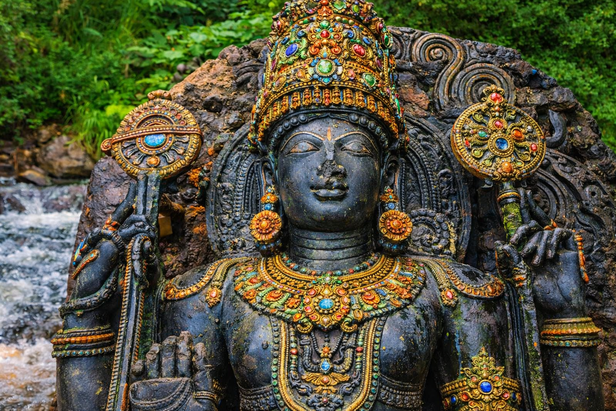
Lord Rama
Image credit : Ai
2. Where Shiva and Vishnu share one sacred space
3. Where Krishna’s darshan begins with Shiva
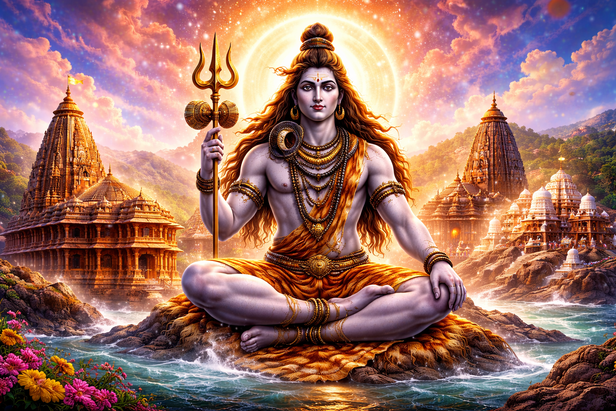
Shiva
Image credit : Ai
4. Where the Himalayas connect Vishnu and Shiva
In the end, these temples remind us of a simple but powerful idea. The divine was never meant to be divided. If Shiva, Vishnu, and Krishna can coexist so effortlessly, maybe the real question is not which path is right, but whether we are ready to see the unity behind them all.