
5 Countries Outside India Where Hanuman Ji Is Greater Than a God
Riya Kumari | Mar 26, 2026, 12:58 IST

Shri Hanuman ji
Image credit : AI
Hanuman Ji feel greater than just a god in these places. Not greater in rank, but greater in nearness. He is not only above life. He enters it. He stands at the gate, inside the role, in the effort, through the fracture, and beside the exile. And perhaps that is what you were searching for too. Not a distant miracle, but a presence that understands the weight you carry without asking you to become someone else first.
Hanuman Ji does not live in only one geography. His presence reaches from Nepal’s Hanuman Dhoka to Thailand’s Ramakien traditions, from Indonesia’s Prambanan reliefs to Cambodia’s Reamker and Angkor imagery, and into Mauritius, where Hanuman shrines remain part of everyday devotional life. In many of these places, he is not remembered merely as a god to be praised from a distance, but as a living force of courage, loyalty, protection, and inner steadiness.
Nepal
![Hanuman]()
In Nepal, Hanuman stands at the gate, and that image says more about life than it first appears to. Most of us think strength is loud. We think it announces itself, wins arguments, controls outcomes. But real strength often looks like standing watch over what matters without needing to be seen. There is a gate inside every person. On one side is the world’s noise, pressure, comparison, and fear.
On the other is something quieter: conscience, dignity, and the part of you that still knows what is right even when your mind is tired. Hanuman, in this sense, is not only worshipped. He is trusted. He is the keeper of that gate. Maybe that is why his presence feels personal. Because what you need most is not always more power. Sometimes you need protection from your own confusion.
Thailand
In Thailand, Hanuman moves through story, performance, and cultural memory not as a side figure, but as a vivid hero with wit, bravery, and presence. This matters because most people live trapped inside roles. Professional. Parent. Child. Partner. Success story. Failure. Strong one. Responsible one. You wear these identities so long that they begin to feel like skin. But they are still costumes.
Hanuman reminds us of a deeper self, one that can act fully without being consumed by the mask. He enters battle, but battle does not become his identity. He serves with total devotion, but service does not reduce him. He is powerful, yet never imprisoned by the need to be the center. There is a quiet freedom in that. You do not have to stop living your responsibilities. You only have to stop mistaking them for your entire being.
Indonesia
![Shree Hanuman]()
At Prambanan in Indonesia, the Ramayana lives in stone. The story survives not because it was frozen, but because it kept moving through time. That is where many people struggle: you want to act, but you also want guarantees. You want to love, but only if loss can be prevented. You want to try, but only if success arrives on schedule. So life becomes a negotiation with uncertainty.
Hanuman offers another way. He acts with complete force, but not with anxious possession. His energy is total, yet his ego is light. He does not seem to ask, “What will I get from this?” He asks, “What must be done now?” This is not passivity. It is not detachment in the cold sense. It is wholehearted action without chaining your peace to the result. Like an archer who releases the arrow cleanly, he understands that sincerity belongs to us, but outcomes do not.
Cambodia
In Cambodia, Hanuman becomes not just a symbol of strength, but also of relationship, memory, and cultural resilience. We live in a world that rewards convenience over loyalty. People leave when staying becomes difficult. Attention breaks easily. Promises thin out. Even the self becomes unstable, changing shape to please the room.
Hanuman stands against that drift. Not with stubbornness, but with anchored love. He teaches that loyalty is not weakness. It is a form of inner architecture. It is what keeps a human being from collapsing inward. And maybe that is why his story reaches people so deeply. Because beneath all ambition, most of us are still asking one trembling question: what, or who, is worth remaining true to?
Mauritius
![Bajrangbali]()
In Mauritius, Hanuman devotion carried across oceans became part of daily life and domestic space. There is something profoundly human in that. We all know exile, even without leaving our country. You can feel exiled in your own work, your own family, even inside your own mind. You can wake up in a life you built and still feel like a guest in it.
Hanuman, here, becomes more than a deity. He becomes a way of carrying meaning into displacement. A red flag in the wind. A small shrine near the home. A reminder that belonging is not always found first in land. Sometimes it is built through memory, faith, and the refusal to let the soul become homeless.
Nepal
Hanuman
Image credit : AI
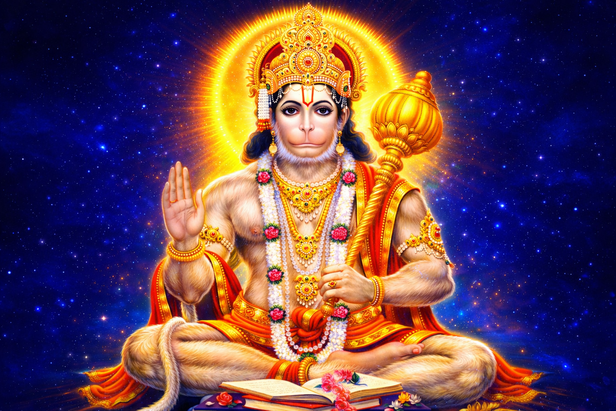
In Nepal, Hanuman stands at the gate, and that image says more about life than it first appears to. Most of us think strength is loud. We think it announces itself, wins arguments, controls outcomes. But real strength often looks like standing watch over what matters without needing to be seen. There is a gate inside every person. On one side is the world’s noise, pressure, comparison, and fear.
On the other is something quieter: conscience, dignity, and the part of you that still knows what is right even when your mind is tired. Hanuman, in this sense, is not only worshipped. He is trusted. He is the keeper of that gate. Maybe that is why his presence feels personal. Because what you need most is not always more power. Sometimes you need protection from your own confusion.
Thailand
In Thailand, Hanuman moves through story, performance, and cultural memory not as a side figure, but as a vivid hero with wit, bravery, and presence. This matters because most people live trapped inside roles. Professional. Parent. Child. Partner. Success story. Failure. Strong one. Responsible one. You wear these identities so long that they begin to feel like skin. But they are still costumes.
Hanuman reminds us of a deeper self, one that can act fully without being consumed by the mask. He enters battle, but battle does not become his identity. He serves with total devotion, but service does not reduce him. He is powerful, yet never imprisoned by the need to be the center. There is a quiet freedom in that. You do not have to stop living your responsibilities. You only have to stop mistaking them for your entire being.
Indonesia
Shree Hanuman
Image credit : AI
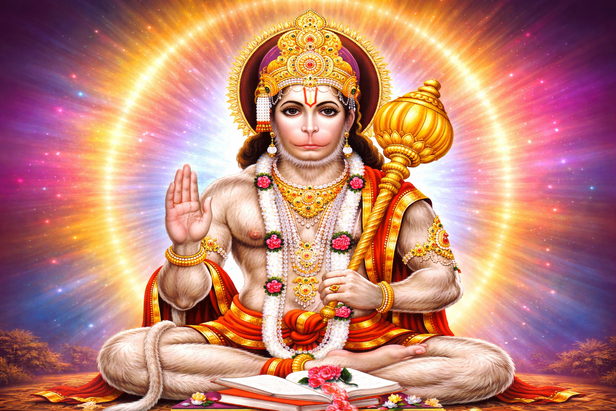
At Prambanan in Indonesia, the Ramayana lives in stone. The story survives not because it was frozen, but because it kept moving through time. That is where many people struggle: you want to act, but you also want guarantees. You want to love, but only if loss can be prevented. You want to try, but only if success arrives on schedule. So life becomes a negotiation with uncertainty.
Hanuman offers another way. He acts with complete force, but not with anxious possession. His energy is total, yet his ego is light. He does not seem to ask, “What will I get from this?” He asks, “What must be done now?” This is not passivity. It is not detachment in the cold sense. It is wholehearted action without chaining your peace to the result. Like an archer who releases the arrow cleanly, he understands that sincerity belongs to us, but outcomes do not.
Cambodia
In Cambodia, Hanuman becomes not just a symbol of strength, but also of relationship, memory, and cultural resilience. We live in a world that rewards convenience over loyalty. People leave when staying becomes difficult. Attention breaks easily. Promises thin out. Even the self becomes unstable, changing shape to please the room.
Hanuman stands against that drift. Not with stubbornness, but with anchored love. He teaches that loyalty is not weakness. It is a form of inner architecture. It is what keeps a human being from collapsing inward. And maybe that is why his story reaches people so deeply. Because beneath all ambition, most of us are still asking one trembling question: what, or who, is worth remaining true to?
Mauritius
Bajrangbali
Image credit : AI
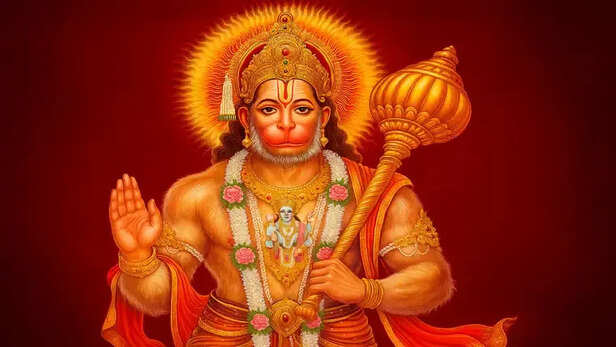
In Mauritius, Hanuman devotion carried across oceans became part of daily life and domestic space. There is something profoundly human in that. We all know exile, even without leaving our country. You can feel exiled in your own work, your own family, even inside your own mind. You can wake up in a life you built and still feel like a guest in it.
Hanuman, here, becomes more than a deity. He becomes a way of carrying meaning into displacement. A red flag in the wind. A small shrine near the home. A reminder that belonging is not always found first in land. Sometimes it is built through memory, faith, and the refusal to let the soul become homeless.