
5 Famous Temples That Secretly Honor Radha First
Nidhi | Mar 05, 2026, 14:53 IST

Radha Krishna
Image credit : Ai
Vrindavan is known as the land of Krishna, but many temples quietly place Radha at the center of devotion. From symbolic crowns to invisible seats beside Krishna, several temples honor Radha first in subtle ways. This article explores five famous Vrindavan temples where Radha’s presence guides the worship, revealing the deeper philosophy of Radha Krishna devotion.
“राधा नाम बिना कृष्ण अधूरा कहा जाता है।”
Without Radha’s name, even Krishna is considered incomplete.
This idea lies at the very heart of Vrindavan’s spiritual culture. While the town is celebrated as the land of Lord Krishna’s divine pastimes, anyone who spends time in its temples soon notices something unusual. Devotees rarely chant “Krishna” alone. The name almost always comes as Radha Krishna.
Radha is not just Krishna’s companion in mythology. In the bhakti tradition of Vrindavan, she represents pure devotion itself. Saints and scholars have long believed that Krishna can only be reached through Radha’s grace. Because of this belief, many temples in Vrindavan quietly place Radha at the center of worship, even when Krishna appears to be the main deity.
Some temples do this through symbolism, some through philosophy, and some through unique rituals that most visitors do not notice at first glance.
![Devotees participate in Holi Utsav at Banke Bihari Temple in Vrindavan]()
The Banke Bihari Temple is one of the most visited temples in Vrindavan. The idol of Banke Bihari shows Krishna in his charming tribhanga posture, attracting thousands of devotees every day.
Interestingly, the temple does not display a separate idol of Radha beside Krishna. However, temple traditions explain that the idol itself represents the combined divine form of Radha and Krishna.
The deity is believed to have appeared before the saint Swami Haridas during deep meditation. According to devotees, the form that manifested contained both Radha and Krishna together.
Because of this belief, Radha’s presence is considered inseparable from the idol. Even during festivals, special rituals acknowledge Radha’s divine role in the temple’s worship.
The Radha Raman Temple is famous for its self manifested deity of Krishna discovered by the saint Gopal Bhatta Goswami.
What makes this temple unique is the way Radha is honored. There is no idol of Radha next to Krishna. Instead, a beautiful silver throne placed beside the deity represents Radha’s presence.
Devotees believe Radha is spiritually seated there. The empty throne symbolizes that Radha is inseparable from Krishna’s divine energy.
During worship, priests and devotees acknowledge this seat with great reverence, quietly reminding visitors that Radha’s presence is central even when her idol is not visible.
![Radha and krishna]()
The Radha Vallabh Temple follows one of the most unusual traditions in Vrindavan.
Inside the sanctum, Krishna stands as the main deity, yet Radha is represented by an ornate crown placed beside him. This crown symbolizes her divine presence.
The Radha Vallabh tradition believes Radha’s love is the highest expression of devotion. According to this philosophy, Krishna’s sweetness and charm are revealed fully only through Radha’s love.
Because of this belief, Radha is treated as the spiritual center of the temple even though her idol is not physically present.
The Radha Damodar Temple was established by Jiva Goswami and is deeply connected to the Gaudiya Vaishnava tradition inspired by Chaitanya Mahaprabhu.
In this spiritual tradition, Radha’s devotion is considered the highest path to Krishna. The temple’s teachings and devotional songs often emphasize Radha’s role in guiding the devotee toward the divine.
Many devotees chant Radha’s name before Krishna during kirtans and prayers. This reflects the belief that Krishna’s grace is reached through Radha’s love and devotion.
![Radha-Krishna]()
The Radha Gokulananda Temple is associated with several saints of the Vrindavan bhakti movement.
Here, Radha is seen as the embodiment of pure spiritual love. Devotional practices often focus on understanding Radha’s deep longing for Krishna, which symbolizes the soul’s longing for God.
Because of this philosophy, Radha’s presence is given great importance in the temple’s worship and teachings, quietly placing her at the heart of devotion.
Without Radha’s name, even Krishna is considered incomplete.
This idea lies at the very heart of Vrindavan’s spiritual culture. While the town is celebrated as the land of Lord Krishna’s divine pastimes, anyone who spends time in its temples soon notices something unusual. Devotees rarely chant “Krishna” alone. The name almost always comes as Radha Krishna.
Radha is not just Krishna’s companion in mythology. In the bhakti tradition of Vrindavan, she represents pure devotion itself. Saints and scholars have long believed that Krishna can only be reached through Radha’s grace. Because of this belief, many temples in Vrindavan quietly place Radha at the center of worship, even when Krishna appears to be the main deity.
Some temples do this through symbolism, some through philosophy, and some through unique rituals that most visitors do not notice at first glance.
1. Banke Bihari Temple
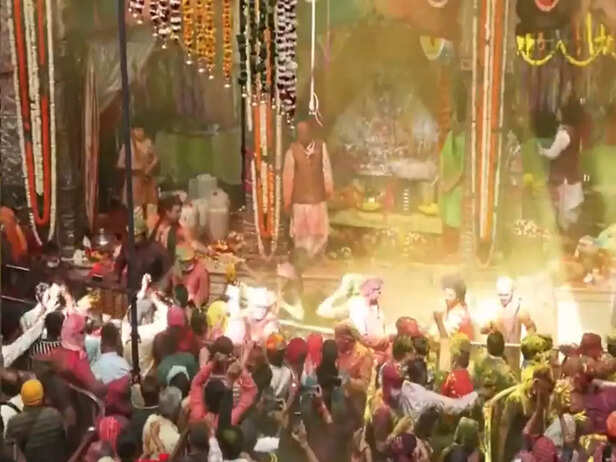
Devotees participate in Holi Utsav at Banke Bihari Temple in Vrindavan
Image credit : ANI
The Banke Bihari Temple is one of the most visited temples in Vrindavan. The idol of Banke Bihari shows Krishna in his charming tribhanga posture, attracting thousands of devotees every day.
Interestingly, the temple does not display a separate idol of Radha beside Krishna. However, temple traditions explain that the idol itself represents the combined divine form of Radha and Krishna.
The deity is believed to have appeared before the saint Swami Haridas during deep meditation. According to devotees, the form that manifested contained both Radha and Krishna together.
Because of this belief, Radha’s presence is considered inseparable from the idol. Even during festivals, special rituals acknowledge Radha’s divine role in the temple’s worship.
2. Radha Raman Temple
What makes this temple unique is the way Radha is honored. There is no idol of Radha next to Krishna. Instead, a beautiful silver throne placed beside the deity represents Radha’s presence.
Devotees believe Radha is spiritually seated there. The empty throne symbolizes that Radha is inseparable from Krishna’s divine energy.
During worship, priests and devotees acknowledge this seat with great reverence, quietly reminding visitors that Radha’s presence is central even when her idol is not visible.
3. Radha Vallabh Temple
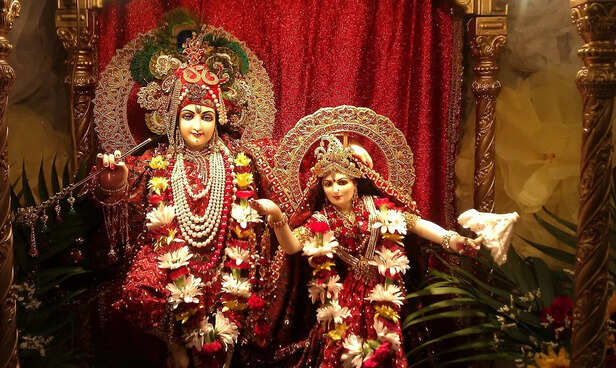
Radha and krishna
Image credit : Pixabay
The Radha Vallabh Temple follows one of the most unusual traditions in Vrindavan.
Inside the sanctum, Krishna stands as the main deity, yet Radha is represented by an ornate crown placed beside him. This crown symbolizes her divine presence.
The Radha Vallabh tradition believes Radha’s love is the highest expression of devotion. According to this philosophy, Krishna’s sweetness and charm are revealed fully only through Radha’s love.
Because of this belief, Radha is treated as the spiritual center of the temple even though her idol is not physically present.
4. Radha Damodar Temple
In this spiritual tradition, Radha’s devotion is considered the highest path to Krishna. The temple’s teachings and devotional songs often emphasize Radha’s role in guiding the devotee toward the divine.
Many devotees chant Radha’s name before Krishna during kirtans and prayers. This reflects the belief that Krishna’s grace is reached through Radha’s love and devotion.
5. Radha Gokulananda Temple
Radha-Krishna
Image credit : Pexels
The Radha Gokulananda Temple is associated with several saints of the Vrindavan bhakti movement.
Here, Radha is seen as the embodiment of pure spiritual love. Devotional practices often focus on understanding Radha’s deep longing for Krishna, which symbolizes the soul’s longing for God.
Because of this philosophy, Radha’s presence is given great importance in the temple’s worship and teachings, quietly placing her at the heart of devotion.