
7 Ancient Shiva Temples Where Devotees Are Not Allowed to Touch the Shivling
Nidhi | Feb 04, 2026, 22:53 IST

Shivling
Image credit : Ai
Across India, there are ancient Shiva temples where devotees are not allowed to touch the Shivling. This article explores seven such sacred temples and explains the spiritual, ritual, and historical reasons behind this practice. From energy preservation and Agamic traditions to the philosophy of inner devotion over physical contact, these temples reveal a deeper understanding of how Shiva is worshipped beyond touch, ritual, and form.
ॐ नमः शिवाय।
न स्पर्शेन न मन्त्रेण, भावेन तु प्रसीदति।
Shiva is known as the most accessible of gods. He lives in cremation grounds, wears ash, listens to the broken, and blesses without conditions. And yet, across India, there are ancient Shiva temples where devotees are clearly instructed not to touch the Shivling.
This often feels confusing. Why would a god so close to humanity place boundaries around physical contact? Is it restriction, or is it something deeper that modern worshippers no longer pause to understand?
The truth is that these temples are not denying devotion. They are preserving a very specific way of experiencing Shiva, one that is rooted in ancient ritual science, spiritual discipline, and a profound understanding of energy, form, and restraint.
![Varanasi, Jan 11 (ANI): Devotees stand in queues at the Kashi Vishwanath Temple ...]() Kashi Vishwanath is one of the most sacred Shiva temples in the world, believed to grant liberation itself. The Shivling here is intensely revered and heavily consecrated.
Kashi Vishwanath is one of the most sacred Shiva temples in the world, believed to grant liberation itself. The Shivling here is intensely revered and heavily consecrated.
Devotees are not permitted to touch the Shivling directly. All rituals, including abhishek, are performed by trained priests following strict schedules and disciplines. This is not merely due to crowd management, though that plays a role, but because the sanctum is treated as a powerful spiritual core.
In Kashi, Shiva is worshipped as the ultimate truth, beyond physical closeness. Darshan here emphasizes presence, surrender, and silence rather than physical interaction.
Located in the high Himalayas, Kedarnath is one of the twelve Jyotirlingas and one of the most energetically intense Shiva shrines.
The Shivling at Kedarnath is considered ancient, self-manifested, and deeply charged. Devotees are not allowed to touch it freely. Only priests conduct rituals under well-defined traditions.
The restriction reflects the belief that the Shivling is not merely symbolic but a living spiritual force shaped by centuries of uninterrupted worship. Physical distance is seen as a form of respect, not denial.
![Ujjain, Jan 17 (ANI): Former Indian Captain and Cricketer Virat Kohli along with...]() Mahakaleshwar is unique among the Jyotirlingas because it is believed to be swayambhu and oriented in a south-facing direction, associated with time and dissolution.
Mahakaleshwar is unique among the Jyotirlingas because it is believed to be swayambhu and oriented in a south-facing direction, associated with time and dissolution.
Despite the temple being famous for its elaborate rituals, devotees are generally not allowed to touch the Shivling directly during normal darshan. The priesthood follows rigid ritual discipline, especially during early morning ceremonies.
The idea here is that Mahakal represents time itself. One does not grasp time. One stands before it, aware and humbled.
Somnath is often called the first among the Jyotirlingas and carries immense historical and spiritual weight.
Devotees are not permitted to touch the Shivling directly. Worship is conducted through visual darshan and priest-led rituals. The temple follows classical Agamic practices that clearly define physical access to the sanctum.
Somnath teaches a quiet lesson that reverence does not always require contact. Sometimes, restraint itself becomes an offering.
Chidambaram is one of the most philosophically profound Shiva temples. Here, Shiva is worshipped as Nataraja, the cosmic dancer, and also as the formless space itself.
The Shivling and the sacred space representing consciousness are not meant for casual physical interaction. Touching is restricted because the focus is on realization, not ritual handling.
This temple emphasizes inner awakening over outward action. Shiva here is experienced, not touched.
![Deoghar, Dec 06 (ANI): Union Minister of Health and Family Welfare JP Nadda perf...]() Baidyanath is another Jyotirlinga associated with healing and deep faith. Despite its reputation as a wish-fulfilling shrine, physical contact with the Shivling is limited.
Baidyanath is another Jyotirlinga associated with healing and deep faith. Despite its reputation as a wish-fulfilling shrine, physical contact with the Shivling is limited.
Rituals are carefully controlled and performed by priests trained in temple traditions. Devotees participate through offerings and prayers rather than touch.
The underlying belief is that healing flows through faith and surrender, not through physical closeness alone.
Rameswaram holds a special place in Shaiva tradition and is closely connected to the Ramayana. The temple is also famous for its sacred water rituals.
Despite extensive ritual participation by devotees in other parts of the temple, direct touching of the Shivling is restricted. The sanctum follows strict Agamic discipline.
Here, Shiva is approached with order, purity of intent, and humility. The journey matters as much as the destination.
न स्पर्शेन न मन्त्रेण, भावेन तु प्रसीदति।
Shiva is known as the most accessible of gods. He lives in cremation grounds, wears ash, listens to the broken, and blesses without conditions. And yet, across India, there are ancient Shiva temples where devotees are clearly instructed not to touch the Shivling.
This often feels confusing. Why would a god so close to humanity place boundaries around physical contact? Is it restriction, or is it something deeper that modern worshippers no longer pause to understand?
The truth is that these temples are not denying devotion. They are preserving a very specific way of experiencing Shiva, one that is rooted in ancient ritual science, spiritual discipline, and a profound understanding of energy, form, and restraint.
1. Kashi Vishwanath Temple, Varanasi
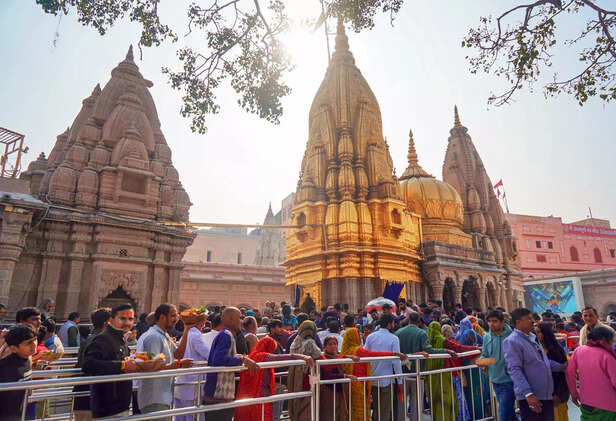
Varanasi, Jan 11 (ANI): Devotees stand in queues at the Kashi Vishwanath Temple ...
Image credit : ANI
Devotees are not permitted to touch the Shivling directly. All rituals, including abhishek, are performed by trained priests following strict schedules and disciplines. This is not merely due to crowd management, though that plays a role, but because the sanctum is treated as a powerful spiritual core.
In Kashi, Shiva is worshipped as the ultimate truth, beyond physical closeness. Darshan here emphasizes presence, surrender, and silence rather than physical interaction.
2. Kedarnath Temple, Uttarakhand
The Shivling at Kedarnath is considered ancient, self-manifested, and deeply charged. Devotees are not allowed to touch it freely. Only priests conduct rituals under well-defined traditions.
The restriction reflects the belief that the Shivling is not merely symbolic but a living spiritual force shaped by centuries of uninterrupted worship. Physical distance is seen as a form of respect, not denial.
3. Mahakaleshwar Temple, Ujjain
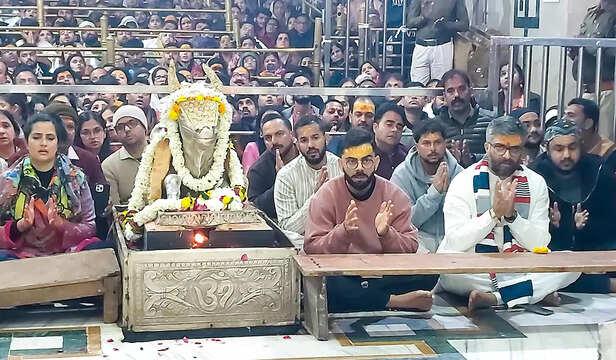
Ujjain, Jan 17 (ANI): Former Indian Captain and Cricketer Virat Kohli along with...
Image credit : ANI
Despite the temple being famous for its elaborate rituals, devotees are generally not allowed to touch the Shivling directly during normal darshan. The priesthood follows rigid ritual discipline, especially during early morning ceremonies.
The idea here is that Mahakal represents time itself. One does not grasp time. One stands before it, aware and humbled.
4. Somnath Temple, Gujarat
Devotees are not permitted to touch the Shivling directly. Worship is conducted through visual darshan and priest-led rituals. The temple follows classical Agamic practices that clearly define physical access to the sanctum.
Somnath teaches a quiet lesson that reverence does not always require contact. Sometimes, restraint itself becomes an offering.
5. Nataraja Temple, Chidambaram
The Shivling and the sacred space representing consciousness are not meant for casual physical interaction. Touching is restricted because the focus is on realization, not ritual handling.
This temple emphasizes inner awakening over outward action. Shiva here is experienced, not touched.
6. Baidyanath Dham, Deoghar
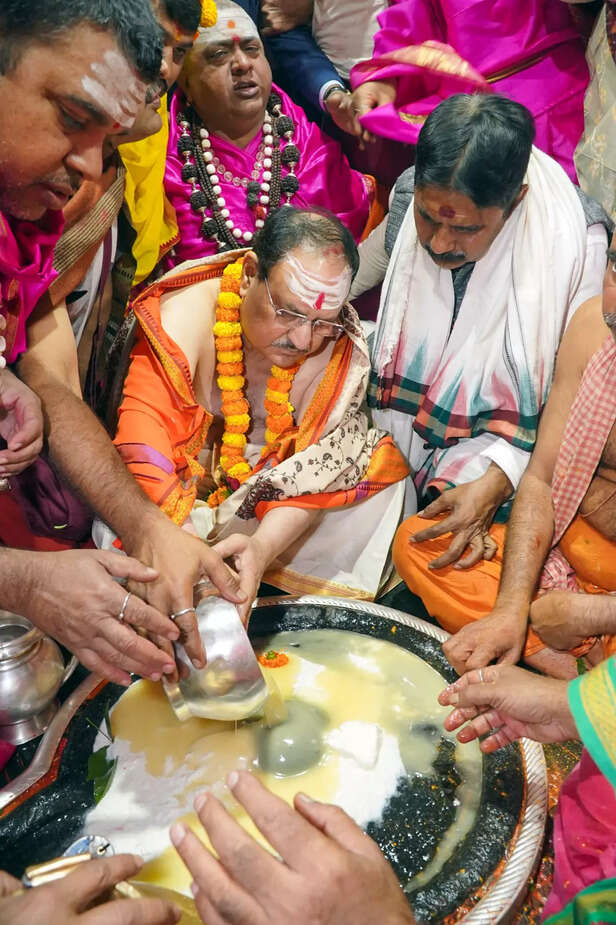
Deoghar, Dec 06 (ANI): Union Minister of Health and Family Welfare JP Nadda perf...
Image credit : ANI
Rituals are carefully controlled and performed by priests trained in temple traditions. Devotees participate through offerings and prayers rather than touch.
The underlying belief is that healing flows through faith and surrender, not through physical closeness alone.
7. Ramanathaswamy Temple, Rameswaram
Despite extensive ritual participation by devotees in other parts of the temple, direct touching of the Shivling is restricted. The sanctum follows strict Agamic discipline.
Here, Shiva is approached with order, purity of intent, and humility. The journey matters as much as the destination.