
7 Gita Shlokas That Explain Why Life Isn’t Meant to Be Fair
Nidhi | Jan 12, 2026, 16:27 IST

Krishna
Image credit : Ai
Life often feels unfair despite effort, honesty, and good intentions. The Bhagavad Gita offers timeless clarity on this reality through profound shlokas that explain karma, action, outcomes, and detachment. This article explores seven key Gita verses that reveal why fairness is not how life operates and how true strength comes from inner balance rather than external justice. A thoughtful, spiritual perspective for those seeking meaning, resilience, and peace amid life’s inequalities.
From childhood, we are taught a simple moral equation. Do good and good will happen to you. Work hard and results will follow. Be honest and life will reward you. Yet lived experience often contradicts this belief. Good people suffer. Effort does not always translate into success. Unfairness shows up without warning and refuses to explain itself.
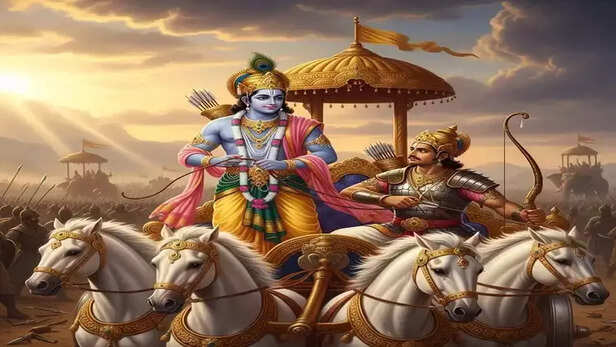
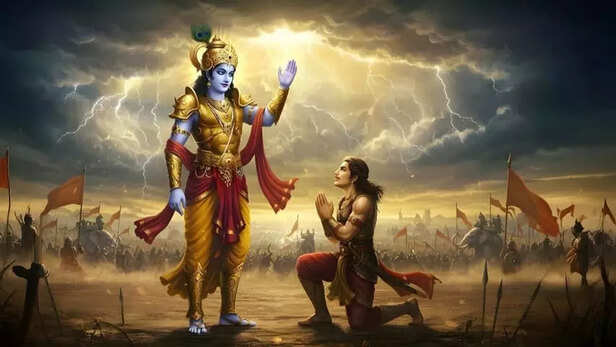
The Bhagavad Gita does not deny this reality. Instead, it addresses it head on. Through a dialogue between Krishna and Arjuna on a battlefield, the Gita offers a deeper understanding of why life does not operate on human ideas of fairness and why expecting fairness often becomes the root of suffering. The verses below do not console us with false hope. They offer clarity, responsibility and inner strength.
![Mahabharata]()
You have control over action, not outcomes
This verse makes it clear that fairness cannot be demanded from results because results are never fully in human control. Action belongs to you. Outcomes are shaped by multiple visible and invisible factors including time, circumstances, collective effort and past karma. Expecting fair results from effort assumes a closed system where only your actions matter. Life is not such a system. The Gita teaches that peace begins when action is performed sincerely without emotional dependence on outcomes. When results do not align with effort, it is not injustice. It is simply the nature of reality operating beyond personal will.
Nature, not morality, governs outcomes
The Gita repeatedly reminds us that the world functions according to prakriti or natural laws. Outcomes arise from the interaction of forces, tendencies and conditions. Morality guides inner conduct, not external distribution of rewards. When we believe that goodness should guarantee protection or success, we misunderstand how the universe functions. Life is not judging us. It is unfolding through cause and effect across time. Fairness is a human emotional concept, not a universal rule.
Equanimity is wisdom, not equal treatment
The Gita speaks of seeing sameness in pleasure and pain, gain and loss. This does not mean life treats everyone equally. It means wisdom lies in responding with balance regardless of how uneven life appears. Fairness is external. Equanimity is internal. When you stop demanding symmetry from life and start cultivating steadiness within yourself, suffering reduces. The Gita does not promise fairness. It promises freedom from being shaken by unfairness.
![Karna and Duryodhana]()
The world is designed to test, not to please
Krishna describes the world as maya, complex and difficult to overcome. This does not imply illusion as falsehood, but illusion as emotional entanglement. The world is structured to challenge ego, attachment and expectation. If life were fair in the way humans define it, growth would stagnate. The unevenness of experiences pushes awareness beyond comfort. According to the Gita, struggle is not punishment. It is the friction required for consciousness to mature.
Act from stability, not emotional demand
This verse asks the seeker to act while remaining rooted in inner balance. When actions are driven by the need for validation, fairness or recognition, disappointment becomes inevitable. The Gita reframes success as inner steadiness rather than external reward. Life feels unfair primarily when actions are emotionally transactional. When action becomes an expression of duty and integrity rather than expectation, the sense of injustice loses its grip.
You cannot opt out of action, but you can choose your attitude
The Gita acknowledges that no one can escape action. Even in suffering, action continues through thought, emotion and reaction. What creates misery is not action itself but resistance to what is happening. Life feels unfair when reality collides with personal preference. The Gita teaches that freedom lies not in controlling events but in choosing awareness over resistance. When acceptance replaces protest, clarity emerges.
![Krishna and Arjun in Mahabharata]()
Fulfillment is internal, not granted by life
The highest state described in the Gita is self-contentment. A person anchored in the self is not dependent on fairness from the world. This does not mean indifference or passivity. It means emotional independence. When fulfillment comes from alignment with purpose rather than external outcomes, unfairness loses its power to destabilize. The Gita does not teach escape from the world. It teaches sovereignty within it.
The Bhagavad Gita does not deny this reality. Instead, it addresses it head on. Through a dialogue between Krishna and Arjuna on a battlefield, the Gita offers a deeper understanding of why life does not operate on human ideas of fairness and why expecting fairness often becomes the root of suffering. The verses below do not console us with false hope. They offer clarity, responsibility and inner strength.
1. कर्मण्येवाधिकारस्ते
Mahabharata
Image credit : Freepik
You have control over action, not outcomes
This verse makes it clear that fairness cannot be demanded from results because results are never fully in human control. Action belongs to you. Outcomes are shaped by multiple visible and invisible factors including time, circumstances, collective effort and past karma. Expecting fair results from effort assumes a closed system where only your actions matter. Life is not such a system. The Gita teaches that peace begins when action is performed sincerely without emotional dependence on outcomes. When results do not align with effort, it is not injustice. It is simply the nature of reality operating beyond personal will.
2. न कर्मफलसंयोगं स्वभावस्तु प्रवर्तते
The Gita repeatedly reminds us that the world functions according to prakriti or natural laws. Outcomes arise from the interaction of forces, tendencies and conditions. Morality guides inner conduct, not external distribution of rewards. When we believe that goodness should guarantee protection or success, we misunderstand how the universe functions. Life is not judging us. It is unfolding through cause and effect across time. Fairness is a human emotional concept, not a universal rule.
3. समं पश्यन्हि सर्वत्र
The Gita speaks of seeing sameness in pleasure and pain, gain and loss. This does not mean life treats everyone equally. It means wisdom lies in responding with balance regardless of how uneven life appears. Fairness is external. Equanimity is internal. When you stop demanding symmetry from life and start cultivating steadiness within yourself, suffering reduces. The Gita does not promise fairness. It promises freedom from being shaken by unfairness.
4. दैवी ह्येषा गुणमयी मम माया दुरत्यया

Karna and Duryodhana
Image credit : Pixabay
The world is designed to test, not to please
Krishna describes the world as maya, complex and difficult to overcome. This does not imply illusion as falsehood, but illusion as emotional entanglement. The world is structured to challenge ego, attachment and expectation. If life were fair in the way humans define it, growth would stagnate. The unevenness of experiences pushes awareness beyond comfort. According to the Gita, struggle is not punishment. It is the friction required for consciousness to mature.
5. योगस्थः कुरु कर्माणि
This verse asks the seeker to act while remaining rooted in inner balance. When actions are driven by the need for validation, fairness or recognition, disappointment becomes inevitable. The Gita reframes success as inner steadiness rather than external reward. Life feels unfair primarily when actions are emotionally transactional. When action becomes an expression of duty and integrity rather than expectation, the sense of injustice loses its grip.
6. न हि कश्चित्क्षणमपि जातु तिष्ठत्यकर्मकृत्
The Gita acknowledges that no one can escape action. Even in suffering, action continues through thought, emotion and reaction. What creates misery is not action itself but resistance to what is happening. Life feels unfair when reality collides with personal preference. The Gita teaches that freedom lies not in controlling events but in choosing awareness over resistance. When acceptance replaces protest, clarity emerges.
7. आत्मन्येवात्मना तुष्टः
Krishna and Arjun in Mahabharata
Image credit : Freepik
Fulfillment is internal, not granted by life
The highest state described in the Gita is self-contentment. A person anchored in the self is not dependent on fairness from the world. This does not mean indifference or passivity. It means emotional independence. When fulfillment comes from alignment with purpose rather than external outcomes, unfairness loses its power to destabilize. The Gita does not teach escape from the world. It teaches sovereignty within it.