
Are Women Really Not Allowed in Temples During Periods? The Truth Explained
Nidhi | Feb 17, 2026, 12:08 IST

Pray
Image credit : Freepik
For generations, women have been told not to enter temples during menstruation. But is this truly a rule in Hinduism, or a social belief that evolved over time? This in-depth article examines what the Vedas, Manusmriti, and Agama Shastras actually say about periods and ritual purity. It also explores historical practices, the Kamakhya tradition that celebrates menstruation, and the Supreme Court’s Sabarimala judgment. By separating scripture from custom and law from belief, this piece uncovers the real story behind one of the most misunderstood religious practices in India.
Every month, millions of women across India quietly ask themselves a question they rarely discuss openly:
Should I enter the temple today?
For some, the answer was taught in childhood — “No, not during periods.”
For others, the rule feels confusing, inconsistent, or even unfair.
But where did this belief actually come from? Is it written in the Vedas? Is it a later social custom? Or is it a misunderstanding that became tradition over time?
The debate around menstruation and temple entry is not just about religion. It touches identity, faith, gender, law, and history. It involves ancient scriptures, temple-specific rituals, constitutional judgments, and evolving social values.
![Veda]()
The earliest Hindu scriptures - the Rigveda, Yajurveda, Samaveda, and Atharvaveda — do not contain a direct prohibition against menstruating women entering temples.
It is also important to note that temple-based deity worship, as practiced today, became prominent much later. Early Vedic religion centered on yajnas (fire rituals) conducted in open spaces or domestic settings. The elaborate temple culture developed in the post-Vedic and classical periods.
The Rigveda includes references to menstruation in descriptive, not condemnatory terms. For example, in Rigveda 10.85, menstruation is referenced in the context of fertility and womanhood. It is not framed as moral impurity.
Therefore, the idea that the Vedas categorically ban temple entry during menstruation is not supported by textual evidence.
Later texts such as the Manusmriti and other Dharmashastras discuss menstruation under the concept of “ashaucha,” which refers to ritual impurity.
For example:
![Temple]()
Temple worship in Hinduism is largely governed by Agama Shastras. These texts regulate temple construction, priestly conduct, consecration rituals, and daily worship.
Certain Agamic traditions emphasize maintaining ritual states for both priests and devotees. In some interpretations, menstruation is considered a period of temporary ritual ineligibility.
However:
The idea that menstruation is inherently impure is contradicted by several Hindu traditions.
A prominent example is the Kamakhya Temple in Assam.
At the Kamakhya Temple, the goddess is believed to undergo menstruation annually during the Ambubachi Mela. The temple closes for three days and reopens in celebration. Devotees receive cloth symbolizing the goddess’s menstrual cycle as a sacred blessing.
Here, menstruation is not stigmatized. It is considered an expression of divine fertility and Shakti.
Similarly, in parts of South India and tribal communities, first menstruation ceremonies are celebrated as auspicious rites of passage.
These examples demonstrate that Hindu traditions are not uniform in viewing menstruation negatively.
The issue of menstruation and temple entry entered national debate through the Sabarimala Temple case.
The Sabarimala Temple in Kerala traditionally restricted entry of women aged approximately 10 to 50. The rationale given was that the presiding deity, Lord Ayyappa, is a Naishtika Brahmachari (eternal celibate), and women of reproductive age were restricted to preserve the celibate character of the deity.
!['Has huge deposits': SIT opposes bail for jailed Sabarimala Tantri in gold heist case]()
In 2018, the Supreme Court of India, in Indian Young Lawyers Association v. State of Kerala, held by a 4:1 majority that the restriction was unconstitutional. The Court ruled that:
The judgment led to widespread protests and ongoing legal review. A larger constitutional bench is still examining broader questions about essential religious practices.
It is important to note that Sabarimala was not a general ban on menstruating women. It was an age-based restriction tied to the temple’s specific tradition.
Anthropologists note that ritual purity concepts are not unique to Hinduism. Many ancient cultures — including Jewish, Christian, Islamic, and tribal traditions — had menstrual seclusion practices.
In traditional Hindu society, menstruation was associated with:
Over time, symbolic ritual states may have evolved into rigid social prohibitions.
Today, there is no uniform enforcement across India.
The debate today revolves around three key tensions:
Should I enter the temple today?
For some, the answer was taught in childhood — “No, not during periods.”
For others, the rule feels confusing, inconsistent, or even unfair.
But where did this belief actually come from? Is it written in the Vedas? Is it a later social custom? Or is it a misunderstanding that became tradition over time?
The debate around menstruation and temple entry is not just about religion. It touches identity, faith, gender, law, and history. It involves ancient scriptures, temple-specific rituals, constitutional judgments, and evolving social values.
1. What Do the Vedas Say?
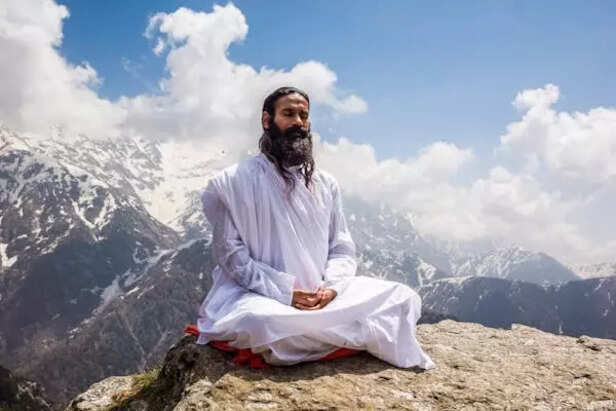
Veda
Image credit : Pexels
The earliest Hindu scriptures - the Rigveda, Yajurveda, Samaveda, and Atharvaveda — do not contain a direct prohibition against menstruating women entering temples.
It is also important to note that temple-based deity worship, as practiced today, became prominent much later. Early Vedic religion centered on yajnas (fire rituals) conducted in open spaces or domestic settings. The elaborate temple culture developed in the post-Vedic and classical periods.
The Rigveda includes references to menstruation in descriptive, not condemnatory terms. For example, in Rigveda 10.85, menstruation is referenced in the context of fertility and womanhood. It is not framed as moral impurity.
Therefore, the idea that the Vedas categorically ban temple entry during menstruation is not supported by textual evidence.
2. References in Dharmashastras and Smritis
For example:
- Manusmriti 5.66–5.73 discusses menstrual impurity as a temporary condition requiring seclusion.
- Yajnavalkya Smriti also mentions that menstruating women should refrain from certain ritual activities.
- Ashaucha is not limited to menstruation. It applies to childbirth, death in the family, and other bodily or social transitions.
- It refers to ritual ineligibility for specific Vedic rites, not social exclusion.
- These texts were prescriptive codes for particular social contexts and evolved over centuries.
3. Agama Shastras and Temple Ritual Systems
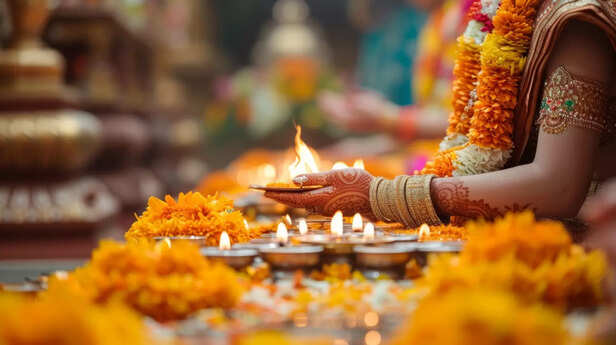
Temple
Image credit : Freepik
Temple worship in Hinduism is largely governed by Agama Shastras. These texts regulate temple construction, priestly conduct, consecration rituals, and daily worship.
Certain Agamic traditions emphasize maintaining ritual states for both priests and devotees. In some interpretations, menstruation is considered a period of temporary ritual ineligibility.
However:
- Agamas differ by sect and region.
- There is no single pan-Indian Agama rule banning menstruating women from all temples.
- Many temples do not explicitly codify such restrictions in written form; they function through customary practice.
4. Evidence of Alternative Traditions
A prominent example is the Kamakhya Temple in Assam.
At the Kamakhya Temple, the goddess is believed to undergo menstruation annually during the Ambubachi Mela. The temple closes for three days and reopens in celebration. Devotees receive cloth symbolizing the goddess’s menstrual cycle as a sacred blessing.
Here, menstruation is not stigmatized. It is considered an expression of divine fertility and Shakti.
Similarly, in parts of South India and tribal communities, first menstruation ceremonies are celebrated as auspicious rites of passage.
These examples demonstrate that Hindu traditions are not uniform in viewing menstruation negatively.
5. The Sabarimala Case and Legal Developments
The Sabarimala Temple in Kerala traditionally restricted entry of women aged approximately 10 to 50. The rationale given was that the presiding deity, Lord Ayyappa, is a Naishtika Brahmachari (eternal celibate), and women of reproductive age were restricted to preserve the celibate character of the deity.

'Has huge deposits': SIT opposes bail for jailed Sabarimala Tantri in gold heist case
Image credit : IANS
In 2018, the Supreme Court of India, in Indian Young Lawyers Association v. State of Kerala, held by a 4:1 majority that the restriction was unconstitutional. The Court ruled that:
- The exclusion violated Article 14 (equality before law).
- It violated Article 25 (freedom of religion) when interpreted in light of constitutional morality.
- Biological characteristics cannot be grounds for exclusion.
The judgment led to widespread protests and ongoing legal review. A larger constitutional bench is still examining broader questions about essential religious practices.
It is important to note that Sabarimala was not a general ban on menstruating women. It was an age-based restriction tied to the temple’s specific tradition.
6. Ritual Purity Across Cultures
In traditional Hindu society, menstruation was associated with:
- Bodily transformation
- Reproductive energy
- A cyclical process tied to fertility
Over time, symbolic ritual states may have evolved into rigid social prohibitions.
7. Contemporary Temple Practices
- Many urban temples do not question women.
- Most temples do not have formal written policies on menstruation.
- The practice largely depends on family customs or personal belief.
8. Core Questions at the Heart of the Debate
- Scriptural Interpretation: Are later Smriti-based customs binding in modern society?
- Temple Autonomy: Should individual temples maintain unique traditions?
- Constitutional Equality: Can biological factors justify religious exclusion?