
Did You Know Ramayana Didn’t Happen Just Once… But 11 Times?
Nidhi | Mar 25, 2026, 16:59 IST

Ramayana
Image credit : Ai
We all know the Ramayana as one epic story, but what if it didn’t happen just once? Some beliefs and interpretations suggest that the Ramayana may have occurred multiple times across cosmic cycles. From the concept of repeating Yugas to different versions of the epic across cultures, this idea challenges everything we thought we knew. Explore why people believe there could be 11 Ramayanas and what it truly means.
What if the Ramayana is not just a story from the past, but a pattern that keeps repeating itself across time? Most of us have grown up hearing it as a single epic, a tale of Lord Ram, Sita, and Ravana that happened once in history. But Hindu philosophy does not always see time the way we do. It sees time as something that moves in cycles, repeating, evolving, and recreating itself again and again.
Because of this, many scholars and traditional interpretations suggest that the Ramayana is not limited to one occurrence. Instead, it reflects a recurring story of dharma and adharma, one that may have unfolded multiple times across cosmic cycles. The idea of 11 Ramayanas is not about counting exact events, but about understanding that this story may not be singular at all.
![Rama's Communication]()
In everyday life, we think of time as a straight line. What happens once, stays in the past. But Hindu cosmology describes time as circular. It moves in cycles called Yugas that repeat endlessly. In every cycle, similar situations arise where balance is disturbed and needs restoration. This means events like the Ramayana are not restricted to one timeline. They can occur again when the conditions are similar.
Lord Ram is considered an avatar of Vishnu, but avatars are not one time appearances. They manifest whenever needed. This makes Ram more than just a historical figure. He represents the ideal of dharma. When that ideal is needed again, the role of Ram can reappear in different forms. The story may change in detail, but the essence remains the same.
Every era faces its own version of challenges. The conflict between right and wrong is constant, but its form changes with time. Because of this, the Ramayana can be seen as a story that adapts to each age. The characters may look different, the setting may change, but the core struggle stays alive. This is why the idea of multiple Ramayanas feels relatable even today.
![Ramayana]()
Even in our current world, there is not just one version of the Ramayana. There are many. From Valmiki to Tulsidas, from South India to Southeast Asia, each version tells the story differently. Some focus on devotion, some on philosophy, some on human emotions. This diversity itself shows that the Ramayana is not a fixed story, but something that evolves with culture and perspective.
If you look closely, the Ramayana is not just about what happened. It is about what keeps happening. The rise of ego, the test of values, the importance of choices, and the consequences of actions. These patterns repeat in society and even in our personal lives. This is why people say the Ramayana is not just history, it is a mirror.
When people talk about 11 Ramayanas, it is often symbolic. Hindu philosophy uses numbers to express ideas beyond literal counting. The number 11 suggests multiplicity and repetition. It is a way of saying that the Ramayana is not one story, but many stories spread across time and understanding.
This is where the idea becomes personal. The Ramayana is not just something that happened to gods and kings. It reflects choices we make every day. Moments where we choose right over wrong, where we face challenges, where we deal with loss, loyalty, and responsibility. In that sense, the Ramayana is not just repeating in the universe, it is repeating in our own lives.
Because of this, many scholars and traditional interpretations suggest that the Ramayana is not limited to one occurrence. Instead, it reflects a recurring story of dharma and adharma, one that may have unfolded multiple times across cosmic cycles. The idea of 11 Ramayanas is not about counting exact events, but about understanding that this story may not be singular at all.
1. Time Doesn’t Move Forward, It Repeats Itself

Rama's Communication
Image credit : Freepik
In everyday life, we think of time as a straight line. What happens once, stays in the past. But Hindu cosmology describes time as circular. It moves in cycles called Yugas that repeat endlessly. In every cycle, similar situations arise where balance is disturbed and needs restoration. This means events like the Ramayana are not restricted to one timeline. They can occur again when the conditions are similar.
2. Ram Is Not Just One Person, But A Role
3. Every Age Needs Its Own Ramayana
4. There Isn’t Just One Ramayana Even Today
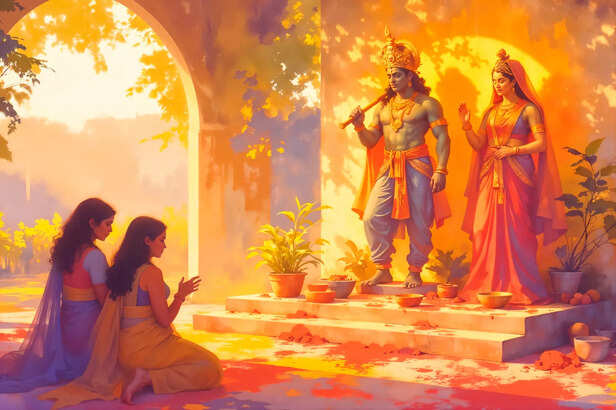
Ramayana
Image credit : Freepik
Even in our current world, there is not just one version of the Ramayana. There are many. From Valmiki to Tulsidas, from South India to Southeast Asia, each version tells the story differently. Some focus on devotion, some on philosophy, some on human emotions. This diversity itself shows that the Ramayana is not a fixed story, but something that evolves with culture and perspective.