
How the Mahabharata War Reshaped the Political Map of Bharat
Nidhi | Feb 19, 2026, 22:51 IST

India and Mahabharata map
Image credit : Ai
The Mahabharata war was not just a battle at Kurukshetra. It transformed the political geography of ancient Bharat. From the fall of Hastinapur and Indraprastha to the rise of Magadha and the decline of Gandhara, this deep research explores how the war reshaped kingdoms that today lie across India, Pakistan, Afghanistan, Nepal, and Bangladesh.
The Mahabharata war, traditionally placed between 1500 BCE and 900 BCE depending on scholarly interpretation, marks a turning point in early Indian civilization. While historians debate its exact dating and scale, the epic and Puranic traditions preserve a memory of large-scale dynastic destruction, territorial shifts, and ecological change. The political map described in the Mahabharata is very different from modern India’s map. It included regions now part of Pakistan, Afghanistan, Nepal, and Bangladesh, and it centered power in areas that later declined.
![Kurukshetra]()
The central power before the war was the Kuru kingdom, with its capital at Hastinapura in present-day Meerut district of Uttar Pradesh. Archaeological excavations at Hastinapur have revealed Painted Grey Ware layers dated roughly between 1200 BCE and 800 BCE, associated with the later Vedic period.
The Mahabharata describes the near total destruction of the Kuru ruling line. Later Puranic texts mention that a flood of the Ganga destroyed Hastinapur, forcing the capital to shift to Kaushambi. Whether this flood occurred immediately after the war or later, the textual memory suggests political displacement.
Before the war, the upper Gangetic plain and parts of Haryana formed the core of imperial authority. After the war, this region gradually lost dominance, and new political centers emerged elsewhere.
Indraprastha, built by the Pandavas, is traditionally identified with the Purana Qila area in present-day Delhi. Excavations there have uncovered Painted Grey Ware and later Northern Black Polished Ware, indicating ancient settlement.
In the epic era, Indraprastha was a major urban and administrative center. After the war and the departure of the Pandavas, it fades from central importance in literary memory. The region would regain prominence centuries later under different historical dynasties, but the immediate post-war period likely saw decline in centralized authority in this zone.
This marks an early example of a political capital losing relevance after dynastic collapse.
![Bharat]()
The kingdom of Gandhara, associated with Shakuni, corresponds to parts of modern northern Pakistan and eastern Afghanistan, including regions around Peshawar and Kandahar.
In the Mahabharata, Gandhara is fully integrated into the political network of Bharatvarsha. Its participation in royal ceremonies and war alliances indicates a connected civilizational geography that extended beyond modern India’s boundaries.
Over centuries, the northwestern region experienced waves of migrations and foreign rule. While these developments occurred long after the epic period, the weakening of pan-regional political unity after the war may have contributed to the gradual fragmentation of the northwest from the Gangetic heartland.
Madra, ruled by King Shalya, and Sindhu, corresponding to the Indus region, were powerful kingdoms located in what is now Pakistan’s Punjab and Sindh provinces.
The Mahabharata reflects a time when the Indus region was central to Indian political life. After the war and subsequent centuries of political change, these areas evolved separately due to shifting trade routes, invasions, and regional developments.
The epic preserves memory of a time when present-day India and Pakistan were part of a shared political and cultural sphere.
Kamboja, often identified with areas near northeastern Afghanistan and parts of Central Asia, appears in epic and Puranic literature as a significant kingdom.
Its inclusion demonstrates that the geographical imagination of Bharatvarsha extended into regions beyond the current Indian state. Over centuries, Central Asian political developments, migrations, and cultural shifts moved these territories outside the Indic political structure.
The Mahabharata period thus reflects a broader civilizational geography than modern India’s borders.
The Panchala kingdom, associated with Draupadi’s father Drupada, corresponds to western and central Uttar Pradesh. Matsya aligns with regions of modern Rajasthan, especially around Jaipur and Alwar.
Both kingdoms suffered severe losses in the war. The destruction of ruling elites would have destabilized governance structures. Over time, these regions evolved into smaller states and later became part of larger imperial formations such as Magadha and the Mauryan Empire.
The war simultaneously weakened multiple northern polities, reshaping regional power balances.
![Dwarka]()
Dwaraka, ruled by Krishna, is located in modern Gujarat. The Mahabharata describes its eventual submergence after internal conflict among the Yadavas.
Marine archaeological investigations off the coast of present-day Dwarka have discovered submerged structural remains dated broadly to the second millennium BCE and later periods. Geological studies confirm that the western coastline of India has undergone sea-level changes over millennia.
While debates continue regarding direct correlation, the narrative reflects memory of significant coastal transformation in western India. If Dwaraka declined after the Yadava destruction, this would represent a shift in western maritime power centers.
Before the war, Magadha existed but was not the dominant power in epic politics. Located in present-day Bihar, it later became the center of major empires including the Nandas, Mauryas, and Guptas.
After the decline of Kuru authority and weakening of western and northwestern kingdoms, the political center of gravity gradually shifted eastward toward the middle and lower Gangetic plains.
This long-term transition from the Saraswati and upper Ganga region to Magadha marks one of the most important geographical shifts in Indian political history.
The Mahabharata mentions Kirata, Anga, and Vanga. Kirata is often associated with Himalayan regions including modern Nepal and northeastern India. Anga and Vanga correspond to areas in Bihar, West Bengal, and Bangladesh.
These regions participated in epic political networks. Over centuries, they developed distinct administrative identities but remained culturally connected within the Indic sphere.
The epic thus reflects a unified cultural geography extending from Afghanistan to Bengal and from the Himalayas to the western coast.
1. The Decline of the Kuru Heartland
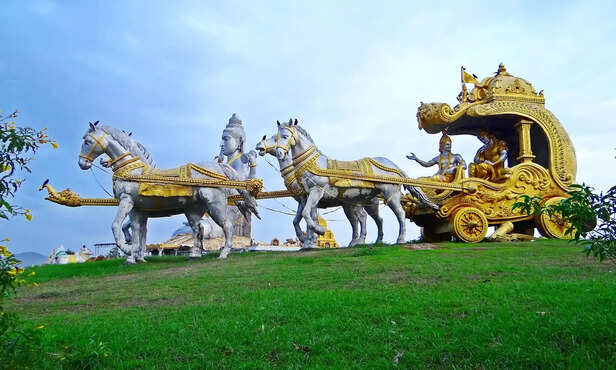
Kurukshetra
Image credit : Pixabay
The central power before the war was the Kuru kingdom, with its capital at Hastinapura in present-day Meerut district of Uttar Pradesh. Archaeological excavations at Hastinapur have revealed Painted Grey Ware layers dated roughly between 1200 BCE and 800 BCE, associated with the later Vedic period.
The Mahabharata describes the near total destruction of the Kuru ruling line. Later Puranic texts mention that a flood of the Ganga destroyed Hastinapur, forcing the capital to shift to Kaushambi. Whether this flood occurred immediately after the war or later, the textual memory suggests political displacement.
Before the war, the upper Gangetic plain and parts of Haryana formed the core of imperial authority. After the war, this region gradually lost dominance, and new political centers emerged elsewhere.
2. Indraprastha and Early Delhi
In the epic era, Indraprastha was a major urban and administrative center. After the war and the departure of the Pandavas, it fades from central importance in literary memory. The region would regain prominence centuries later under different historical dynasties, but the immediate post-war period likely saw decline in centralized authority in this zone.
This marks an early example of a political capital losing relevance after dynastic collapse.
3. Gandhara and Northwestern Integration
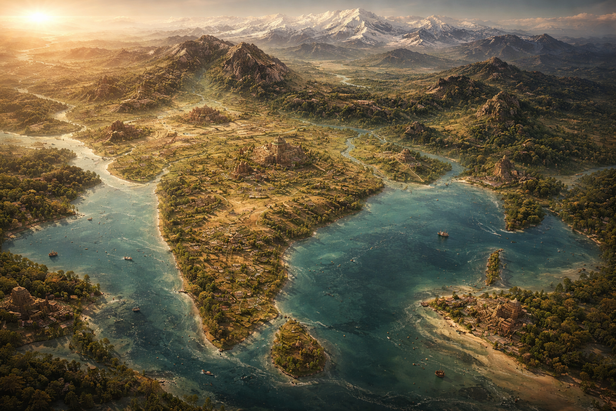
Bharat
Image credit : Ai
The kingdom of Gandhara, associated with Shakuni, corresponds to parts of modern northern Pakistan and eastern Afghanistan, including regions around Peshawar and Kandahar.
In the Mahabharata, Gandhara is fully integrated into the political network of Bharatvarsha. Its participation in royal ceremonies and war alliances indicates a connected civilizational geography that extended beyond modern India’s boundaries.
Over centuries, the northwestern region experienced waves of migrations and foreign rule. While these developments occurred long after the epic period, the weakening of pan-regional political unity after the war may have contributed to the gradual fragmentation of the northwest from the Gangetic heartland.
4. Madra, Sindhu, and the Indus Valley
The Mahabharata reflects a time when the Indus region was central to Indian political life. After the war and subsequent centuries of political change, these areas evolved separately due to shifting trade routes, invasions, and regional developments.
The epic preserves memory of a time when present-day India and Pakistan were part of a shared political and cultural sphere.
5. Kamboja and Central Asian Connections
Its inclusion demonstrates that the geographical imagination of Bharatvarsha extended into regions beyond the current Indian state. Over centuries, Central Asian political developments, migrations, and cultural shifts moved these territories outside the Indic political structure.
The Mahabharata period thus reflects a broader civilizational geography than modern India’s borders.
6. Panchala and Matsya in North India
Both kingdoms suffered severe losses in the war. The destruction of ruling elites would have destabilized governance structures. Over time, these regions evolved into smaller states and later became part of larger imperial formations such as Magadha and the Mauryan Empire.
The war simultaneously weakened multiple northern polities, reshaping regional power balances.
7. Dwaraka and Coastal Change

Dwarka
Image credit : Freepik
Dwaraka, ruled by Krishna, is located in modern Gujarat. The Mahabharata describes its eventual submergence after internal conflict among the Yadavas.
Marine archaeological investigations off the coast of present-day Dwarka have discovered submerged structural remains dated broadly to the second millennium BCE and later periods. Geological studies confirm that the western coastline of India has undergone sea-level changes over millennia.
While debates continue regarding direct correlation, the narrative reflects memory of significant coastal transformation in western India. If Dwaraka declined after the Yadava destruction, this would represent a shift in western maritime power centers.
8. The Rise of Magadha in the East
After the decline of Kuru authority and weakening of western and northwestern kingdoms, the political center of gravity gradually shifted eastward toward the middle and lower Gangetic plains.
This long-term transition from the Saraswati and upper Ganga region to Magadha marks one of the most important geographical shifts in Indian political history.
9. Inclusion of Nepal and Eastern Regions
These regions participated in epic political networks. Over centuries, they developed distinct administrative identities but remained culturally connected within the Indic sphere.
The epic thus reflects a unified cultural geography extending from Afghanistan to Bengal and from the Himalayas to the western coast.