
Mahabharata Happened 26 Times? The Mystery No One Talks About
Nidhi | Mar 26, 2026, 15:04 IST

Mahabharata
Image credit : Ai
Did the Mahabharata happen only once, or has it repeated across cosmic cycles? Ancient Hindu texts suggest time is cyclical, raising the possibility that similar wars between dharma and adharma occur again and again. Some beliefs even claim the Mahabharata happened 26 times. This article explores the truth behind this mystery, decoding Yugas, Kalpas, and the deeper philosophical meaning behind recurring cosmic events.
For most of us, the Mahabharata is a grand epic that happened once in ancient India, a war of dharma versus adharma, of family, power, and fate. But within the depths of Hindu cosmology and Puranic philosophy lies a far more intriguing idea. Time is not linear. It is cyclical. And within these cycles, events like the Mahabharata may not be unique, but recurring.
Some interpretations suggest that the Mahabharata, or a similar cosmic conflict, has occurred multiple times across different cycles of creation, with the number often cited as 26 in certain traditional beliefs and spiritual discussions.
Is this a literal truth, a symbolic idea, or a misunderstood concept? Let us explore.
![Clock Without Hands]()
Unlike modern history, which sees time as a straight line, Hindu philosophy views time as an endless cycle of creation and destruction. The concept of Yugas forms the foundation of this belief.
A full cycle consists of four Yugas: Satya Yuga, Treta Yuga, Dvapara Yuga, and Kali Yuga. The Mahabharata is said to have occurred at the end of Dvapara Yuga, just before the onset of Kali Yuga.
But this cycle does not happen once. It repeats again and again, across millions of years. Each cycle brings similar patterns, similar struggles, and similar turning points.
This opens the possibility that events like the Mahabharata are not one time incidents, but recurring cosmic moments.
To understand repetition, we must go beyond Yugas into larger time scales.
A Kalpa is one day of Brahma, consisting of 14 Manvantaras, and each Manvantara contains multiple Yuga cycles. Within each Manvantara, a new Manu governs humanity, and life evolves again with slight variations.
According to some interpretations of the Puranas, similar divine events unfold in each Manvantara. This includes the appearance of avatars, cosmic wars, and the restoration of dharma.
The Mahabharata war is often linked to such a recurring cosmic need rather than a one time historical event. Over multiple Manvantaras, similar wars may have taken place.
![Temple]()
In the Mahabharata, the presence of Lord Krishna is central. He is considered the eighth avatar of Vishnu, who descends whenever dharma declines.
But Vishnu does not incarnate just once. Across cycles, he appears again and again in different forms, each time to restore balance.
If avatars repeat, then the circumstances that call them into existence must also repeat. This includes conflicts like the Mahabharata.
Thus, the idea that Mahabharata happened multiple times is deeply tied to the cyclical appearance of divine avatars.
One fascinating aspect of this theory is whether the same characters return.
Hindu philosophy speaks of soul continuity and karma cycles. Souls are reborn again and again, carrying impressions from past lives. In different Yugas or cycles, similar souls may take birth with similar roles.
This does not mean the exact same people, but archetypal roles reappear. A warrior like Arjuna, a strategist like Krishna, a complex figure like Karna, and a rigid force like Bhishma can manifest again in different forms.
The Mahabharata then becomes less about individuals and more about eternal human tendencies playing out repeatedly.
The claim that Mahabharata happened 26 times is not directly stated in mainstream scriptures like the critical editions of the Mahabharata. However, it appears in certain traditional interpretations, oral beliefs, and extrapolations from cosmological cycles.
Some scholars and spiritual thinkers interpret the number symbolically. It may represent repeated occurrences across specific Manvantaras or cycles within a Kalpa.
Rather than a precise historical count, 26 can be understood as a way of expressing multiplicity, suggesting that the event has occurred many times, far beyond a single instance.
![Mahabharata]()
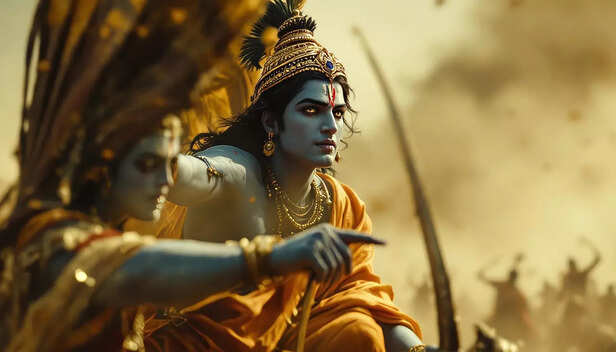
If we step back, the Mahabharata is not just a battle between two families. It is a clash between dharma and adharma, truth and illusion, duty and desire.
These conflicts are timeless. They exist in every age, every society, and even within every individual.
From this perspective, the Mahabharata is not bound to one date in history. It is a repeating pattern of human and cosmic behavior. Whenever imbalance grows, a Mahabharata unfolds in some form.
This is why its lessons remain relevant even today.
Some interpretations suggest that the Mahabharata, or a similar cosmic conflict, has occurred multiple times across different cycles of creation, with the number often cited as 26 in certain traditional beliefs and spiritual discussions.
Is this a literal truth, a symbolic idea, or a misunderstood concept? Let us explore.
1. Time in Hinduism Is Cyclical, Not Linear
Clock Without Hands
Image credit : Freepik
Unlike modern history, which sees time as a straight line, Hindu philosophy views time as an endless cycle of creation and destruction. The concept of Yugas forms the foundation of this belief.
A full cycle consists of four Yugas: Satya Yuga, Treta Yuga, Dvapara Yuga, and Kali Yuga. The Mahabharata is said to have occurred at the end of Dvapara Yuga, just before the onset of Kali Yuga.
But this cycle does not happen once. It repeats again and again, across millions of years. Each cycle brings similar patterns, similar struggles, and similar turning points.
This opens the possibility that events like the Mahabharata are not one time incidents, but recurring cosmic moments.
2. The Idea of Kalpas and Manvantaras
A Kalpa is one day of Brahma, consisting of 14 Manvantaras, and each Manvantara contains multiple Yuga cycles. Within each Manvantara, a new Manu governs humanity, and life evolves again with slight variations.
According to some interpretations of the Puranas, similar divine events unfold in each Manvantara. This includes the appearance of avatars, cosmic wars, and the restoration of dharma.
The Mahabharata war is often linked to such a recurring cosmic need rather than a one time historical event. Over multiple Manvantaras, similar wars may have taken place.
3. The Concept of Repeating Avatars
Temple
Image credit : Freepik
In the Mahabharata, the presence of Lord Krishna is central. He is considered the eighth avatar of Vishnu, who descends whenever dharma declines.
But Vishnu does not incarnate just once. Across cycles, he appears again and again in different forms, each time to restore balance.
If avatars repeat, then the circumstances that call them into existence must also repeat. This includes conflicts like the Mahabharata.
Thus, the idea that Mahabharata happened multiple times is deeply tied to the cyclical appearance of divine avatars.
4. Are the Characters the Same Each Time?
Hindu philosophy speaks of soul continuity and karma cycles. Souls are reborn again and again, carrying impressions from past lives. In different Yugas or cycles, similar souls may take birth with similar roles.
This does not mean the exact same people, but archetypal roles reappear. A warrior like Arjuna, a strategist like Krishna, a complex figure like Karna, and a rigid force like Bhishma can manifest again in different forms.
The Mahabharata then becomes less about individuals and more about eternal human tendencies playing out repeatedly.
5. The Number 26, Where Does It Come From
Some scholars and spiritual thinkers interpret the number symbolically. It may represent repeated occurrences across specific Manvantaras or cycles within a Kalpa.
Rather than a precise historical count, 26 can be understood as a way of expressing multiplicity, suggesting that the event has occurred many times, far beyond a single instance.
6. Mahabharata as a Cosmic Pattern, Not Just a War
Mahabharata
Image credit : Pixabay
If we step back, the Mahabharata is not just a battle between two families. It is a clash between dharma and adharma, truth and illusion, duty and desire.
These conflicts are timeless. They exist in every age, every society, and even within every individual.
From this perspective, the Mahabharata is not bound to one date in history. It is a repeating pattern of human and cosmic behavior. Whenever imbalance grows, a Mahabharata unfolds in some form.
This is why its lessons remain relevant even today.