
Overthinking Everything? Not Chanting Hanuman Ji’s Name Is a Mistake
Nidhi | Jan 06, 2026, 12:42 IST

Hanuman Ji
Overthinking is often mistaken for intelligence or responsibility, but in Sanatan wisdom it is a sign of an unanchored mind. This article explores why chanting Hanuman Ji’s name has traditionally been recommended for mental restlessness, fear, and excessive thinking. Rooted in scriptural understanding and practical guidance, it explains how chanting works as a discipline for the mind rather than a ritual for escape. With a structured, step-by-step approach, the article shows how Hanuman Ji’s name restores inner strength, steadiness, and clarity in everyday life, especially for those struggling with constant mental noise.
“मन एव मनुष्याणां कारणं बन्धमोक्षयोः”
The scriptures remind us that the mind alone is the cause of bondage and liberation. It is not the world that binds us first, but the way the mind reacts to it.
Sanatan Dharma never treated the restless mind as a weakness. It treated it as a powerful force that must be disciplined. That is why the tradition never asks the mind to be silenced. It asks the mind to be anchored.
In the Ramayana, Hanuman Ji is praised not first for strength, but for mastery over thought. He moved faster than the wind, faced impossible situations, and carried immense responsibility, yet his mind never collapsed into fear or doubt.
This is why the verse describing him begins with the mind itself:
“मनोजवं मारुततुल्यवेगं
जितेन्द्रियं बुद्धिमतां वरिष्ठम्”
A mind swift as the wind, senses under control, intelligence rooted in discipline. This is not symbolic praise. It is instruction.
Overthinking is not a modern illness. It is an ancient human condition. What has changed is that people now believe thinking more will solve it. Our traditions taught the opposite. A mind caught in endless thought cannot be argued into peace. It must be given strength, rhythm, and direction.
![Tension]()
The first step is honesty. Overthinking often pretends to be problem-solving, but in reality it is the same thoughts repeating without progress. When you notice the same worries returning again and again, pause and acknowledge that the mind is looping. This recognition alone reduces pressure, because you stop treating every thought as urgent or meaningful.
At this stage, do not look for answers. The mind does not need more content. It needs an anchor. Choose one simple word: Hanuman.
An overthinking mind resists anything that feels heavy or demanding. That is why chanting must begin small. Start by chanting Hanuman Ji’s name 11 times, slowly and clearly. This is not about devotion or rules. It is about breaking the momentum of mental noise.
The moment repetition begins, attention gathers. The mind moves from scattered thinking to directed awareness.
![Chant Hanuman Chalisa the Right Way]()
Overthinking is supported by shallow breathing and constant inner tension. Chanting becomes far more effective when it is aligned with breath. Inhale normally, and chant “Hanuman” slowly on the exhale.
This naturally lengthens breathing and signals safety to the nervous system. Hanuman Ji is associated with prana, the life force carried by breath. When breath steadies, thought follows.
Chanting only during anxiety limits its power. The mind needs daily training, not emergency fixes. Fix one time each day—either morning before engaging with the world or night before sleep.
Choose a sustainable count such as 21 or 108 repetitions. Regularity matters more than duration. Over time, the mind begins returning to calm faster, even during stressful situations.
Overthinking thrives on confusion. Chanting becomes more effective when paired with one clear intention. Choose a single line and repeat it silently after chanting, such as asking for strength, clarity, or freedom from fear.
This gives the mind direction. Instead of scattering into many worries, mental energy gathers around one purpose.
Overthinking continues when action is delayed. After chanting, take one small but definite step and stop revisiting it. This could be completing one task, sending one message, or making one decision.
Hanuman Ji represents decisive action guided by clarity. Movement breaks mental loops.
![Mental wellbeing]()
Overthinking spikes during specific moments—before meetings, after conversations, while waiting for results, or at night. During these moments, silently chant Hanuman Ji’s name a few times while slowing your breath.
This prevents spirals before they fully form and trains the mind to respond with grounding instead of panic.
The goal is not to eliminate thoughts completely. The true sign that chanting is working is faster recovery. Thoughts lose grip sooner, emotional reactions soften, and mental exhaustion reduces.
This is inner strength rebuilding itself quietly.
The scriptures remind us that the mind alone is the cause of bondage and liberation. It is not the world that binds us first, but the way the mind reacts to it.
Sanatan Dharma never treated the restless mind as a weakness. It treated it as a powerful force that must be disciplined. That is why the tradition never asks the mind to be silenced. It asks the mind to be anchored.
In the Ramayana, Hanuman Ji is praised not first for strength, but for mastery over thought. He moved faster than the wind, faced impossible situations, and carried immense responsibility, yet his mind never collapsed into fear or doubt.
This is why the verse describing him begins with the mind itself:
“मनोजवं मारुततुल्यवेगं
जितेन्द्रियं बुद्धिमतां वरिष्ठम्”
A mind swift as the wind, senses under control, intelligence rooted in discipline. This is not symbolic praise. It is instruction.
Overthinking is not a modern illness. It is an ancient human condition. What has changed is that people now believe thinking more will solve it. Our traditions taught the opposite. A mind caught in endless thought cannot be argued into peace. It must be given strength, rhythm, and direction.
Step 1: Recognise When the Mind Is Looping, Not Solving

Tension
Image credit : Freepik
The first step is honesty. Overthinking often pretends to be problem-solving, but in reality it is the same thoughts repeating without progress. When you notice the same worries returning again and again, pause and acknowledge that the mind is looping. This recognition alone reduces pressure, because you stop treating every thought as urgent or meaningful.
At this stage, do not look for answers. The mind does not need more content. It needs an anchor. Choose one simple word: Hanuman.
Step 2: Start Chanting Small to Avoid Mental Resistance
The moment repetition begins, attention gathers. The mind moves from scattered thinking to directed awareness.
Step 3: Sync Chanting With the Breath
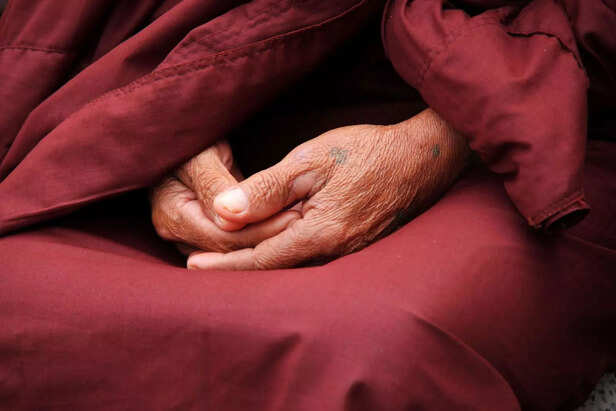
Chant Hanuman Chalisa the Right Way
Image credit : Pexels
Overthinking is supported by shallow breathing and constant inner tension. Chanting becomes far more effective when it is aligned with breath. Inhale normally, and chant “Hanuman” slowly on the exhale.
This naturally lengthens breathing and signals safety to the nervous system. Hanuman Ji is associated with prana, the life force carried by breath. When breath steadies, thought follows.
Step 4: Make Chanting a Daily Mental Discipline
Choose a sustainable count such as 21 or 108 repetitions. Regularity matters more than duration. Over time, the mind begins returning to calm faster, even during stressful situations.
Step 5: Add One Clear Intention to Guide the Mind
This gives the mind direction. Instead of scattering into many worries, mental energy gathers around one purpose.
Step 6: Follow Chanting With One Decisive Action
Hanuman Ji represents decisive action guided by clarity. Movement breaks mental loops.
Step 7: Use Chanting During Trigger Moments

Mental wellbeing
Image credit : Freepik
Overthinking spikes during specific moments—before meetings, after conversations, while waiting for results, or at night. During these moments, silently chant Hanuman Ji’s name a few times while slowing your breath.
This prevents spirals before they fully form and trains the mind to respond with grounding instead of panic.
Step 8: Measure Progress by Recovery, Not Silence
This is inner strength rebuilding itself quietly.