The broom comes out weeks before the diyas. Mattresses are dragged into sunlight, cupboards emptied onto beds, old letters and broken objects finally faced. Most families treat this as an annual inconvenience. The original understanding was that the cleaning was the ritual, not preparation for it.
Lakshmi Does Not Enter Where Arishadvarga Lingers
The classical texts frame pre-Diwali purification around one practical concern: Lakshmi, the goddess of prosperity and auspicious entry, does not settle where the six enemies of the mind, kama, krodha, lobha, moha, mada, matsarya, desire, anger, greed, delusion, pride, and envy, have been allowed to accumulate unchecked. These are not metaphors for bad moods. The Bhagavad Gita names them directly in chapter sixteen, verses one through three and twenty-one, as the qualities that close a person off from clarity. The house, in this framework, is an extension of the mind that inhabits it. Clutter is not merely disorganised objects. It is the physical record of postponed decisions, unresolved attachments, and things kept out of guilt rather than love. Cleaning before Diwali was the annual reckoning with all of it.
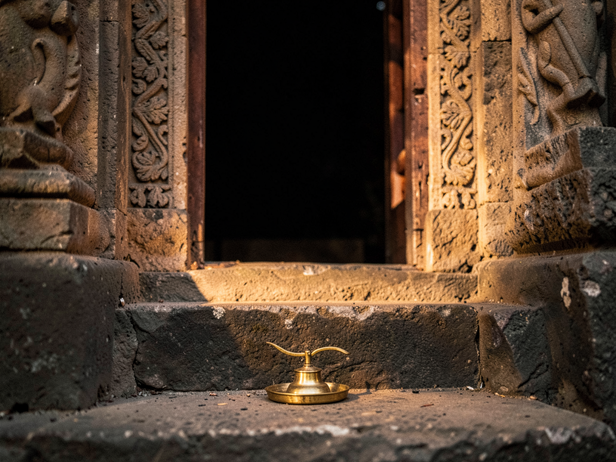
![Warm Light at Threshold]()
Warm Light at Threshold
Image credit : AI
I prepare for Diwali cleaning, a ritual of purification and spiritual significance.
The Specific Logic of Emptying, Not Just Tidying
There is a difference between cleaning and emptying, and the tradition insists on the latter. You take everything out before you put anything back. This is not efficient housekeeping advice. It is a forced confrontation. When a cupboard is emptied completely, you must hold every object and decide again whether it belongs in your life. The broken thing you kept meaning to fix. The gift you never used but feel obligated to store. The papers from a year that is over. The tradition understood that a house fills with the weight of unmade choices, and that weight is what Lakshmi is said to avoid. The goddess of abundance is also, in her classical description, the goddess of discernment, she is depicted in the Vishnu Purana as one who chooses where she rests with care. The emptying is an act of making the house worthy of a considered choice.
Dhanteras and the Order of the Ritual
The cleaning precedes Dhanteras, which precedes Diwali itself, and the sequence matters. Dhanteras, the thirteenth lunar day of Krishna Paksha in Kartik, marks the arrival of Dhanvantari, the physician of the gods, carrying the pot of amrita from the ocean of milk. The day is associated with health and the removal of what harms the body and the household. Purchasing new metal on Dhanteras is the known practice. The less observed one is that the house should already be clean before the new enters it. You do not bring abundance into disorder. The ritual sequence encodes a principle: clear first, then invite. The cleaning is not the preamble. It is the first act of worship.
![Ancient Manuscript, Sacred Light]()
Ancient Manuscript, Sacred Light
Image credit : AI
Preparing for Diwali cleaning ritual meaning, this ancient manuscript symbolizes the purification of knowledge.
What the Smoke and the Light Were Actually Doing
The diyas lit on Diwali night are not decorative. In the older understanding, fire consumes what lingers. Homes were fumigated with dhoop, resins, dried herbs, cow dung cakes, before the lamps were placed. The smoke was understood to move through corners and thresholds and carry out what sweeping could not reach. This is consistent with the Atharva Veda's understanding of purification through fire and smoke as agents that break up stagnant energy in a space. The lamp that follows the smoke is not a celebration of cleanliness. It is an invitation extended into a space that has been made ready. The distinction is between illuminating a room and consecrating one. The cleaning, the emptying, the smoke, the light, they form a single continuous act, not a cleaning day followed by a festival.
The Year's Residue and the Annual Reset
Every household accumulates a year's worth of things that were never properly finished. Conversations that ended badly and were never returned to. Objects that belonged to someone who is gone. Rooms that became repositories for everything that had no other place. The pre-Diwali cleaning, at its original depth, was the one moment in the year when a household was asked to look at all of it honestly. Not to throw everything away, but to decide again, consciously, what belongs. The tradition did not promise that the cleaning would resolve grief or repair what was broken. It asked only that nothing be kept by default. Lakshmi's arrival, in this reading, is not a reward for a tidy house. It is what becomes possible in a house where the people inside it have stopped avoiding what they have been carrying.