The oldest Atash Behram in India has been burning since 1742. The priests who tend it today are the latest in an unbroken chain of men who have never let the flame touch the open air, never let an uninitiated eye see it directly, and never once let it go out. That is not a metaphor for devotion. It is the actual job.
What the Fire Is, and What It Is Not
Fire in Zoroastrianism is not worshipped as a god. That distinction matters to every Parsi who has had to explain it to a curious outsider. Atar, the sacred fire, is understood as the visible form of Ahura Mazda's light, a witness, a medium, a point of contact between the mortal and the divine. The Avestan texts describe fire as the son of Ahura Mazda, the highest deity in Zoroastrian theology, and the Yasna liturgy addresses it directly in prayer. But the fire is not itself the object of worship. It is closer to what a consecrated altar is in other traditions: the place where the sacred becomes locatable.
There are three grades of sacred fire in Zoroastrian practice. The Dadgah is the lowest, maintained in homes and smaller prayer halls. The Agiary, or Atash Adaran, is a higher grade kept in most fire temples. The Atash Behram, the Fire of Victory, is the highest grade, and there are only nine of them left in the world. Eight are in India, concentrated in Mumbai and Udvada. One is in Iran, in Yazd. The consecration of an Atash Behram requires sixteen different categories of fire to be ritually purified and combined, drawn from sources including lightning-struck wood, a cremation pyre, a brick kiln, and the hearth of a king or a man of high standing. The process, done correctly, takes more than a year.
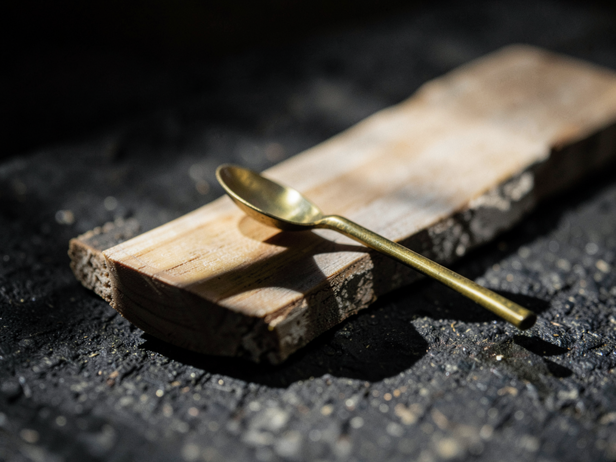
![Brass Ladle on Sandalwood]()
Brass Ladle on Sandalwood
Image credit : AI
A brass ladle rests near sandalwood, evoking a sense of ritual. This image hints at traditions like those found in Parsi fire temples.
The Discipline of Tending
A priest who enters the inner sanctum of an Atash Behram follows a protocol that has not changed in its essentials for centuries. He has bathed. He wears a padam, a cloth mask tied at the nose and mouth, so his breath does not contaminate the fire. He carries the sandalwood and frankincense, loban, on a ladle, never in bare hands. He feeds the fire sixteen times in every twenty-four hours, at intervals tied to the Zoroastrian division of the day into five watches, called Gehs. The feeding is not symbolic. The fire is a living thing under his care, and if it dims between feedings, that is a failure of the watch.
The wood used is almost always sandalwood or other hardwoods that burn cleanly. The smoke must be pure. The ash is collected and treated as sacred material, not discarded. Visitors to the outer hall of an Atash Behram may receive a small mark of this ash on their forehead, the way a Hindu devotee receives kumkum at a temple, a gesture of blessing from the same fire that has been burning since before anyone alive can remember.
Udvada and the Iranshah
The most sacred of the nine Atash Behrams is the Iranshah, housed in the small coastal town of Udvada in Gujarat. Its name means King of Iran, and its origin story is the story of the Parsi migration itself. When Zoroastrians fled the Arab conquest of Persia in the seventh and eighth centuries CE, they carried fire with them across the sea. The Iranshah, according to tradition, is that original fire, or rather, the direct descendant of it, maintained without interruption through every displacement and every difficulty the community has faced since landing on the Sanjan coast.
Udvada is a pilgrimage town in a way that is easy to underestimate from the outside. It is small, quiet, and not on the way to anything else. But on Zoroastrian holy days, and especially on the Iranshah's own anniversary, Parsis travel there from Mumbai, from Pune, from the diaspora in London and Toronto and Houston, to stand in the outer hall and be in the presence of that fire. The Iranshah does not move. The community moves toward it.
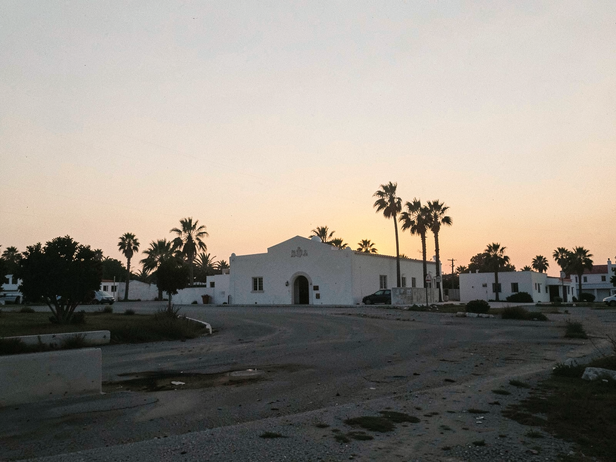
![Coastal Dawn Serenity]()
Coastal Dawn Serenity
Image credit : AI
I observe the tranquil dawn over a coastal town, a scene reminiscent of the sacred fire traditions of the Parsi community.
Why It Cannot Be Allowed to Go Out
The short answer is theological. An Atash Behram that goes out is not simply a fire that needs relighting. The consecration process that created it, those sixteen fire-sources, that year of ritual, cannot be repeated casually. The community of initiated priests required to perform it correctly is shrinking. The Parsi population in India, which numbered around 114,000 at the 2011 census and has continued to decline since, does not have an inexhaustible supply of Athornans, the hereditary priestly class. Relighting a sacred fire at the Atash Behram grade is not impossible, but it is a generational undertaking, and each generation is smaller than the last.
The longer answer is that the fire is a continuous thing. Its continuity is the point. A fire that has burned for two hundred and eighty years without interruption is not the same object as a fire lit yesterday from the same wood in the same room. The thread of time is part of what makes it sacred. Letting it go out would not just be a logistical problem. It would be the end of something that cannot be started again, only approximated.
A Community and Its Flame
The Parsi community's relationship with its fire temples is complicated in ways that the temples themselves do not show. Non-Zoroastrians are not permitted inside an Atash Behram, a rule that has generated both resentment from outsiders and genuine internal debate. Some Parsis argue the restriction is cultural defensiveness dressed as theology. Others hold that the consecration of the space depends on the ritual purity of everyone in it, and that purity, in this context, is a technical condition, not a moral judgment. The debate has not been resolved, and the fire burns regardless.
What is not in dispute is what the fire represents to the people who can enter. For a community that has watched its numbers fall for a century, that has seen its neighbourhoods in Mumbai slowly emptied of the next generation, the Atash Behram is the one thing that has not diminished. It is older than any living Parsi. It will, if the community holds, outlast every one of them. The priests who tend it are not preserving a relic. They are keeping a promise made by people who crossed an ocean with fire in a vessel, and decided that whatever else they lost, this would not be among it.