The river is cold at dusk, and the sun is already half gone. Devotees stand waist-deep, arms raised, offering arghya to a star that is, by any ordinary logic, on its way out. The rising sun will come tomorrow, bright and unambiguous. Yet the setting sun receives the first offering. Chhath Puja is one of the few solar festivals anywhere in the world that structures its central ritual this way, and the reason cuts to the heart of what the tradition is actually saying about time, power, and what deserves to be honoured first.
The Sun That Is Leaving Is the One Already Proven
The setting sun has completed its arc. It has given the day everything it was going to give, light, warmth, the conditions for life to continue. The rising sun at dawn is a promise. The setting sun at dusk is a record. In the logic of Chhath, gratitude is owed to what has already delivered, not to what might deliver. Offering arghya to Sandhya Surya, the evening sun, is an acknowledgement that the gift came first, and the thanks follows after. This is a reversal of the transactional instinct, which is to honour power while it can still do something for you. The Chhath sequence refuses that instinct entirely.
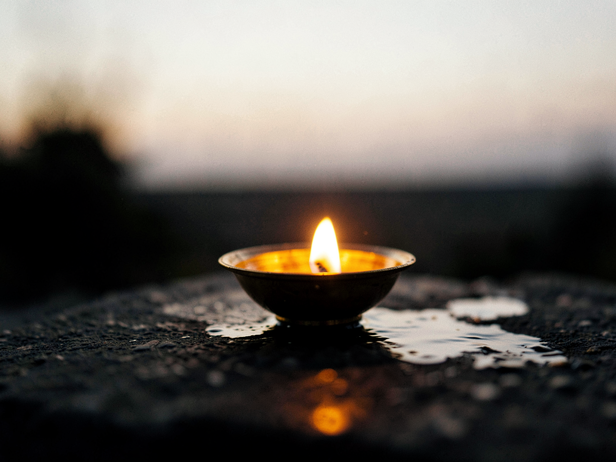
![Brass Diya's Golden Glow]()
Brass Diya's Golden Glow
Image credit : AI
A single brass diya illuminates the darkness, its warm flame a symbol of devotion, perhaps for the Sandhya Arghya meaning Chhath.
Darkness Is Not the Opposite of the Sacred, It Is Part of the Cycle
Most ritual systems treat darkness as a problem to be overcome or a period to be endured. Chhath treats the transition into darkness as a moment worth marking with the highest act of worship in the festival. The sun does not become less sacred as it sets. The tradition holds that Surya passes through the lower world during the night, sustaining what exists beneath the visible horizon, before returning at dawn. The first arghya is offered at the threshold of that invisible journey. It is not farewell. It is acknowledgement that the work continues even when it cannot be seen. This is why the vrat, the fast, runs through the night between the two arghyas. The devotee stays awake with the sun's unseen passage.
The Rising Sun Receives the Second Arghya, Not a Lesser One
Morning arghya at Usha Surya is not a consolation offering. It marks the completion of the full cycle, the sun has moved through darkness and returned. The sequence is deliberate: evening first, morning second, because the tradition is tracing a complete arc rather than celebrating a single moment. A festival that opened with the rising sun would be celebrating beginning. By opening with the setting sun, Chhath celebrates wholeness. The two arghyas together enclose the night. Neither means anything without the other, but the order matters because it establishes what the festival is about: not the hope of a new day, but the continuity of the one that never actually stopped.
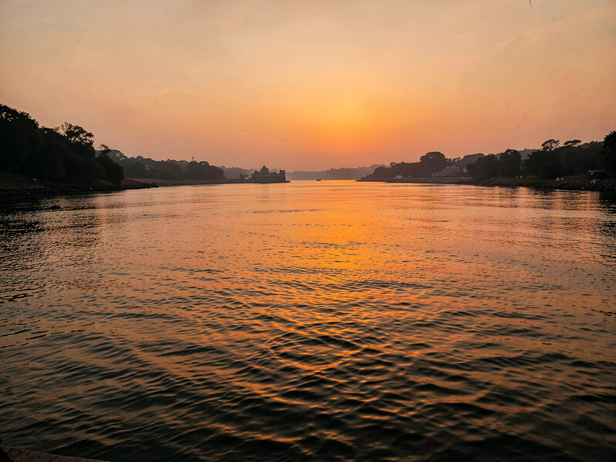
![River Dusk Amber Glow]()
River Dusk Amber Glow
Image credit : AI
I observe the river's tranquil beauty at dusk, a perfect setting for the Sandhya Arghya meaning in Chhath Puja.
The Ritual Geography of Standing in Water
Devotees do not offer arghya from the bank. They enter the river or the tank and stand in it. Water in this context is not a backdrop; it is a third element in the offering alongside the devotee and the sun. The Ganga, the Kosi, the Gandak, the lakes of Patna and Darbhanga, these are not interchangeable locations. The water connects earth to sky, the visible to the invisible, the devotee's body to something larger than the body. Standing in it during the transition from day to night places the person physically at the threshold the ritual is describing. The arghya, lifted in cupped hands and poured toward the horizon, traces the same arc the sun is completing. The gesture and the moment are the same shape.
What the Sequence Teaches About Gratitude
The Chhath ritual order encodes a specific understanding: that the appropriate time to give thanks is after the gift, not before it, and that power deserves honour even, especially, in its diminished form. A sun at full noon is easy to worship. A sun at the waterline, already half swallowed by the horizon, asks something more of the worshipper. The tradition asks for it anyway, and asks for it first. The rising sun tomorrow will be brilliant and warm and easy to face. The setting sun tonight requires the devotee to walk into cold water and hold their offering toward something that is already leaving. That difficulty is the point. The first arghya goes to the setting sun because gratitude that costs nothing is not the kind this festival is interested in.