The eight limbs of Patanjali's Ashtanga path are not a menu. They are a sequence, and the fifth one, pratyahara, is the hinge the whole structure turns on. Strip it out, and what looks like a spiritual practice is, technically, a very disciplined form of sensory stimulation.
What the Word Actually Means
The Sanskrit breaks into prati, meaning against or away, and ahara, meaning food or that which is taken in. Pratyahara is the withdrawal of the senses from their objects, not suppression, not numbness, but a voluntary turning inward. Patanjali defines it in the Yoga Sutras, Chapter 2, verse 54: when the sense organs cease to follow their respective objects and take on the form of the mind itself, that is pratyahara. The senses do not go blank. They redirect. They stop feeding outward and begin attending to whatever the mind is actually doing.
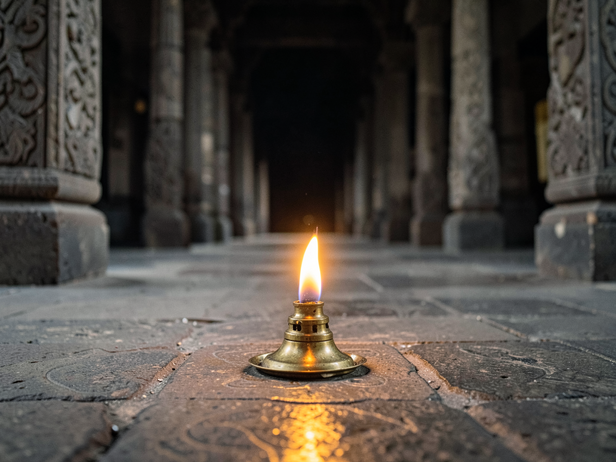
![Temple Lamp's Golden Glow]()
Temple Lamp's Golden Glow
Image credit : AI
The lamp's warm glow offers a moment of stillness, a visual representation of the withdrawal of senses in yoga.
Where It Sits and Why That Placement Matters
The eight limbs move from the outermost to the innermost: yama and niyama govern conduct, asana steadies the body, pranayama regulates the breath, and then pratyahara arrives before dharana, dhyana, and samadhi. The first four limbs are called bahiranga, external. The last three are antaranga, internal. Pratyahara is the threshold between them. Patanjali calls the final three together dharana, dhyana, and samadhi, samyama, the inner discipline, and none of them is accessible while the senses are still pulling attention outward. Skipping pratyahara and attempting meditation is like trying to fill a vessel with a hole in it. The concentration drains back out through the eyes, the ears, the restless hands reaching for a phone.
Why Modern Practice Skips It
The honest answer is that pratyahara is uncomfortable in a way that a difficult asana is not. A difficult asana gives the practitioner something to work against, a visible edge, a measurable improvement, an Instagram frame. Pratyahara offers none of that. It is the practice of making the senses boring to themselves, and boredom, for a mind trained on constant input, feels like failure rather than progress. There is also a structural problem with how yoga is taught outside its traditional context. Most modern classes move from asana into savasana and call the lying-still portion meditation. Savasana is rest. It is not pratyahara, and it is not meditation. Pratyahara requires active withdrawal, a practitioner who has practised trataka, the steady gazing at a fixed point until external objects stop registering, or who has sat in silence long enough that the sounds of the room stop pulling the mind toward them, knows the difference immediately. That kind of sitting is not offered in a sixty-minute studio class because it cannot be scheduled, sequenced, or sold as a skill level.
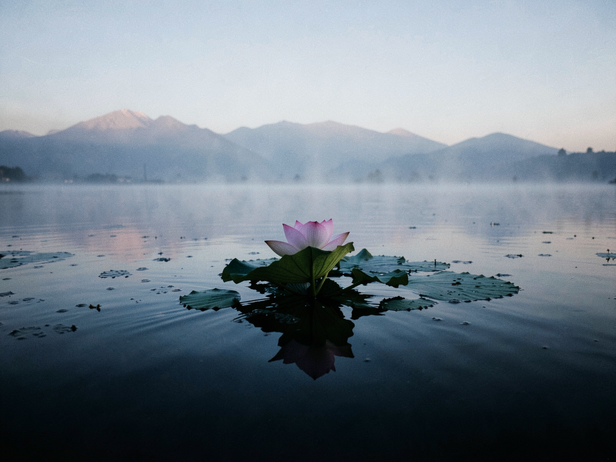
![Dawn Lotus Mist]()
Dawn Lotus Mist
Image credit : AI
I observe the serene withdrawal of senses, like this lotus at dawn, embracing the quietude.
What Pratyahara Actually Looks Like in Practice
Classical texts describe several approaches. Trataka, steady, unblinking focus on a flame or a fixed point, trains the visual sense to hold rather than wander. Nada yoga, sustained listening to internal sound, redirects the auditory sense inward. Yoga Nidra in its original form, before it became a sleep-aid product, was a systematic pratyahara practice: the practitioner rotates awareness through the body without moving, teaching the senses to receive instruction from the mind rather than from external stimuli. What these practices share is duration and deliberate disengagement from novelty. The mind is not given something interesting to look at. It is given the instruction to stop looking outward at all, and then left to discover what remains. What remains, for most practitioners who sit long enough, is a surprising amount of noise, memory, craving, aversion, the running commentary that asana and pranayama can temporarily quiet but cannot dissolve. Pratyahara makes that noise audible, which is exactly why it is avoided, and exactly why Patanjali placed it where he did.
The Consequence of Skipping It
A practitioner who moves directly from pranayama into an attempt at dharana, concentrated attention on a single object, is attempting to build the sixth limb on ground the fifth limb was meant to prepare. The concentration will hold for a few seconds and then scatter. This is not a failure of will. It is a structural gap. The senses have not been trained to withdraw, so they continue to pull. The mind chases them. The practitioner decides they are bad at meditation and returns to asana, which gives them something concrete to improve. The cycle is self-reinforcing. What changes it is not a better meditation technique. It is the patient, unglamorous work of pratyahara, sitting with the senses until they stop insisting, and noticing, for the first time, what the mind is like when it is left alone with itself. That is the ground Patanjali was pointing toward. Everything after it grows from there.