
Death Is Not the End: Here’s What Happens According to 10 Religions
Nidhi | Feb 23, 2026, 13:04 IST

Sage
Image credit : Pexels
What happens after we die? Different religions offer powerful and deeply meaningful answers. From heaven and hell in Christianity and Islam to reincarnation in Hinduism and Buddhism, and spiritual liberation in Sikhism, this article explores what 10 major religions believe about life after death. Discover how faith traditions across the world interpret the afterlife, judgment, rebirth, and the soul’s journey beyond physical existence.
“जन्म मृत्यु सत्य मानव का,
आत्मा नष्ट न होई कभी;
धर्म बताये पथ विभिन्न रूपे,
मृत्यु के बाद जीव चले कही।”
Death has always been one of the most mysterious questions humanity has faced. Across time and cultures, religions have offered explanations about what happens after we leave our physical body. Some speak of eternal life, others of rebirth, and some describe the soul’s journey in symbolic or mystical terms. These beliefs shape how billions around the world find meaning, comfort, and moral direction in life and in facing death.
While the details vary widely, most religious traditions agree that death is not the end of existence. Instead, what comes after death reflects the core spiritual teachings of each faith about the soul, morality, and the ultimate purpose of life.
![Death]()
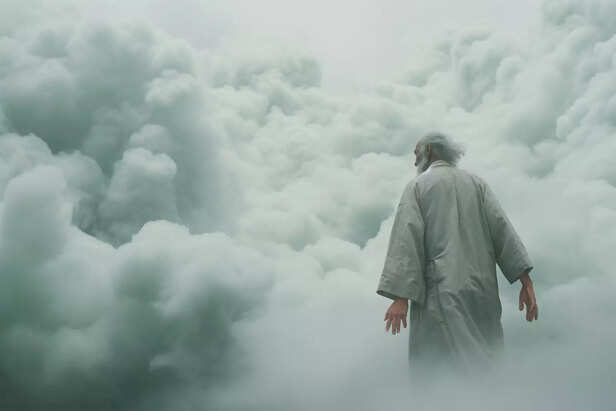
In Christianity, the afterlife centers on the belief that death is a transition from this physical world to an eternal reality. Christians generally believe that after death the soul continues and eventually faces divine judgment. Those who have lived faithfully and accepted Jesus Christ are believed to enter Heaven, a state of eternal peace and union with God. Those who reject divine guidance face separation from God, often described as Hell. Some traditions also emphasize an intermediate purification before entering Heaven.
Christian teachings use images like the “eternal banquet” and the presence of God to describe a future beyond earthly life.
In Islam, death is not the end of existence but the beginning of what is called Akhirah or the Hereafter. According to Islamic belief, when a person dies, the soul awaits the Day of Judgment. On this day, all individuals will be resurrected and judged by Allah based on their deeds. The righteous are promised Jannah (Paradise), a place of joy and light. Those whose lives were ruled by wrongdoing are said to enter Jahannam (Hell).
This belief emphasizes accountability for one’s actions and moral responsibility throughout life.
![manikarnika-ghat-city]()
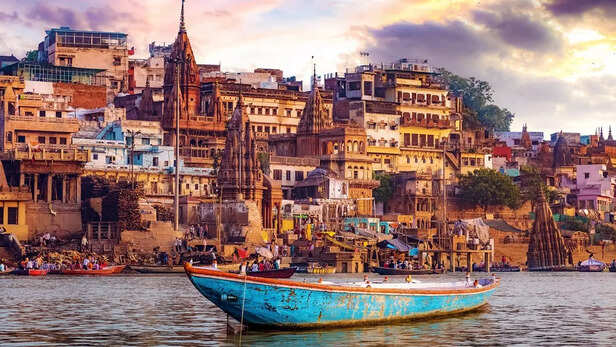
Hinduism views death as part of a continuing cycle of existence known as samsara. In this worldview, the soul undergoes repeated birth, death, and rebirth based on karma, the moral record of actions in life. Good deeds may lead to a better rebirth, while negative actions can result in hardship. Liberation from this cycle — called moksha - is the ultimate goal, representing freedom from suffering and union with the divine.
In this understanding, life and death are part of an ongoing spiritual journey.
Buddhism also teaches a type of rebirth, though it differs from the Hindu idea of a permanent soul relocating to a new body. Instead, Buddhism focuses on a stream of consciousness influenced by ethical conduct and intention. This stream continues until the one attains Nirvana, a state of liberation from desire, suffering, and the cycle of rebirth.
In this view, death is not the end but a step in a larger spiritual process.
Judaism’s teachings on the afterlife are diverse and more varied than in many other religions. Some Jewish traditions speak of the World to Come (Olam Ha-Ba), where the righteous experience closeness to God after death. Others emphasize that the focus of life should be on moral living in the present, with less emphasis on specific details about the afterlife. Historical beliefs include resurrection at the end of days, though interpretations vary among different Jewish communities.
Sikhism teaches that human life is part of a broader spiritual order and that physical death is simply the release of the soul from the body. According to Sikh teachings, there is no permanent separation between life and death in the ultimate sense. Instead, the soul returns to its primal source, the divine reality from which all life emerges. This belief suggests that death dissolves the outer form, but life continues as unity with the Creator.
Sikhism frames afterlife as continuity in spiritual identity with God.
In Zoroastrian teaching, the soul faces a spiritual judgment immediately after death at a place called the Chinvat Bridge. Here, one’s deeds are weighed and guide where the soul goes next. The righteous are led toward the House of Song, a realm of goodness and peace, while the unrighteous may fall toward darker realms. Ultimately, some traditions within Zoroastrianism believe in a future final renewal where all souls are purified and restored.
![Elysium]()
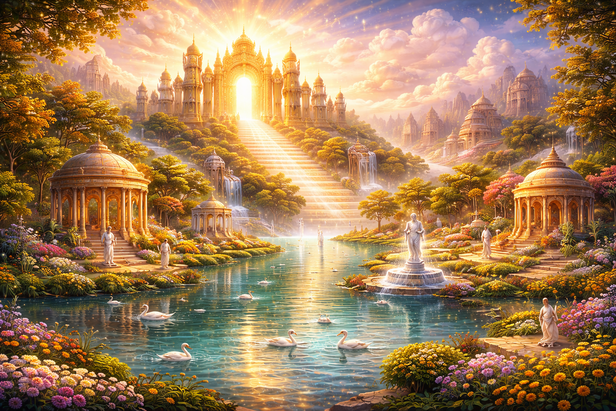
In many ancient pagan traditions, the afterlife was seen as the soul’s journey to the Land of Ancestors or the Underworld. For example, ancient Greek mythology described places such as Elysium for honored souls and Tartarus for those who faced punishment. While not contemporary religions in many cases, these beliefs influenced later cultures and spiritual stories.
Though not always described with fixed destinations like heaven or hell, Taoist thought often emphasizes returning to harmony with the Way (Tao) after death. In this perspective, life and death are part of cosmic balance, and the spirit continues in forms aligned with natural energy. Death is seen as another transformation in the flow of existence.
While not strictly religious, many secular or humanist perspectives reject an afterlife entirely. From this standpoint, death marks the end of personal consciousness, with no continuation of self or spirit. This view suggests that meaning and legacy lie in the life lived rather than in what follows death.
आत्मा नष्ट न होई कभी;
धर्म बताये पथ विभिन्न रूपे,
मृत्यु के बाद जीव चले कही।”
Death has always been one of the most mysterious questions humanity has faced. Across time and cultures, religions have offered explanations about what happens after we leave our physical body. Some speak of eternal life, others of rebirth, and some describe the soul’s journey in symbolic or mystical terms. These beliefs shape how billions around the world find meaning, comfort, and moral direction in life and in facing death.
While the details vary widely, most religious traditions agree that death is not the end of existence. Instead, what comes after death reflects the core spiritual teachings of each faith about the soul, morality, and the ultimate purpose of life.
1. Christianity: Eternal Life Through Resurrection and Judgment
Death
Image credit : Freepik
In Christianity, the afterlife centers on the belief that death is a transition from this physical world to an eternal reality. Christians generally believe that after death the soul continues and eventually faces divine judgment. Those who have lived faithfully and accepted Jesus Christ are believed to enter Heaven, a state of eternal peace and union with God. Those who reject divine guidance face separation from God, often described as Hell. Some traditions also emphasize an intermediate purification before entering Heaven.
Christian teachings use images like the “eternal banquet” and the presence of God to describe a future beyond earthly life.
2. Islam: Life After Death and Resurrection
This belief emphasizes accountability for one’s actions and moral responsibility throughout life.
3. Hinduism: Rebirth and Liberation Through Karma
manikarnika-ghat-city
Image credit : Pexels
Hinduism views death as part of a continuing cycle of existence known as samsara. In this worldview, the soul undergoes repeated birth, death, and rebirth based on karma, the moral record of actions in life. Good deeds may lead to a better rebirth, while negative actions can result in hardship. Liberation from this cycle — called moksha - is the ultimate goal, representing freedom from suffering and union with the divine.
In this understanding, life and death are part of an ongoing spiritual journey.
4. Buddhism: Rebirth and the Path to Nirvana
In this view, death is not the end but a step in a larger spiritual process.
5. Judaism: A Range of Afterlife Ideas
6. Sikhism: Unity With the Divine Source
Sikhism frames afterlife as continuity in spiritual identity with God.
7. Zoroastrianism: Judgment and the Chinvat Bridge
8. Pagan Beliefs: Land of the Ancestors
Elysium
Image credit : Ai
In many ancient pagan traditions, the afterlife was seen as the soul’s journey to the Land of Ancestors or the Underworld. For example, ancient Greek mythology described places such as Elysium for honored souls and Tartarus for those who faced punishment. While not contemporary religions in many cases, these beliefs influenced later cultures and spiritual stories.