
If Shakti Peethas Truly Hold Shakti, Why Are They Scattered Across India?
Nidhi | Jan 05, 2026, 12:19 IST

Shakti Peethas
Image credit : Ai
Why are Shakti Peethas spread across India instead of existing at one central holy place? This article explores the deeper spiritual, mythological, and philosophical reasons behind the scattering of Shakti Peethas. Moving beyond surface mythology, it explains how the idea of Shakti as a universal, living force shaped sacred geography, pilgrimage traditions, and Shakta philosophy. The article connects ancient texts, symbolism, and belief systems to reveal why Shakti was meant to be experienced everywhere, not confined to a single shrine.
“या देवी सर्वभूतेषु शक्तिरूपेण संस्थिता ।
नमस्तस्यै नमस्तस्यै नमस्तस्यै नमो नमः ॥”
If Devi is everywhere, why do Shakti Peethas feel so specific? Why are they not centered in one “holy capital,” but scattered across India and, in many traditional lists, across the wider subcontinent too?
That question sounds modern, almost logistical. But it actually lands right on the heart of Shakta thought: Shakti is not meant to be locked inside a single shrine. Shakti is meant to be recognized in the whole body of the land, in many forms, through many doors, for many kinds of seekers.
Most Shakti Peetha traditions connect their origin to the Daksha yajna episode: Sati’s self immolation, Shiva’s grief, and Vishnu’s act of cutting the body so cosmic balance could return. Wherever a part or ornament of Sati is believed to have fallen, a Peetha became sacred.
Different texts and regions preserve different lists and counts, commonly 51 or 52, sometimes 64 or 108, with a widely revered set of 18 major Peethas in many traditions.
![Temple]()
The dismemberment motif is not just dramatic mythology. It is a theological message: uncontained grief can dissolve the world, but when the divine is “placed” into the earth, sorrow becomes sadhana. The scattering turns a personal tragedy into a sacred geography.
So the Peethas are not random points. They are “anchors” that translate an overwhelming cosmic event into human scale places where devotion, ritual, and remembrance can actually happen.
A single mega temple could never carry the full range of Devi’s roles. Shakta traditions emphasize that Devi appears as many forms and energies, each with its own “entry point” into the human psyche and social life. A network of Peethas makes room for the many manifestations, each with its own spiritual texture, iconography, and mode of worship.
In simple terms: the Mother is not only protector, not only fierce, not only generous, not only silent. The land needs multiple sanctums to hold multiple intensities.
One of the most powerful ideas behind the Peethas is that Bharatvarsha becomes a living mandala. Sacred sites are not merely “locations to visit.” They are a way to see geography as divine anatomy, where the earth is not separate from the Goddess.
When a tradition maps holiness across distance, it is saying: the sacred is not a single throne, it is an embodied presence spread through the world.
Many Peetha listings come through Tantric and Puranic streams, where power is approached through linked nodes of energy. The Peetha is often described with a paired Bhairava, emphasizing that Shakti is not isolated; it is in relationship, in balance, in dynamic union with Shiva.
A network of Peethas fits this worldview: spiritual power flows through a web, not through one exclusive headquarters.
![Goddess Sati]()
In several traditions, the number of primary Peethas is tied to sacred structure and symbolism, not only to physical geography. This is why lists vary across texts and regions: different lineages preserve different “maps” of the same idea.
So the scattering is partly a spiritual language: Shakti is articulated in many “units,” many gates of approach, rather than one monolith.
A single shrine creates a single kind of devotion: arrive, pray, return. But a scattered set of Peethas creates a journey, and journeys reshape identity. Pilgrimage networks build patience, humility, and continuity, because the devotee must carry devotion across distance, fatigue, uncertainty, and changing landscapes.
The spiritual psychology here is sharp: if Shakti is everywhere, you should be able to keep your faith alive even when you are far from your “favorite” temple.
Historically, Shakta worship is not one uniform package. It has strong regional expressions, and textual references themselves present variations. You will find different enumerations and emphasis across sources, including mentions of 18 major Peethas, and other totals like 51, 52, 64, or 108 depending on the stream being followed.
This is not automatically “contradiction.” In living traditions, lists are often lineage markers: a way a community preserves its sacred memory and authority.
A centralized faith can become gatekept by one city, one priesthood, one route, one political order. Scattered Peethas make devotion more distributed: many communities become guardians of Devi’s presence, and the Goddess becomes reachable across diverse cultures and landscapes.
In that sense, scattering is a spiritual democracy. The Mother does not demand you come only to one door.
![Shakti Peethas]()
The line that quietly changes everything is the one devotees chant: Devi exists as Shakti within all beings.
If Shakti is the inner principle of life, then a Peetha is not a warehouse of power. It is a lens. A Peetha concentrates attention, devotion, and ritual into a location so the seeker can experience what is, in Shakta philosophy, ultimately present everywhere.
That is why the map is scattered. Not because Shakti is “divided,” but because human perception is.
नमस्तस्यै नमस्तस्यै नमस्तस्यै नमो नमः ॥”
If Devi is everywhere, why do Shakti Peethas feel so specific? Why are they not centered in one “holy capital,” but scattered across India and, in many traditional lists, across the wider subcontinent too?
That question sounds modern, almost logistical. But it actually lands right on the heart of Shakta thought: Shakti is not meant to be locked inside a single shrine. Shakti is meant to be recognized in the whole body of the land, in many forms, through many doors, for many kinds of seekers.
The story behind the scattering
Different texts and regions preserve different lists and counts, commonly 51 or 52, sometimes 64 or 108, with a widely revered set of 18 major Peethas in many traditions.
1) Because the myth is teaching that grief must be grounded, not worshipped
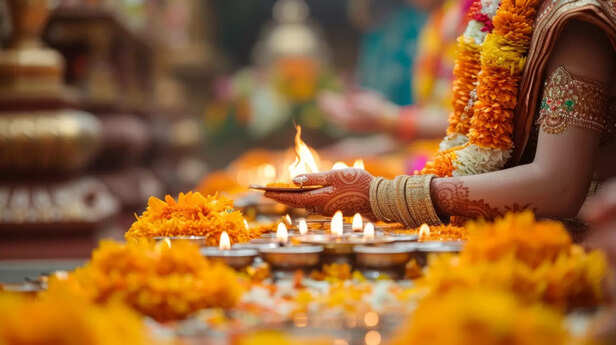
Temple
Image credit : Freepik
The dismemberment motif is not just dramatic mythology. It is a theological message: uncontained grief can dissolve the world, but when the divine is “placed” into the earth, sorrow becomes sadhana. The scattering turns a personal tragedy into a sacred geography.
So the Peethas are not random points. They are “anchors” that translate an overwhelming cosmic event into human scale places where devotion, ritual, and remembrance can actually happen.
2) Because Shakti is not one mood, one face, or one function
In simple terms: the Mother is not only protector, not only fierce, not only generous, not only silent. The land needs multiple sanctums to hold multiple intensities.
3) Because the land itself is treated as Devi’s body
When a tradition maps holiness across distance, it is saying: the sacred is not a single throne, it is an embodied presence spread through the world.
4) Because Tantra thinks in networks, not in centers
A network of Peethas fits this worldview: spiritual power flows through a web, not through one exclusive headquarters.
5) Because “51” is also a symbolic map of sound, not just a map of soil

Goddess Sati
Image credit : Freepik
In several traditions, the number of primary Peethas is tied to sacred structure and symbolism, not only to physical geography. This is why lists vary across texts and regions: different lineages preserve different “maps” of the same idea.
So the scattering is partly a spiritual language: Shakti is articulated in many “units,” many gates of approach, rather than one monolith.
6) Because pilgrimage is meant to transform the seeker through movement
The spiritual psychology here is sharp: if Shakti is everywhere, you should be able to keep your faith alive even when you are far from your “favorite” temple.
7) Because the tradition grew across regions, languages, and centuries
This is not automatically “contradiction.” In living traditions, lists are often lineage markers: a way a community preserves its sacred memory and authority.
8) Because Shakti is inclusive by design, not exclusive by geography
In that sense, scattering is a spiritual democracy. The Mother does not demand you come only to one door.
9) Because the question assumes Shakti is a substance that must be stored
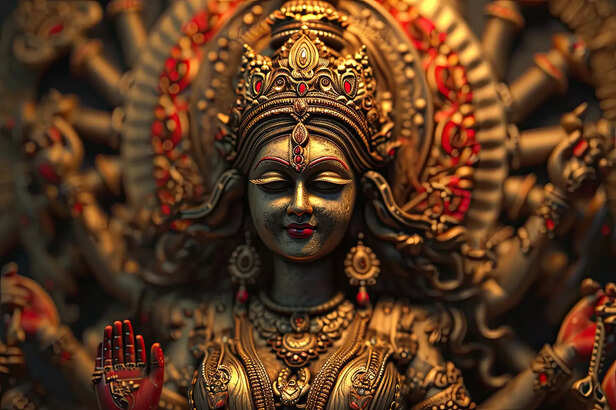
Shakti Peethas
Image credit : Freepik
The line that quietly changes everything is the one devotees chant: Devi exists as Shakti within all beings.
If Shakti is the inner principle of life, then a Peetha is not a warehouse of power. It is a lens. A Peetha concentrates attention, devotion, and ritual into a location so the seeker can experience what is, in Shakta philosophy, ultimately present everywhere.
That is why the map is scattered. Not because Shakti is “divided,” but because human perception is.