People have been wondering about the existence of God and the presence of evil and suffering in the world for centuries. The question is very simple but it can cause a lot of distress: If God indeed exists, then why are there bad things happening? Why do good people seem to be the ones suffering? Why are the innocent the ones experiencing loss illness heartbreak, and injustice? Why doesn't some higher power intervene and stop tragedies from happening? This question has been pondered by different thinkers like philosophers, religious scholars as well as laymen over the centuries. Some people are being shaken in their faith by sufferings while others during isolation and hardships follow their spirituality further. For certain people, the existence of pain serves as evidence for the non-existence of God; for others, pain gets them to believe that life indeed has a deeper meaning beyond mere pleasure and comfort. One could say that its not the right thing to look for a single corresponding answer but it will provide more help if one tries to look into the different ways in which people that still hold onto the belief in a higher power, struggle to understand pain, injustice, and suffering.
The Concept of Karma: Actions Have Consequences
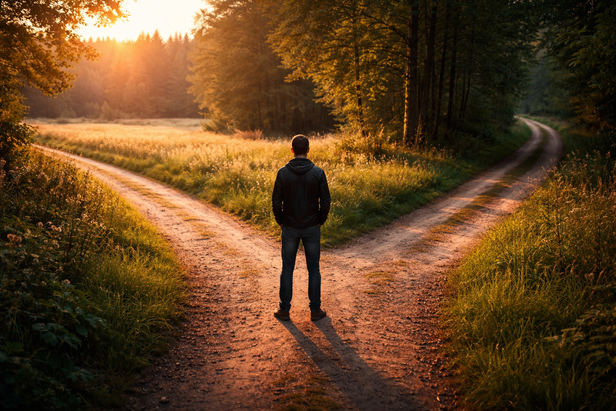
![Person at crossroads]()
Person at crossroads
Image credit : Times Life Bureau
Good and bad actions eventually return as consequences.
One of the most frequent spiritual reasons for suffering is the notion of karma. This theory says that every deed is followed by a result. Good deeds bring good results and evil deeds are followed by evil results not necessarily immediately, but certainly eventually. In many Eastern belief systems, karma is usually not viewed as a divine punishment but rather as one of the natural laws of the universe say like gravity. As things that happen in the physical world are followed by reactions, moral world deeds also carry results. This however does not always imply that if a person experiences something bad, he must have done something wrong in this life.
Some traditions hold that karma may be the result of past deeds, decisions, and even past lives. On the other hand, karma is a very intricate concept because, on one hand, it may lead to a situation where people start blaming the victim for their sufferings which is not always a fair stance and lacks compassion. Not every misfortune can be interpreted by merely saying that the person deserved it. Life is much more complicated than that. Nevertheless, karma is just an attempt to explain why there is suffering in the world by hinting that life harmonizes with a principle of cause and result even if humans cannot entirely understand this principle.
Free Will: Humans Make Their Own Choices
Another reason that is often mentioned is free will. In fact, a lot of spiritual and philosophical traditions hold that humans are the ones who have the power to choose their own path. If God were in control of every single action, humans would just be like the robots, not people with responsibility and moral choices. If people have free will in the true sense, then they also have the liberty to make the wrong choices, hurt others, start wars lie cheat, and create injustice. Most of the bad things that occur in the world are actually the result of human decisions, rather than natural forces or divine intervention.
For instance corruption violence, environmental harm, exploitation, and crime are not natural disasters - they come from human choices. So, sometimes it is not even the question of Why does God permit such things? but Why do we humans do such things to one another? In a way, this reasoning doesn't take away suffering but it transfers the blame from God to human actions. It implies that most of the worlds issues are not the punishment by God but the problems created by humans.
Suffering and Growth: Pain as a Teacher
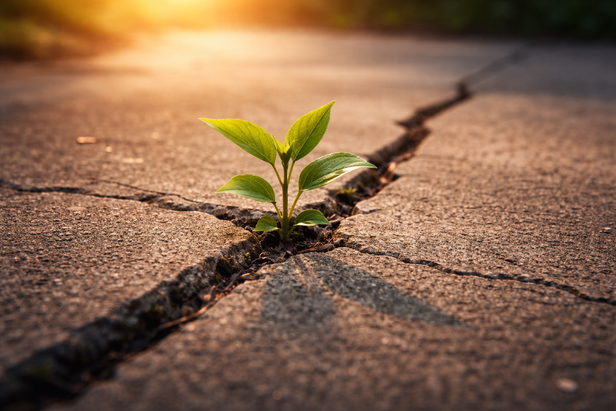
![Plant growing through cracks]()
Plant growing through cracks
Image credit : Times Life Bureau
Pain and struggles often lead to emotional growth.
One way to look at it is that suffering is a part of human development. This concept is not saying that pain is a good thing or that we should celebrate suffering. However, it points out that through tough challenges, people can be transformed in a way that is impossible through comfort alone. It is not uncommon for individuals to come out of hard experiences stronger, more compassionate, more patient, and more understanding. For example, a person who experiences loss comes to realize how much they value their relationships with others. Failure, on the other hand, is what builds ones ability to withstand setbacks times.
Being struck with a disease is what makes us be thankful for our health. Getting turned down by someone is what helps one find their self-esteem. Physical/emotional pain is usually what leads a person to be a more seasoned individual at an emotional/spiritual level through that experience. Still, it is not the case that every misfortune has such a clear reason or a lesson to be learned. Some suffering is so random so unfair and without any meaning that it is impossible to find a reason. Besides, there are also cases of individuals who, on reflection, find that it was their toughest moments that led to their greatest change. Therefore, it can be said that suffering, rather than being a punishment, is a harsh teacher in a figurative sense.
Tests of Faith: Belief During Difficult Times
Another popular spiritual belief is that challenging times serve as a test of one's faith. The main thought behind it is that anyone can believe in God while they are being showered by happiness, but when one is experiencing various pains, losses and uncertainties, that's when faith gets tested. Almost every religious story and legend has a character that through their suffering, keep next to their God and get their faith strengthened through struggle. A test simply means that God doesn't cause someone to suffer, on the contrary, it is the trying situations that unveil a person's strength, patience, and faith that these people have.
For many people, faith is not about receiving all what they want but it is the ability to hope and find the meaning of their existences even when things aren't going well. People through faith can find emotional strength, a sense of purpose, and the capability to continue going on when they have considered their situation as unbearable. Still, for some the above statement can be very hard to come to terms with because it is not fair that some people get tested more than others. Indeed not everyone finds comfort from suffering as a test. But for many believers, faith is not strongest when things are going well, but rather in the most difficult moments of life.
Final Note :
One reason this question has kept people thinking for centuries is suffering is a generic human condition. We all go through the times of loss and disappointment, injustice and pain, and in those moments, we look for the meaning, often turn to faith or spirituality. Whether you believe in God or not, suffering makes people ask big questions about life purpose good and evil, and human nature. Sometimes religion provides the answers, sometimes philosophy does, and sometimes there are no definitive answers at all. The question "Why does evil exist if God exists?" is multi-faceted and complex. Different individuals attribute suffering to various interpretations like karma, free will, character development, or testing one's faith. Some even believe suffering is a by-product of the operating of the universe, completely chaotic and unpredictable. It is possible suffering still exists as evil is a consequence of human neglect and resistance against the divine order of the world. But the main question remains. Nevertheless, the presence of suffering alone is neither a definitive argument for nor against the existence of God. However, it does uncover a significant aspect of human nature: despite extreme adversity, people are resilient in their pursuit of meaning, hope and a connection with a higher power.
FAQs (Frequently Asked Questions) :
- Why does God allow bad things to happen?
Many beliefs say suffering exists because of karma, free will, and life’s natural challenges. - Is suffering a test from God?
Some spiritual beliefs say difficult times test faith, patience, and inner strength. - Can suffering have a purpose in life?
Many people believe suffering helps people grow emotionally and spiritually.