
Why Devotees Believe Tirupati Balaji Still Lives Among Us in Kali Yuga
Nidhi | Feb 10, 2026, 16:19 IST

Tirupati Balaji, worshipped as Lord Venkateswara
Image credit : Ai
Devotees across generations believe that Tirupati Balaji, worshipped as Lord Venkateswara, did not return to Vaikuntha but continues to reside on Earth during Kali Yuga. This belief is rooted in references from ancient Puranas, Vaishnava theology, and Agama-based temple traditions followed at Tirumala. The article examines scriptural declarations, ritual practices, and historical continuity that shape the belief of Tirupati Balaji as a living deity in the present age.
“कलौ युगे जनाः सर्वे क्लेशयुक्ता भवन्ति वै
तेषां उद्धारणार्थाय वेंकटेशो धरातले।”
In Kali Yuga, when human life is filled with suffering and turmoil, Lord Venkateswara remains on Earth for the upliftment of all.
Kali Yuga is repeatedly described in Hindu scriptures as the most challenging phase of cosmic time, an age where faith weakens, discipline fades, and human beings struggle to sustain spiritual balance. In such an era, the belief that the divine chose to withdraw to a distant celestial realm feels inadequate to many devotees. This is where the faith surrounding Tirupati Balaji becomes deeply significant.
Devotees believe that while Vishnu’s eternal abode remains Vaikuntha, as Lord Venkateswara he deliberately chose to stay on Earth during Kali Yuga. Not as a symbolic presence, but as a conscious, living deity residing on Tirumala hill. This conviction is sustained by Puranic references, Agama-based temple traditions, and centuries of uninterrupted worship that treat Balaji not as a distant god, but as a guardian who continues to listen, respond, and protect in humanity’s most difficult age.
![Tirupati Balaji, worshipped as Lord Venkateswara]()
The Varaha Purana, one of the eighteen Mahapuranas, explicitly states that Lord Vishnu chose Venkatadri hill as his permanent abode during Kali Yuga. In a dialogue between Varaha and Bhudevi, Vishnu declares that he will remain manifest as Sri Venkateswara to protect beings suffering from the moral and spiritual burdens of the age.
Unlike Dashavatara incarnations such as Rama or Krishna, whose missions were time bound, Venkateswara’s role is described as continuous. The text emphasizes mercy, accessibility, and acceptance of devotion over strict ritual purity.
Several Vaishnava texts describe Tirumala not merely as a sacred place but as an earthly equivalent of Vaikuntha during Kali Yuga. The Brahmanda Purana states that worship offered on Venkatadri yields the same merit as worship performed in Vishnu’s celestial abode.
This equivalence explains why devotees believe Balaji did not retreat to Vaikuntha. Instead, Vaikuntha is believed to have descended symbolically onto Tirumala for this age.
Tirupati follows strict Vaikhanasa Agama traditions, which govern Vishnu worship. According to these Agamas, when prana pratishtha is performed, the deity is no longer symbolic. The divine consciousness is believed to permanently reside in the form.
Agamas clearly state that such a deity must be treated as a living king. This is why the idol is awakened with Suprabhatam, offered food multiple times a day, adorned with fresh garments, and ritually rested at night. These are not ceremonial gestures but mandated practices rooted in scripture.
![Andhra Pradesh: Panchami Saare ritual draws large crowd, seeking Lord Venkateswara's blessings]()
Temple tradition and Vaishnava theology hold that the main idol of Lord Venkateswara is swayambhu, meaning self manifested. Puranic belief treats swayambhu forms as eternal manifestations not created or dissolved by human agency.
Texts such as the Skanda Purana reference naturally manifested Vishnu forms as timeless presences that remain accessible to devotees without invoking or dismissing rituals. This supports the belief that Balaji is permanently present on Tirumala throughout Kali Yuga.
Traditional temple practices record that the idol retains warmth and requires daily cooling with sandalwood paste. The deity is also ceremonially wiped after Abhishekam, as described in temple manuals.
While modern science may interpret these observations differently, within Agamic tradition such signs are consistent with a living divine presence. The Shilpa Shastras acknowledge that divinity manifests differently based on cosmic time, especially during Kali Yuga.
The Varaha Purana and local Vaishnava lore describe Lord Venkateswara taking a loan from Kubera to fund his celestial wedding. He is believed to have vowed to remain on Earth until the debt is repaid by devotees.
This belief carries deeper symbolism. Kali Yuga is dominated by material obligations, debt, and transactional life. By accepting offerings as repayment rather than sacrifice, Balaji aligns divine grace with the moral reality of the age.
![Pray]()
The Bhagavata Purana repeatedly states that bhakti alone grants liberation in Kali Yuga. Practices like severe penance or complex yajnas are described as impractical for most humans.
Tirupati Balaji embodies this doctrine. His worship emphasizes surrender, humility, and emotional devotion rather than intellectual mastery. This doctrinal alignment strengthens the belief that he remains physically present to accept simple devotion from ordinary people.
Perhaps the strongest evidence is historical continuity. Tirumala has witnessed uninterrupted worship across dynasties including Pallavas, Cholas, Vijayanagara rulers, and modern administrations.
Today, Tirumala Tirupati Devasthanams preserves these traditions strictly according to Agama injunctions. The belief that Balaji is alive is not symbolic theology but operational reality within temple administration.
तेषां उद्धारणार्थाय वेंकटेशो धरातले।”
In Kali Yuga, when human life is filled with suffering and turmoil, Lord Venkateswara remains on Earth for the upliftment of all.
Kali Yuga is repeatedly described in Hindu scriptures as the most challenging phase of cosmic time, an age where faith weakens, discipline fades, and human beings struggle to sustain spiritual balance. In such an era, the belief that the divine chose to withdraw to a distant celestial realm feels inadequate to many devotees. This is where the faith surrounding Tirupati Balaji becomes deeply significant.
Devotees believe that while Vishnu’s eternal abode remains Vaikuntha, as Lord Venkateswara he deliberately chose to stay on Earth during Kali Yuga. Not as a symbolic presence, but as a conscious, living deity residing on Tirumala hill. This conviction is sustained by Puranic references, Agama-based temple traditions, and centuries of uninterrupted worship that treat Balaji not as a distant god, but as a guardian who continues to listen, respond, and protect in humanity’s most difficult age.
1. Varaha Purana Declares Venkateswara as the Kali Yuga Avatar
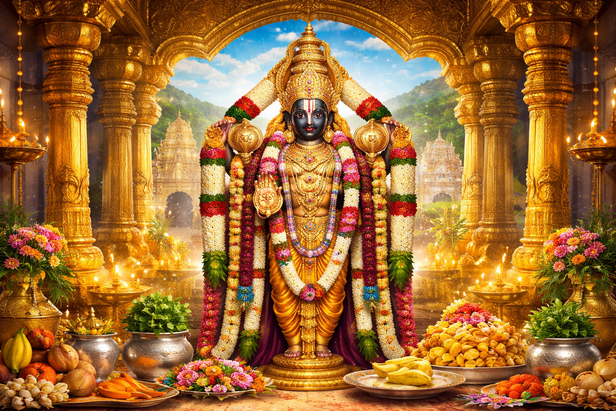
Tirupati Balaji, worshipped as Lord Venkateswara
Image credit : Ai
The Varaha Purana, one of the eighteen Mahapuranas, explicitly states that Lord Vishnu chose Venkatadri hill as his permanent abode during Kali Yuga. In a dialogue between Varaha and Bhudevi, Vishnu declares that he will remain manifest as Sri Venkateswara to protect beings suffering from the moral and spiritual burdens of the age.
Unlike Dashavatara incarnations such as Rama or Krishna, whose missions were time bound, Venkateswara’s role is described as continuous. The text emphasizes mercy, accessibility, and acceptance of devotion over strict ritual purity.
2. Tirumala Is Equated With Vaikuntha in Scriptures
This equivalence explains why devotees believe Balaji did not retreat to Vaikuntha. Instead, Vaikuntha is believed to have descended symbolically onto Tirumala for this age.
3. Agama Shastra Treats the Deity as a Conscious Living Presence
Agamas clearly state that such a deity must be treated as a living king. This is why the idol is awakened with Suprabhatam, offered food multiple times a day, adorned with fresh garments, and ritually rested at night. These are not ceremonial gestures but mandated practices rooted in scripture.
4. The Idol Is Regarded as Swayambhu and Eternal
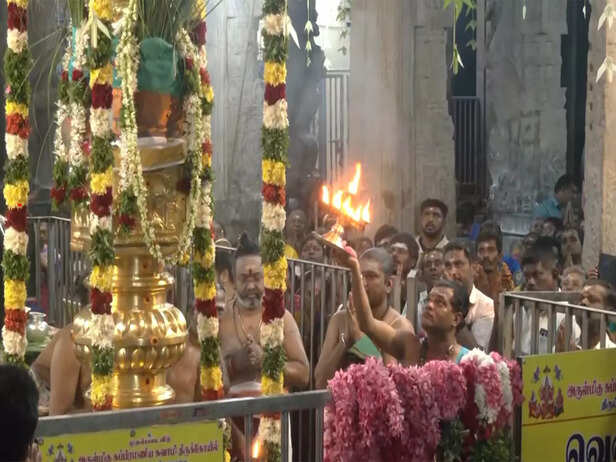
Andhra Pradesh: Panchami Saare ritual draws large crowd, seeking Lord Venkateswara's blessings
Image credit : ANI
Temple tradition and Vaishnava theology hold that the main idol of Lord Venkateswara is swayambhu, meaning self manifested. Puranic belief treats swayambhu forms as eternal manifestations not created or dissolved by human agency.
Texts such as the Skanda Purana reference naturally manifested Vishnu forms as timeless presences that remain accessible to devotees without invoking or dismissing rituals. This supports the belief that Balaji is permanently present on Tirumala throughout Kali Yuga.
5. Physical Ritual Observations Reinforce the Living Deity Belief
While modern science may interpret these observations differently, within Agamic tradition such signs are consistent with a living divine presence. The Shilpa Shastras acknowledge that divinity manifests differently based on cosmic time, especially during Kali Yuga.
6. Kubera Debt Narrative Aligns With Kali Yuga Dharma
This belief carries deeper symbolism. Kali Yuga is dominated by material obligations, debt, and transactional life. By accepting offerings as repayment rather than sacrifice, Balaji aligns divine grace with the moral reality of the age.
7. Bhakti Is Declared the Supreme Path in Kali Yuga
Pray
Image credit : Freepik
The Bhagavata Purana repeatedly states that bhakti alone grants liberation in Kali Yuga. Practices like severe penance or complex yajnas are described as impractical for most humans.
Tirupati Balaji embodies this doctrine. His worship emphasizes surrender, humility, and emotional devotion rather than intellectual mastery. This doctrinal alignment strengthens the belief that he remains physically present to accept simple devotion from ordinary people.
8. Continuous Worship Without Interruption for Over a Millennium
Today, Tirumala Tirupati Devasthanams preserves these traditions strictly according to Agama injunctions. The belief that Balaji is alive is not symbolic theology but operational reality within temple administration.