
Why Draupadi’s Rakhi to Krishna Changed the Fate of the Mahabharata
Riya Kumari | Aug 04, 2025, 12:45 IST

Draupadi Krishna
Image credit : Times Life Bureau
Trust in the divine doesn’t mean you sit and do nothing, expecting a miracle. That’s fantasy, not faith. Trust means: You act. You strive. You give your best. And where your hands end, Krishna’s begin. It is not about magical thinking. It’s about surrendering the part you cannot control, after fully engaging the part you can. You plant the seed, water it, protect it. But the blooming? That’s grace.
There’s a moment in the Mahabharata that most retellings glance over, a simple, almost quiet gesture. Draupadi, the empress of the Pandavas, once tore a piece of her saree to bandage a bleeding wound on Krishna’s finger. That act, done without hesitation, without thought of ritual or reward, became the seed of one of the most profound divine promises in Hindu scripture. In that instant, she didn’t tie a rakhi. She tied faith. And in return, Krishna didn’t just promise to protect her, he vowed to uphold her dignity at the cost of his own cosmic detachment.
The Raksha Bandhan That Wasn’t a Ritual
![Cloth]()
In the eyes of dharma, that torn cloth became a sacred raksha sutra, because it was tied with emotion, not ceremony. This wasn’t a festive Raksha Bandhan with sweets and tilak. It was spontaneous bhakti. It was a soul recognising another soul beyond time, beyond gender, beyond birth, a warrior queen offering protection to a god, and a god vowing to return it a hundredfold.
Not a Debt, But a Dharma
![Krishna]()
When Krishna saved Draupadi from the cheerharan, endlessly extending her saree when Dushasana tried to disrobe her, it wasn’t repayment. It was dharma remembering a promise it had made when no one was watching. In Bhagavad Gita (Chapter 9, Verse 22), Krishna says:
अनन्याश्चिन्तयन्तो मां ये जनाः पर्युपासते।
तेषां नित्याभियुक्तानां योगक्षेमं वहाम्यहम्॥
(“Those who always think of Me and worship Me with exclusive devotion, I carry what they lack and preserve what they have.”)
Draupadi thought of him, called him, loved him, trusted him, not as a god, but as a friend. As a rakshak. As someone who must come when dharma is violated. And he did.
A Thread Stronger Than War
![Draupadi]()
We often think the Mahabharata was won on the battlefield, with Arjuna’s arrows and Bhima’s strength. But before the Kurukshetra war began, the foundation of Krishna’s intervention was laid by that one rakhi. That one act of uninvited kindness. In that moment, Draupadi made Krishna not just her sakha, but her sankat-mochak.
In return, Krishna didn't just protect her once. He orchestrated the very fabric of fate, delaying Karna’s attack, weakening Bhishma’s will, shattering Duryodhana’s pride. Not to avenge a friend. But to protect a vow made in love.
The Deeper Message
![Lord Krishna]()
In the Shastras, raksha (protection) is not merely about saving someone from harm. It is the preservation of satya, maryada, sankalp, and atmasamman (truth, dignity, intention, and self-respect). Draupadi’s rakhi wasn’t tied to Krishna’s hand, it was tied to his dharma. And Krishna, being leela-purushottam, the master of divine play, turned the tide of an epic just to honour it. This is not just history. It’s blueprint. It tells us that:
In a World That Forgets, Dharma Remembers
Draupadi was humiliated before a full court of kings, and no one stood. No father. No husband. No elder. Just silence. But the one she had trusted when she wasn’t supposed to, her friend, her Krishna, heard her soul. He didn’t stop the war. He rewrote its outcome. Because of a rakhi that wasn’t even a rakhi.
Because sometimes, the smallest threads carry the weight of the entire world. Let that linger. Because next time you think your faith went unnoticed, remember Draupadi. Remember her cloth. And remember that the divine always returns what is given with love, multiplied by eternity.
The Raksha Bandhan That Wasn’t a Ritual

Cloth
Image credit : Unsplash
In the eyes of dharma, that torn cloth became a sacred raksha sutra, because it was tied with emotion, not ceremony. This wasn’t a festive Raksha Bandhan with sweets and tilak. It was spontaneous bhakti. It was a soul recognising another soul beyond time, beyond gender, beyond birth, a warrior queen offering protection to a god, and a god vowing to return it a hundredfold.
Not a Debt, But a Dharma

Krishna
Image credit : Unsplash
When Krishna saved Draupadi from the cheerharan, endlessly extending her saree when Dushasana tried to disrobe her, it wasn’t repayment. It was dharma remembering a promise it had made when no one was watching. In Bhagavad Gita (Chapter 9, Verse 22), Krishna says:
अनन्याश्चिन्तयन्तो मां ये जनाः पर्युपासते।
तेषां नित्याभियुक्तानां योगक्षेमं वहाम्यहम्॥
(“Those who always think of Me and worship Me with exclusive devotion, I carry what they lack and preserve what they have.”)
Draupadi thought of him, called him, loved him, trusted him, not as a god, but as a friend. As a rakshak. As someone who must come when dharma is violated. And he did.
A Thread Stronger Than War
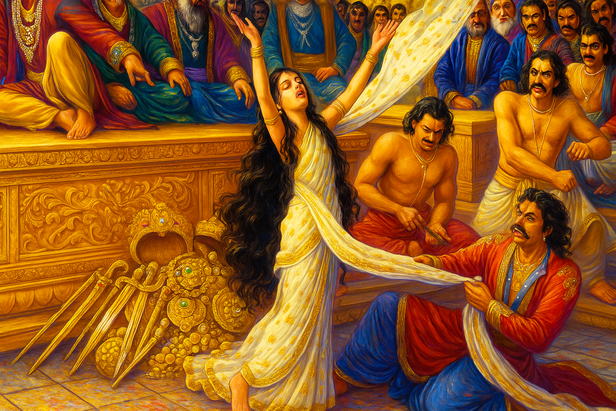
Draupadi
Image credit : Times Life Bureau
We often think the Mahabharata was won on the battlefield, with Arjuna’s arrows and Bhima’s strength. But before the Kurukshetra war began, the foundation of Krishna’s intervention was laid by that one rakhi. That one act of uninvited kindness. In that moment, Draupadi made Krishna not just her sakha, but her sankat-mochak.
In return, Krishna didn't just protect her once. He orchestrated the very fabric of fate, delaying Karna’s attack, weakening Bhishma’s will, shattering Duryodhana’s pride. Not to avenge a friend. But to protect a vow made in love.
The Deeper Message
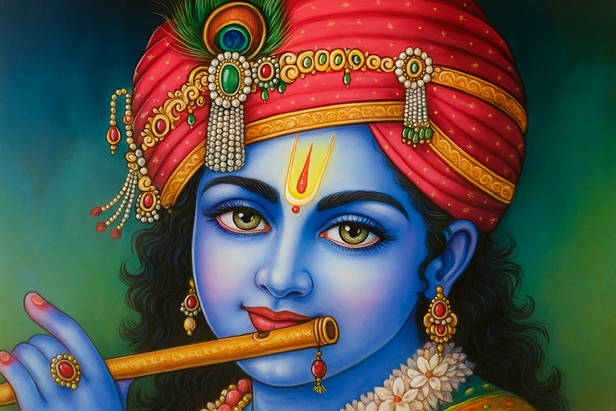
Lord Krishna
Image credit : Times Life Bureau
In the Shastras, raksha (protection) is not merely about saving someone from harm. It is the preservation of satya, maryada, sankalp, and atmasamman (truth, dignity, intention, and self-respect). Draupadi’s rakhi wasn’t tied to Krishna’s hand, it was tied to his dharma. And Krishna, being leela-purushottam, the master of divine play, turned the tide of an epic just to honour it. This is not just history. It’s blueprint. It tells us that:
- Protection is not asked for; it is earned through faith.
- Dharma does not forget small acts done in truth.
- One moment of heartfelt surrender can change lifetimes.
In a World That Forgets, Dharma Remembers
Because sometimes, the smallest threads carry the weight of the entire world. Let that linger. Because next time you think your faith went unnoticed, remember Draupadi. Remember her cloth. And remember that the divine always returns what is given with love, multiplied by eternity.