
Why Hanuman Appears In The Mahabharata 8000 Years After Ram
Riya Kumari | Dec 03, 2025, 16:24 IST

Hanuman
Image credit : AI
There are moments in our lives when someone from our “past” returns at the exact time we need them, not to fix anything, but to remind us of who we once were, and who we still can be. The Mahabharata does something similar. It brings back Hanuman, the silent guardian of the Ramayana, long after Rama’s age has ended.
The idea that Hanuman, the mighty Vanara hero of the Ramayana, reappears in the Mahabharata (centuries later, in a different age) might at first glance strike one as odd. How can a hero belong to a previous era still walk the earth when heroes of a new age rise? Yet this very “anachronism” carries within it a profound message: the continuity of dharma, the timelessness of spiritual ideals, and the bridge between eras, not just as legend, but as soul of a civilization.
![Lord Hanuman]()
According to tradition, Hanuman was granted boon of immortality, because of his unwavering devotion and divine heritage. That means his life is not confined to a single yuga or a single epic; he lives, as long as the name of righteousness and devotion persists.
So when Mahabharata unfolds, and heroes like Bhima (himself a son of the Wind-god like Hanuman) roam the forests in exile, it’s not a historical glitch, but a cosmic continuum. Hanuman appears, not as a relic of the past, but as a living symbol of what never dies: virtue, devotion, dharma.
By existing across Treta-yuga (Ramayana era) and Dwapara-yuga (Mahabharata era), Hanuman becomes more than a character: he becomes a bridge, a living thread that connects two great narratives of Hindu civilisation. When Bhima, mighty, proud, full of strength, meets an old monkey blocking his path, and fails to lift even its tail, it’s not just a test of muscle. It’s a lesson: physical power alone does not equal true strength. That “monkey” revealing as Hanuman is a poetic way to show that humility and inner strength transcend eras and obvious power.
Thus, Hanuman’s presence in Mahabharata isn’t a cameo, it is a divine statement: “The ideals we fought for during Rama’s time, I still carry. I still walk. I still stand guard.”
![Hanuman ji]()
Each age brings its own crises and its own wars. The fact that Hanuman arrives again when humanity needs a reminder, a guardian presence, reinforces the idea that dharma is not bound to one story or one age. In Mahabharata, when warriors fight not merely for power but for dharma, justice, and cosmic order, the reappearance of Hanuman becomes symbolic: victory is not just about weapons or strategy, but about righteousness, faith, humility.
Hanuman’s taking seat on the flag (dhwaja) of Arjuna’s chariot during war reflects this, his presence wasn’t to fight personally but to sanctify the war, to remind the warrior (and readers) that the fight must be guided by dharma, not ego.
In Ramayana, Hanuman’s strength is legendary, leaps across oceans, lifting mountains, devotion that conquers fear. In Mahabharata, his role is quieter but deeper: meeting Bhima, humbling arrogance, offering protection not through force but divine presence.
This dual role, as a warrior-devotee and as a wise guardian, shows that true greatness lies not in flashy deeds, but in steadfastness, humility, inner devotion, wisdom. For any epoch, ancient or modern, this remains relevant. In our lives too: strength without humility is hollow, power without righteousness crumbles.
![Shree Hanuman]()
When we read epics, often we treat them as “stories of the past.” But the presence of a timeless figure like Hanuman suggests that these are not just stories, they are living ideas, ideals, codes of conduct.
Hanuman is not just an epic-hero; he is a principle. When people chant his name, seek his blessings, it’s not nostalgia. It’s invocation of eternal values: courage, devotion, humility, righteousness. By appearing again in Mahabharata, he reminds humanity that though eras change, truth, dharma, devotion, they endure.
When life brings us struggles (like Kurukshetra), the presence of a “Hanuman”, our inner conscience, devotion, can guide us. Strength and success might tempt arrogance (like Bhima); wisdom lies in humility. Values aren’t bound to time or circumstance, they survive through ages, carried by souls like Hanuman. We, too, can be bridges. Between eras, between values and action; between knowledge and compassion. In that sense, Hanuman’s re-appearance in Mahabharata is not a quirk, it is a sacred design. A living testament that certain truths are timeless; certain lights never die. Perhaps that is the real legacy: that heroes don’t belong to one age, their ideals belong to all ages.
Immortality & the timeless soul
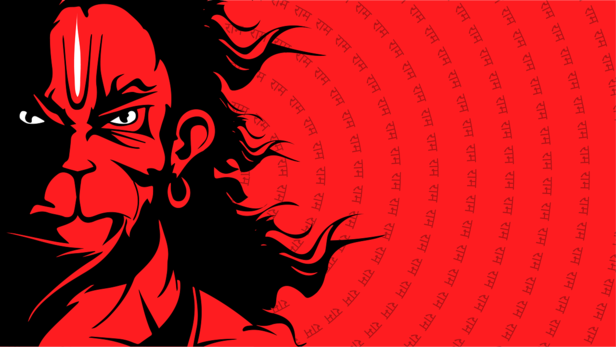
Lord Hanuman
Image credit : Pixabay
According to tradition, Hanuman was granted boon of immortality, because of his unwavering devotion and divine heritage. That means his life is not confined to a single yuga or a single epic; he lives, as long as the name of righteousness and devotion persists.
So when Mahabharata unfolds, and heroes like Bhima (himself a son of the Wind-god like Hanuman) roam the forests in exile, it’s not a historical glitch, but a cosmic continuum. Hanuman appears, not as a relic of the past, but as a living symbol of what never dies: virtue, devotion, dharma.
Bridge between epochs - The living link of Dharma
Thus, Hanuman’s presence in Mahabharata isn’t a cameo, it is a divine statement: “The ideals we fought for during Rama’s time, I still carry. I still walk. I still stand guard.”
Dharma is eternal - War, struggle and the call for righteousness doesn’t belong to one age
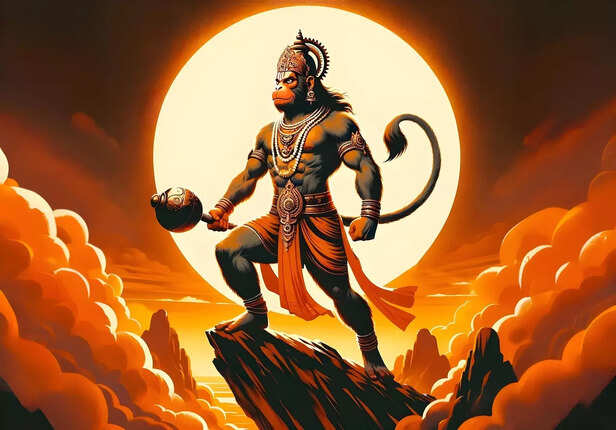
Hanuman ji
Image credit : Pixabay
Each age brings its own crises and its own wars. The fact that Hanuman arrives again when humanity needs a reminder, a guardian presence, reinforces the idea that dharma is not bound to one story or one age. In Mahabharata, when warriors fight not merely for power but for dharma, justice, and cosmic order, the reappearance of Hanuman becomes symbolic: victory is not just about weapons or strategy, but about righteousness, faith, humility.
Hanuman’s taking seat on the flag (dhwaja) of Arjuna’s chariot during war reflects this, his presence wasn’t to fight personally but to sanctify the war, to remind the warrior (and readers) that the fight must be guided by dharma, not ego.
Humility, devotion and spiritual strength vs. brute force
This dual role, as a warrior-devotee and as a wise guardian, shows that true greatness lies not in flashy deeds, but in steadfastness, humility, inner devotion, wisdom. For any epoch, ancient or modern, this remains relevant. In our lives too: strength without humility is hollow, power without righteousness crumbles.
Eternal relevance - A reminder that legends can be alive in every age
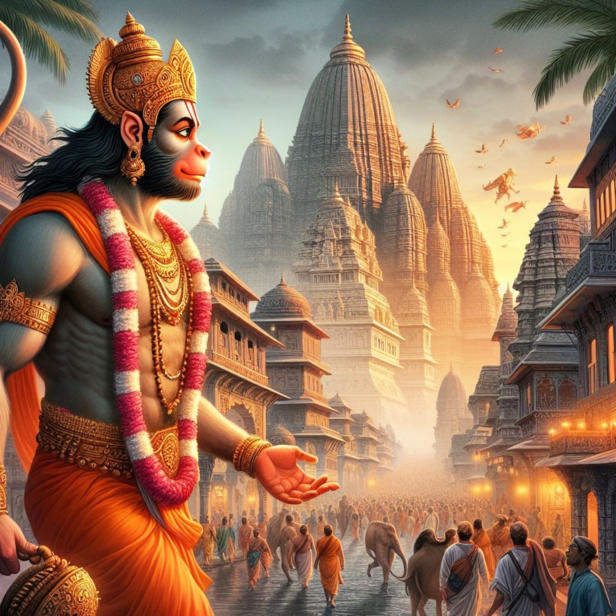
Shree Hanuman
Image credit : Pixabay
When we read epics, often we treat them as “stories of the past.” But the presence of a timeless figure like Hanuman suggests that these are not just stories, they are living ideas, ideals, codes of conduct.
Hanuman is not just an epic-hero; he is a principle. When people chant his name, seek his blessings, it’s not nostalgia. It’s invocation of eternal values: courage, devotion, humility, righteousness. By appearing again in Mahabharata, he reminds humanity that though eras change, truth, dharma, devotion, they endure.