
Why Hindu Dharma Rejects January 1 as the True New Year
Riya Kumari | Jan 05, 2026, 13:19 IST

New Year
Image credit : AI
Every year, the world celebrates January 1 as a fresh beginning. Fireworks light up the sky, promises are made, calendars are reset. But beneath the celebration lies a quiet question we rarely ask: does life itself begin again at this time? In Hindu Dharma, time is not decided by convenience or consensus, it is observed, felt, and aligned with nature’s intelligence. A true new year is not announced by clocks; it arrives when the Earth stirs, when light returns, when life moves from dormancy to growth.
Every year on January 1, millions around the globe cheer, make resolutions, set goals, and welcome the “new year.” It feels like a fresh start but pause for a moment and ask: Does nature actually reset on January 1? Does the Earth shift its seasons, or life suddenly rejuvenate because a clock struck midnight in some part of the world? The short answer: no. January 1 is an administrative convention, not a cosmic or natural threshold. In contrast, the Hindu New Year, rooted in the cycles of the Earth, Moon, Sun, and life itself, is not arbitrarily placed. It emerges organically from the fabric of nature, culture, psyche, and cosmic observance.
A Calendar Imported vs. A Calendar Observed
![Winter]()
January 1 as New Year originates from ancient Rome, tied to the Roman god Janus and later formalized through the Julian and Gregorian calendars for administrative governance, taxation, and ecclesiastical order. The Gregorian calendar is now global, but historically:
In India, this calendar became dominant through colonial administration, education systems, and global standardization, not through tradition or indigenous truth. Hindu calendars, on the other hand, emerged from observation - of celestial movements, seasons, agricultural cycles, and human life patterns. They are lived, not imported.
Nature Does Tell Us When a Year Begins
Look at the Earth in January
Now look at March - April:
The Sun’s path crosses key astronomical thresholds like its gradual transition toward equinox alignments. Hindu New Year is celebrated on Chaitra Shukla Pratipada, the first lunar day after the new moon in the month of Chaitra, usually falling in March or April. This isn’t a random choice. It aligns with spring (Vasant Ritu) - a time of renewal, growth, and instinctive awakening across nature. This mirrors human psychology: after a period of dormancy (winter), life revives. Symbolically and literally, this is when a new cycle begins.
The Psychology of Renewal
![Spring]()
Human beings feel renewal when:
January 1 has become a milestone mostly because of global media, urban culture, and Western influence. It is a marker of timekeeping, not transformation. But psychological renewal is tied to experience. Ask yourself:
Do you feel reborn on a cold, midwinter night?
Or do you feel renewed when the Sun climbs higher, when the soil warms, when life starts signaling growth again?
Hindu New Year feels like a beginning because it aligns with what life itself is doing.
Tradition, Story, and Cosmic Order
In Hindu tradition, this time also has cosmological depth. Chaitra Pratipada is linked with:
What It Means to Reclaim a New Year
January 1 has its place as a global convention. But calling it the “real” New Year ignores what time really means to humanity and to nature. A New Year shouldn’t be just a number change on a clock. It should reflect:
A Calendar Imported vs. A Calendar Observed

Winter
Image credit : Pixabay
January 1 as New Year originates from ancient Rome, tied to the Roman god Janus and later formalized through the Julian and Gregorian calendars for administrative governance, taxation, and ecclesiastical order. The Gregorian calendar is now global, but historically:
- It was never designed to reflect nature’s rhythms.
- It was shaped by political and bureaucratic needs.
- There is no natural event tied to January 1 on Earth - no equinox, solstice, or ecological change.
In India, this calendar became dominant through colonial administration, education systems, and global standardization, not through tradition or indigenous truth. Hindu calendars, on the other hand, emerged from observation - of celestial movements, seasons, agricultural cycles, and human life patterns. They are lived, not imported.
Nature Does Tell Us When a Year Begins
Look at the Earth in January
- Many trees are dormant.
- Days are short.
- In much of India, winter still lingers.
Now look at March - April:
- Days are lengthening.
- Flowers bloom, fresh foliage unfurls.
- Crops begin to stir from the winter lull.
The Sun’s path crosses key astronomical thresholds like its gradual transition toward equinox alignments. Hindu New Year is celebrated on Chaitra Shukla Pratipada, the first lunar day after the new moon in the month of Chaitra, usually falling in March or April. This isn’t a random choice. It aligns with spring (Vasant Ritu) - a time of renewal, growth, and instinctive awakening across nature. This mirrors human psychology: after a period of dormancy (winter), life revives. Symbolically and literally, this is when a new cycle begins.
The Psychology of Renewal
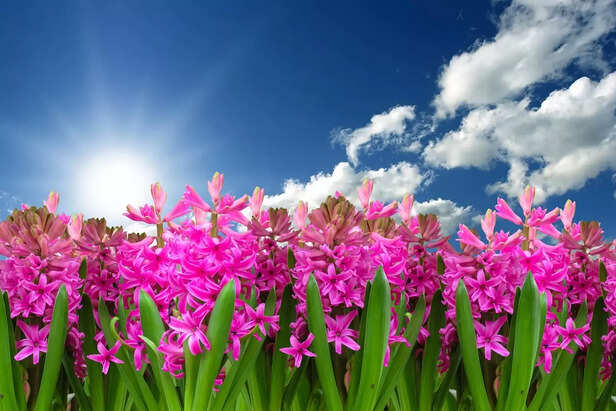
Spring
Image credit : Pixabay
Human beings feel renewal when:
- Days get brighter,
- Nature seems to wake up,
- There’s a perceptible shift from stagnation to motion.
January 1 has become a milestone mostly because of global media, urban culture, and Western influence. It is a marker of timekeeping, not transformation. But psychological renewal is tied to experience. Ask yourself:
Do you feel reborn on a cold, midwinter night?
Or do you feel renewed when the Sun climbs higher, when the soil warms, when life starts signaling growth again?
Hindu New Year feels like a beginning because it aligns with what life itself is doing.
Tradition, Story, and Cosmic Order
In Hindu tradition, this time also has cosmological depth. Chaitra Pratipada is linked with:
- The day Brahma began creation,
- The inauguration of Navratri,
- Cultural festivals like Gudi Padwa, Ugadi, Poila Baisakh, Cheti Chand, all celebrating life’s rejuvenation.
What It Means to Reclaim a New Year
January 1 has its place as a global convention. But calling it the “real” New Year ignores what time really means to humanity and to nature. A New Year shouldn’t be just a number change on a clock. It should reflect:
- A reawakening in the world,
- A shift in Earth’s rhythms,
- A moment that resonates with our bodies, minds, and ecology.