
Why Some Say India Has 4 Shankaracharyas and Others Say 5
Nidhi | Feb 02, 2026, 13:00 IST

"Distraction from real issues": Shankaracharya Avimukteshwaranand on "I Love Muhammad-Mahadev" row
Image credit : ANI
How many Shankaracharyas does India actually have: four or five? This article explains why the number is debated, tracing the four original mathas established by Adi Shankaracharya and the separate tradition of the Kanchi Kamakoti Peeth. By examining history, lineage claims, and living religious practice, the article clarifies why some follow the four-matha system while others recognise a fifth Shankaracharya, without taking sides.
“एकं सद् विप्रा बहुधा वदन्ति।”
Truth is one, but it is spoken of in many ways.
Ask how many Shankaracharyas India has, and you may hear two confident answers. Some will say four. Others will firmly say five. This difference is not confusion born out of ignorance. It comes from history, tradition, and how authority is understood within Hindu spiritual systems.
At the heart of this question lies the legacy of Adi Shankaracharya, one of India’s most influential philosophers and reformers. To understand why the number differs, we must look at what Shankaracharyas were meant to represent, what was formally established, and how later traditions evolved.
![‘Who gave him title of Shankaracharya?’ Mamta Kulkarni criticises Swami Avimukteshwaranand]() Historical records and traditional accounts agree on one core fact. Adi Shankaracharya established four main monastic seats, known as mathas, in the four directions of India.
Historical records and traditional accounts agree on one core fact. Adi Shankaracharya established four main monastic seats, known as mathas, in the four directions of India.
These are
This structure is clearly mentioned in traditional lists and is why many scholars and institutions state that India has four Shankaracharyas.
The number four holds structural importance in Adi Shankaracharya’s vision. It reflects balance and geographical completeness rather than hierarchy.
Each matha was linked to a Veda, a Mahavakya, and a specific monastic tradition. The Shankaracharyas of these four seats were meant to function independently but within a shared philosophical system.
Because this framework can be directly traced to Adi Shankaracharya’s lifetime and mission, it is often described as the original and official arrangement.
![South 24 Parganas, Jan 13 (ANI): Shankaracharya Nishchalananda Saraswati address...]() The debate arises with the presence of the Kanchi Kamakoti Peetham, located in Kanchipuram.
The debate arises with the presence of the Kanchi Kamakoti Peetham, located in Kanchipuram.
Many followers consider the Kanchi Shankaracharya to be the fifth Shankaracharya. The tradition of Kanchi claims a lineage that traces back to Adi Shankaracharya himself, stating that he established or resided at Kanchi and entrusted it with spiritual authority.
This belief is strong among devotees and has been upheld within that lineage for centuries.
The main reason many scholars do not include Kanchi in the original count is documentation.
Classical lists of the four mathas do not mention Kanchi as part of the directional system. The four mathas were created with a clear geographical and philosophical purpose. Kanchi does not fit into this directional structure.
Because of this, historians often describe Kanchi as a later or parallel institution rather than part of the original four mathas.
Here lies the core of the difference.
Those who say India has four Shankaracharyas rely on historical records, institutional continuity, and the structure laid down by Adi Shankaracharya.
Those who say India has five rely on living tradition, lineage belief, and spiritual continuity as preserved by the Kanchi Peeth.
Hindu traditions have always allowed both recorded history and lived tradition to coexist. This is why the debate continues without being resolved in a single direction.
Unlike hierarchical religious systems, Hindu authority is not controlled by a single institution.
Each Shankaracharya derives authority from lineage, scholarship, conduct, and acceptance by followers. This means multiple centers of influence can exist without invalidating one another.
Because the Kanchi Shankaracharya holds significant spiritual influence, many naturally count it as an equal seat of authority, even if it is not part of the original four.
Truth is one, but it is spoken of in many ways.
Ask how many Shankaracharyas India has, and you may hear two confident answers. Some will say four. Others will firmly say five. This difference is not confusion born out of ignorance. It comes from history, tradition, and how authority is understood within Hindu spiritual systems.
At the heart of this question lies the legacy of Adi Shankaracharya, one of India’s most influential philosophers and reformers. To understand why the number differs, we must look at what Shankaracharyas were meant to represent, what was formally established, and how later traditions evolved.
1. The Four Mathas Established by Adi Shankaracharya
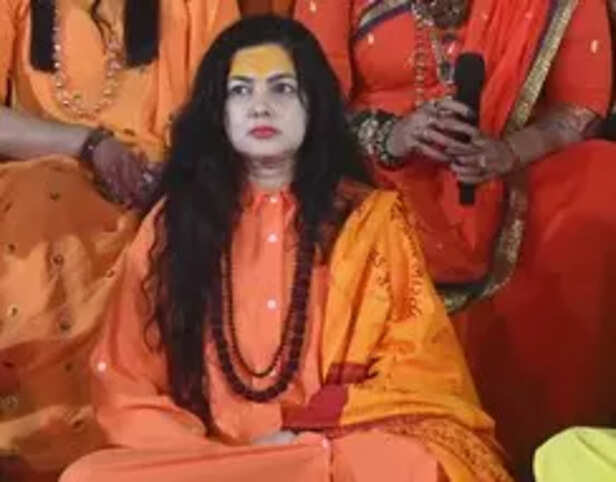
‘Who gave him title of Shankaracharya?’ Mamta Kulkarni criticises Swami Avimukteshwaranand
Image credit : IANS
These are
- Sringeri Sharada Peetham in the south
- Dwaraka Sharada Peetham in the west
- Govardhana Peetham at Puri in the east
- Jyotirmath at Badrinath in the north
This structure is clearly mentioned in traditional lists and is why many scholars and institutions state that India has four Shankaracharyas.
2. Why the Number Four Became the Official Framework
Each matha was linked to a Veda, a Mahavakya, and a specific monastic tradition. The Shankaracharyas of these four seats were meant to function independently but within a shared philosophical system.
Because this framework can be directly traced to Adi Shankaracharya’s lifetime and mission, it is often described as the original and official arrangement.
3. The Emergence of the Kanchi Peeth
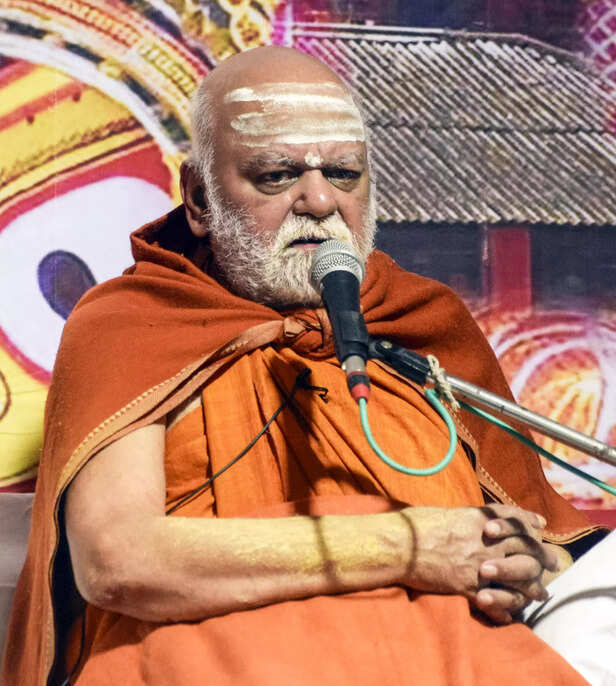
South 24 Parganas, Jan 13 (ANI): Shankaracharya Nishchalananda Saraswati address...
Image credit : ANI
Many followers consider the Kanchi Shankaracharya to be the fifth Shankaracharya. The tradition of Kanchi claims a lineage that traces back to Adi Shankaracharya himself, stating that he established or resided at Kanchi and entrusted it with spiritual authority.
This belief is strong among devotees and has been upheld within that lineage for centuries.
4. Why Kanchi Is Not Included in the Original Four
Classical lists of the four mathas do not mention Kanchi as part of the directional system. The four mathas were created with a clear geographical and philosophical purpose. Kanchi does not fit into this directional structure.
Because of this, historians often describe Kanchi as a later or parallel institution rather than part of the original four mathas.
5. Tradition Versus Documentation
Those who say India has four Shankaracharyas rely on historical records, institutional continuity, and the structure laid down by Adi Shankaracharya.
Those who say India has five rely on living tradition, lineage belief, and spiritual continuity as preserved by the Kanchi Peeth.
Hindu traditions have always allowed both recorded history and lived tradition to coexist. This is why the debate continues without being resolved in a single direction.
6. Authority in Hinduism Is Not Centralised
Each Shankaracharya derives authority from lineage, scholarship, conduct, and acceptance by followers. This means multiple centers of influence can exist without invalidating one another.
Because the Kanchi Shankaracharya holds significant spiritual influence, many naturally count it as an equal seat of authority, even if it is not part of the original four.