
If Ravana Was Evil, Why Is He Worshipped in Some Places?
Nidhi | Feb 18, 2026, 11:54 IST

Ravana
Image credit : Ai
Was Ravana truly evil, or is there more to his story? While most of India burns his effigy during Dussehra, some communities worship him as a scholar, Shiva devotee, and powerful ruler. Backed by references from the Valmiki Ramayana, Shiva Purana, and Bhagavata Purana, this article explores the scriptural, regional, and historical reasons behind Ravana worship. Discover why temples dedicated to Ravana exist and what his complex character really teaches about dharma, ego, and knowledge.
“रामो विग्रहवान् धर्मः”
Rama is the embodiment of dharma.
This declaration from the Valmiki Ramayana sets the tone for how generations have understood the epic. Rama represents righteousness. Ravana represents adharma. Every year on Dussehra, his effigy is burned to symbolize the destruction of evil.
Yet here is a question that unsettles this simple picture.
If Ravana was purely evil, why do some communities in India perform rituals in his name? Why are there temples dedicated to him in parts of Uttar Pradesh, Madhya Pradesh and Rajasthan? Why do certain traditions describe him as a scholar, a Shiva devotee and even a guardian figure?
The answer lies not in denying his wrongdoing, but in understanding the layered portrayal found within scriptures, regional Ramayanas and oral traditions. Ravana is one of the most complex characters in Indian epic literature. He is condemned for abducting Sita, yet praised for his mastery of the Vedas. He is destroyed for arrogance, yet remembered for devotion.
![Nagpur, Oct 2 (ANI): Effigies of Ravana, Kumbhkaran, and Meghnath set ablaze dur...]()
In the Valmiki Ramayana, Ravana is introduced as the son of sage Vishrava and the rakshasi Kaikesi. This makes him a Brahmin by lineage, descending from sage Pulastya, one of the mind born sons of Brahma.
Valmiki describes Ravana as:
This passage is important. The epic itself does not deny Ravana’s intellectual stature. His downfall is not ignorance, but ego.
Ravana’s association with Shiva is deeply rooted in Puranic literature and later devotional traditions.
According to the Shiva Purana, Ravana performed intense penance to please Shiva. In some accounts, he offered his own heads one by one in sacrifice. Pleased with his devotion, Shiva granted him immense power and the celestial sword Chandrahas.
The famous Shiva Tandava Stotram, traditionally attributed to Ravana, reflects extraordinary poetic and philosophical depth. Whether historically composed by him or not, the tradition itself preserves him as a profound Shaivite devotee.
In Shaiva theology, devotion can exist even in morally flawed individuals. Bhakti does not erase karma, but it reveals spiritual intensity. For some Shaiva communities, Ravana’s devotion is worthy of recognition.
![(Bhagavata Purana 9.3.28-33)]()
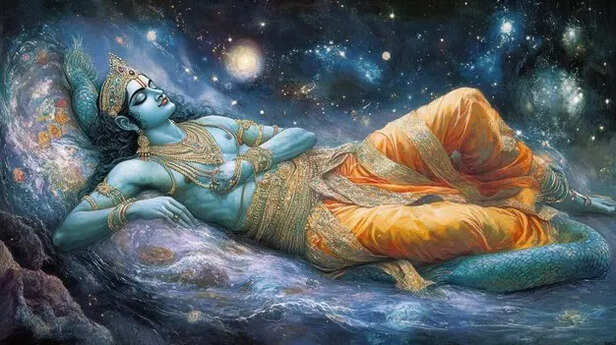
In the Bhagavata Purana, Ravana is described as the rebirth of Jaya, one of the gatekeepers of Vishnu, who was cursed to take birth as an enemy of the Lord. This narrative presents Ravana not as a random villain, but as part of a cosmic cycle.
Similarly, Jain and Buddhist versions of the Ramayana modify his character significantly. In Jain retellings, Ravana is portrayed as a tragic but virtuous king who ultimately follows a path shaped by karma rather than inherent evil.
These variations demonstrate that the portrayal of Ravana has never been uniform. Scriptural traditions themselves allow interpretive space.
Traditional texts such as the Ravana Samhita are attributed to him in later astrological literature. Though modern scholars debate authorship, the very attribution reflects how Ravana was remembered in intellectual history.
Some South Indian traditions credit him with contributions to Ayurveda and music. He is sometimes associated with the invention of the Ravanahatha, a bowed string instrument still used in Rajasthan.
The image that emerges is not of a barbaric demon, but of a cultured and learned monarch whose moral failure overshadowed his achievements.
In Mandore near Jodhpur, Ravana is considered the son in law of the region because of his marriage to Mandodari. Certain communities perform shraddha rituals for him.
In parts of Madhya Pradesh, Ravana temples exist where he is worshipped not as a villain, but as a knowledgeable Brahmin. These practices are localized and do not represent mainstream Hindu worship, yet they persist.
This reflects a broader truth about Indian tradition. Epics are living texts. Communities reinterpret characters through regional memory and identity.
![Ravana and the Blindness of Power]()
The Ramayana does not present a simplistic binary morality. Ravana violates dharma by abducting Sita, yet he adheres to certain codes. He does not assault her without consent. He offers her protection in Ashoka Vatika. He is shown as a responsible ruler to his subjects.
This moral complexity invites reflection rather than blind condemnation.
In Indian philosophy, characters often embody mixtures of guna qualities. Ravana represents immense knowledge combined with overwhelming ego. His ten heads are symbolically interpreted as mastery over the six shastras and four Vedas, or alternatively as ten uncontrolled senses.
Thus, burning his effigy is symbolic. It is not merely about destroying a historical villain. It is about destroying arrogance within oneself.
Vaishnava theology often explains Ravana’s existence as necessary for Rama’s incarnation. Without Ravana, Rama’s purpose as the upholder of dharma would remain incomplete.
This aligns with the Bhagavata Purana narrative of divine play, where even adversaries participate in the unfolding of cosmic order.
In this view, Ravana is not worshipped as a moral ideal, but acknowledged as part of a divine drama.
Modern historians and scholars of religion emphasize that Hindu epics evolved over centuries. The Ramayana has over 300 documented versions across South and Southeast Asia.
In Sri Lanka, some nationalist narratives reinterpret Ravana as an advanced ruler wronged by invaders. These modern reinterpretations are more political than scriptural, yet they influence cultural memory.
Thus, Ravana’s worship in certain places is shaped by layered historical, social and theological influences.
Rama is the embodiment of dharma.
This declaration from the Valmiki Ramayana sets the tone for how generations have understood the epic. Rama represents righteousness. Ravana represents adharma. Every year on Dussehra, his effigy is burned to symbolize the destruction of evil.
Yet here is a question that unsettles this simple picture.
If Ravana was purely evil, why do some communities in India perform rituals in his name? Why are there temples dedicated to him in parts of Uttar Pradesh, Madhya Pradesh and Rajasthan? Why do certain traditions describe him as a scholar, a Shiva devotee and even a guardian figure?
The answer lies not in denying his wrongdoing, but in understanding the layered portrayal found within scriptures, regional Ramayanas and oral traditions. Ravana is one of the most complex characters in Indian epic literature. He is condemned for abducting Sita, yet praised for his mastery of the Vedas. He is destroyed for arrogance, yet remembered for devotion.
1. Scriptural Depiction in the Valmiki Ramayana
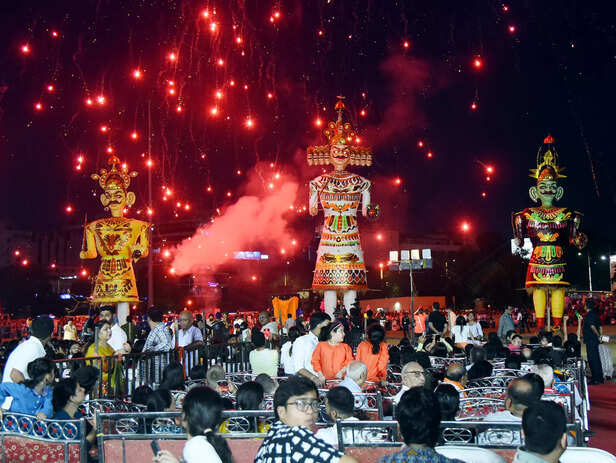
Nagpur, Oct 2 (ANI): Effigies of Ravana, Kumbhkaran, and Meghnath set ablaze dur...
Image credit : ANI
In the Valmiki Ramayana, Ravana is introduced as the son of sage Vishrava and the rakshasi Kaikesi. This makes him a Brahmin by lineage, descending from sage Pulastya, one of the mind born sons of Brahma.
Valmiki describes Ravana as:
- Master of the Vedas and Vedangas
- Skilled in statecraft and warfare
- A formidable ruler of Lanka
- A practitioner of severe tapas
This passage is important. The epic itself does not deny Ravana’s intellectual stature. His downfall is not ignorance, but ego.
2. Ravana’s Devotion to Lord Shiva
According to the Shiva Purana, Ravana performed intense penance to please Shiva. In some accounts, he offered his own heads one by one in sacrifice. Pleased with his devotion, Shiva granted him immense power and the celestial sword Chandrahas.
The famous Shiva Tandava Stotram, traditionally attributed to Ravana, reflects extraordinary poetic and philosophical depth. Whether historically composed by him or not, the tradition itself preserves him as a profound Shaivite devotee.
In Shaiva theology, devotion can exist even in morally flawed individuals. Bhakti does not erase karma, but it reveals spiritual intensity. For some Shaiva communities, Ravana’s devotion is worthy of recognition.
3. Ravana in Puranic and Alternative Traditions
(Bhagavata Purana 9.3.28-33)
Image credit : Freepik
In the Bhagavata Purana, Ravana is described as the rebirth of Jaya, one of the gatekeepers of Vishnu, who was cursed to take birth as an enemy of the Lord. This narrative presents Ravana not as a random villain, but as part of a cosmic cycle.
Similarly, Jain and Buddhist versions of the Ramayana modify his character significantly. In Jain retellings, Ravana is portrayed as a tragic but virtuous king who ultimately follows a path shaped by karma rather than inherent evil.
These variations demonstrate that the portrayal of Ravana has never been uniform. Scriptural traditions themselves allow interpretive space.
4. Ravana as a Scholar of Astrology and Ayurveda
Some South Indian traditions credit him with contributions to Ayurveda and music. He is sometimes associated with the invention of the Ravanahatha, a bowed string instrument still used in Rajasthan.
The image that emerges is not of a barbaric demon, but of a cultured and learned monarch whose moral failure overshadowed his achievements.
5. Regional Worship and Cultural Identity
In parts of Madhya Pradesh, Ravana temples exist where he is worshipped not as a villain, but as a knowledgeable Brahmin. These practices are localized and do not represent mainstream Hindu worship, yet they persist.
This reflects a broader truth about Indian tradition. Epics are living texts. Communities reinterpret characters through regional memory and identity.
6. The Ethical Complexity of Dharma
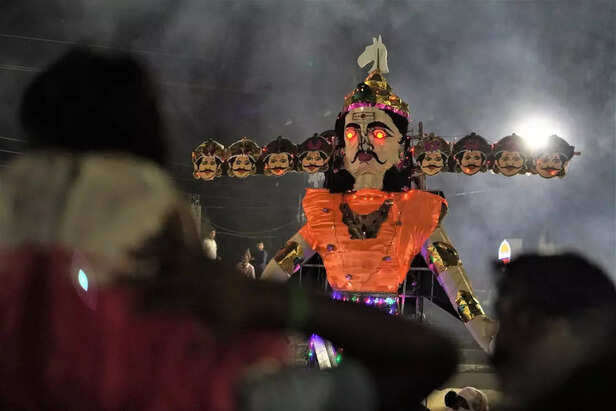
Ravana and the Blindness of Power
Image credit : Pexels
The Ramayana does not present a simplistic binary morality. Ravana violates dharma by abducting Sita, yet he adheres to certain codes. He does not assault her without consent. He offers her protection in Ashoka Vatika. He is shown as a responsible ruler to his subjects.
This moral complexity invites reflection rather than blind condemnation.
In Indian philosophy, characters often embody mixtures of guna qualities. Ravana represents immense knowledge combined with overwhelming ego. His ten heads are symbolically interpreted as mastery over the six shastras and four Vedas, or alternatively as ten uncontrolled senses.
Thus, burning his effigy is symbolic. It is not merely about destroying a historical villain. It is about destroying arrogance within oneself.
7. Theological Interpretation of Cosmic Roles
This aligns with the Bhagavata Purana narrative of divine play, where even adversaries participate in the unfolding of cosmic order.
In this view, Ravana is not worshipped as a moral ideal, but acknowledged as part of a divine drama.
8. Academic and Historical Perspectives
In Sri Lanka, some nationalist narratives reinterpret Ravana as an advanced ruler wronged by invaders. These modern reinterpretations are more political than scriptural, yet they influence cultural memory.
Thus, Ravana’s worship in certain places is shaped by layered historical, social and theological influences.