
How Krishna’s Death Explains Why Even the Best Things Must End
Nidhi | Nov 11, 2025, 16:06 IST

Krishna's Death
Image credit : Times Life Bureau
When Lord Krishna left the world, it wasn’t just the death of a divine being — it was the closing of an era. This article explores the deeper meaning behind Krishna’s death, why it marked the end of Dvapara Yuga, and how it reveals one of life’s greatest spiritual truths: even the most divine and beautiful things must end so new creation can begin.
“जन्म कर्म च मे दिव्यम् एवम् यो वेत्ति तत्त्वतः।
त्यक्त्वा देहं पुनर्जन्म नैति मामेति सोऽर्जुन॥”
(Bhagavad Gita 4.9)
“One who understands the divine nature of My birth and activities does not, upon leaving the body, take birth again, but attains Me.”
When Krishna left the mortal world, it was not merely the death of a divine being. It marked the end of an age. The departure of Krishna closed the Dvapara Yuga and opened the doors to Kali Yuga, an age of darkness, confusion, and decay. But hidden within this cosmic shift lies one of the most profound truths of existence: even the best, the brightest, and the most divine must one day come to an end.
Krishna’s death is not a tragedy. It is a teaching, a reminder that impermanence is not punishment but progression. To understand why even the most perfect moments or beings must pass, one must look deeper into the spiritual and cosmic reasoning behind His departure.
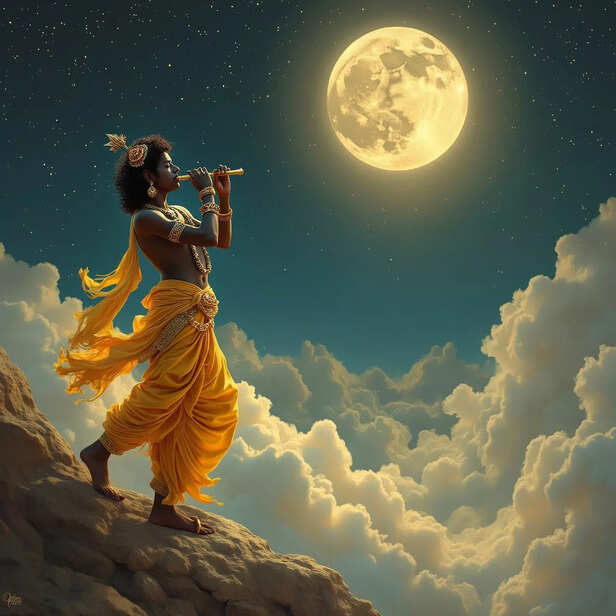
![Krishna ji]() Every Yuga in Hindu cosmology has a distinct moral structure. In Satya Yuga, dharma stands firm on all four legs: truth, purity, compassion, and austerity. By the time of Dvapara Yuga, only two remained. When Krishna was born, dharma was already unstable, and His life became a continuous restoration of balance.
Every Yuga in Hindu cosmology has a distinct moral structure. In Satya Yuga, dharma stands firm on all four legs: truth, purity, compassion, and austerity. By the time of Dvapara Yuga, only two remained. When Krishna was born, dharma was already unstable, and His life became a continuous restoration of balance.
But when even Krishna, the embodiment of dharma, saw that righteousness had lost its foundation, His presence had fulfilled its role. The Mahabharata war was not merely a battle of kingdoms; it was the final exhaustion of karma accumulated over ages. When that balance was restored, there was no further reason for Him to remain. His death signified that the cycle of dharma had completed its intended purpose.
![Universe]() The end of Krishna’s mortal life was initiated by a curse, Gandhari’s curse that the Yadavas, intoxicated by pride, would destroy themselves just as the Kauravas had. It might seem harsh, but curses in Itihasa are not personal vengeance; they are instruments of cosmic law.
The end of Krishna’s mortal life was initiated by a curse, Gandhari’s curse that the Yadavas, intoxicated by pride, would destroy themselves just as the Kauravas had. It might seem harsh, but curses in Itihasa are not personal vengeance; they are instruments of cosmic law.
Even Krishna, the supreme consciousness, was not exempt from the laws of karma and destiny. He accepted Gandhari’s curse with calm understanding. The destruction of the Yadavas, and His own eventual death through the arrow of a hunter, symbolized that no creation, however divine, can escape dissolution once its cosmic role is complete.
This is not defeat but design. The divine too must yield to the rhythm of cosmic renewal.
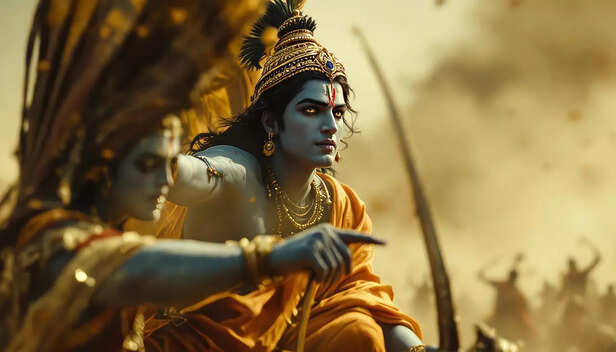
![Mahabharata]() The Yadavas represented a civilization at its peak, wealthy, powerful, and confident. Yet within that abundance grew arrogance and moral decay. Their fall is an archetype for every human age that rises to glory and then collapses from within.
The Yadavas represented a civilization at its peak, wealthy, powerful, and confident. Yet within that abundance grew arrogance and moral decay. Their fall is an archetype for every human age that rises to glory and then collapses from within.
Krishna allowed this self-destruction to unfold. He could have prevented it, but doing so would have violated the law of karma and the inevitability of time. The message was clear: when ego replaces humility, even the most enlightened societies decay. The ending of Krishna’s clan was not punishment; it was reflection, a warning that progress without inner balance leads to ruin.
Krishna’s death came through the arrow of Jara, a hunter who mistook His foot for a deer. For the divine, this was no accident. Krishna chose a mortal end that appeared ordinary to dissolve the illusion of His physical permanence.
In His final act, Krishna displayed the purest form of detachment. He did not resist, He did not mourn, He simply smiled and accepted. That smile holds the essence of vairagya, or spiritual detachment, the acceptance that all forms, even divine ones, must fade when their time is over.
Krishna’s passing teaches that attachment, even to the good, binds one to sorrow. The truly awakened soul sees endings not as losses, but as transitions in the eternal flow of consciousness.
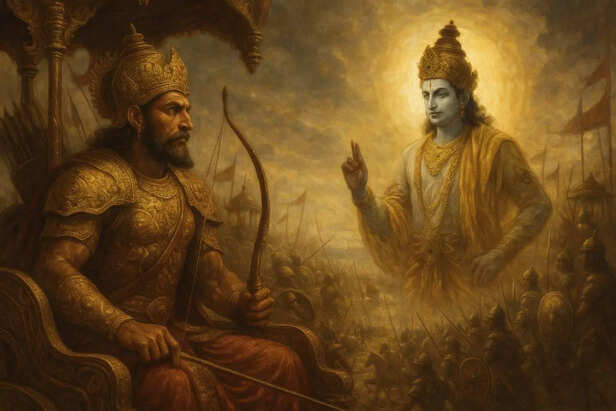
![Mahabharata]() In Hindu cosmology, creation, preservation, and destruction form an eternal triad. Brahma creates, Vishnu sustains, and Shiva dissolves. These are not three gods competing for control; they are one process expressed in three forms.
In Hindu cosmology, creation, preservation, and destruction form an eternal triad. Brahma creates, Vishnu sustains, and Shiva dissolves. These are not three gods competing for control; they are one process expressed in three forms.
Krishna, as Vishnu’s avatar, came to preserve dharma. Once that preservation was complete, dissolution had to follow for renewal to begin. Without destruction, creation cannot happen again. The end of Krishna’s life thus became the seed for a new beginning, the birth of Kali Yuga, which, though darker, holds the potential for inner realization through struggle.
Every ending, therefore, is part of the cosmic rhythm that sustains existence.
After Krishna’s departure, His chariot burned, His flute fell silent, and His kingdom turned to dust. Even Arjuna, who once heard the song of the Gita, found himself powerless. But that silence was necessary.
The divine presence is like music, beautiful, elevating, but momentary. Once the song ends, the silence that follows is where understanding takes root. Krishna’s disappearance forced humanity to live without His visible guidance, to internalize what He taught.
The world had to evolve from devotion to understanding, from external worship to inner realization. The absence of Krishna was not abandonment; it was empowerment, an invitation to find Him within.
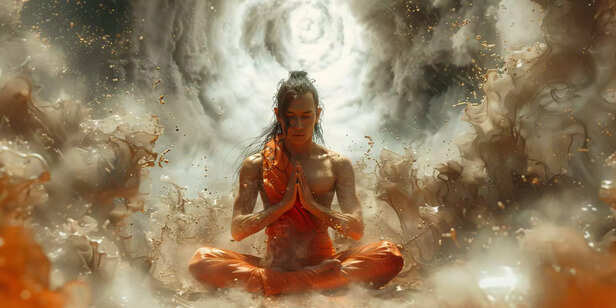
![Kali Yuga Inner Demons]() Many interpret the beginning of Kali Yuga as a fall from virtue, but spiritually, it represents the age of self-effort. When Krishna walked the earth, dharma was visible, and He guided humanity directly. But in Kali Yuga, dharma must be discovered within the confusion of life.
Many interpret the beginning of Kali Yuga as a fall from virtue, but spiritually, it represents the age of self-effort. When Krishna walked the earth, dharma was visible, and He guided humanity directly. But in Kali Yuga, dharma must be discovered within the confusion of life.
This is why His death was necessary. Only when the guiding hand withdraws can the disciple truly learn to walk. Humanity had to step into darkness to seek its own light. The best things must end not because they lose their value, but because they have fulfilled their purpose.
त्यक्त्वा देहं पुनर्जन्म नैति मामेति सोऽर्जुन॥”
(Bhagavad Gita 4.9)
“One who understands the divine nature of My birth and activities does not, upon leaving the body, take birth again, but attains Me.”
When Krishna left the mortal world, it was not merely the death of a divine being. It marked the end of an age. The departure of Krishna closed the Dvapara Yuga and opened the doors to Kali Yuga, an age of darkness, confusion, and decay. But hidden within this cosmic shift lies one of the most profound truths of existence: even the best, the brightest, and the most divine must one day come to an end.
Krishna’s death is not a tragedy. It is a teaching, a reminder that impermanence is not punishment but progression. To understand why even the most perfect moments or beings must pass, one must look deeper into the spiritual and cosmic reasoning behind His departure.
1. The Completion of Dharma’s Cycle
Krishna ji
Image credit : Pixabay
But when even Krishna, the embodiment of dharma, saw that righteousness had lost its foundation, His presence had fulfilled its role. The Mahabharata war was not merely a battle of kingdoms; it was the final exhaustion of karma accumulated over ages. When that balance was restored, there was no further reason for Him to remain. His death signified that the cycle of dharma had completed its intended purpose.
2. The Curse That Reflected Universal Law

Universe
Image credit : Freepik
Even Krishna, the supreme consciousness, was not exempt from the laws of karma and destiny. He accepted Gandhari’s curse with calm understanding. The destruction of the Yadavas, and His own eventual death through the arrow of a hunter, symbolized that no creation, however divine, can escape dissolution once its cosmic role is complete.
This is not defeat but design. The divine too must yield to the rhythm of cosmic renewal.
3. The Decline of the Yadavas as a Mirror of Civilization
Mahabharata
Image credit : Pixabay
Krishna allowed this self-destruction to unfold. He could have prevented it, but doing so would have violated the law of karma and the inevitability of time. The message was clear: when ego replaces humility, even the most enlightened societies decay. The ending of Krishna’s clan was not punishment; it was reflection, a warning that progress without inner balance leads to ruin.
4. The Arrow and the Lesson of Detachment
In His final act, Krishna displayed the purest form of detachment. He did not resist, He did not mourn, He simply smiled and accepted. That smile holds the essence of vairagya, or spiritual detachment, the acceptance that all forms, even divine ones, must fade when their time is over.
Krishna’s passing teaches that attachment, even to the good, binds one to sorrow. The truly awakened soul sees endings not as losses, but as transitions in the eternal flow of consciousness.
5. The Cosmic Purpose of Endings
Mahabharata
Image credit : Pixabay
Krishna, as Vishnu’s avatar, came to preserve dharma. Once that preservation was complete, dissolution had to follow for renewal to begin. Without destruction, creation cannot happen again. The end of Krishna’s life thus became the seed for a new beginning, the birth of Kali Yuga, which, though darker, holds the potential for inner realization through struggle.
Every ending, therefore, is part of the cosmic rhythm that sustains existence.
6. The Silence After the Song
The divine presence is like music, beautiful, elevating, but momentary. Once the song ends, the silence that follows is where understanding takes root. Krishna’s disappearance forced humanity to live without His visible guidance, to internalize what He taught.
The world had to evolve from devotion to understanding, from external worship to inner realization. The absence of Krishna was not abandonment; it was empowerment, an invitation to find Him within.
7. The Dawn of Kali Yuga and Human Awakening
Kali Yuga Inner Demons
Image credit : Freepik
This is why His death was necessary. Only when the guiding hand withdraws can the disciple truly learn to walk. Humanity had to step into darkness to seek its own light. The best things must end not because they lose their value, but because they have fulfilled their purpose.