
If Shiva Destroys Everything, Why Do Millions Pray to Him for Protection?
Nidhi | Jan 05, 2026, 16:47 IST

Lord Shiva
Image credit : Ai
Why do millions turn to Lord Shiva for protection when he is known as the destroyer of the universe? This article explores the deeper spiritual meaning behind Shiva’s dual role as both destroyer and protector, revealing how destruction in Hindu philosophy is not about chaos, but transformation and renewal. Drawing from ancient scriptures, symbolism, and Shaivite beliefs, the piece explains why devotees see Shiva as a guardian who removes danger, ego, and illusion to protect life, balance, and inner peace.
करपुरगौरं करुणावतारं संसारसारं भुजगेन्द्रहारम्।
सदा वसन्तं हृदयारविन्दे भवं भवानीसहितं नमामि॥
Shiva is often introduced as the Destroyer but devotees also call him Shankara, the auspicious one. That “contradiction” is not a flaw in the tradition. It is the point. In Hindu thought, destruction is not only an ending. It is a necessary force that clears what is decayed, false, or harmful, so life can renew itself. Shiva embodies that paradox fully: fierce enough to dissolve the universe, gentle enough to guard a single seeker’s inner peace.
When we say Shiva is both destroyer and protector, we are really describing one unified power working at two levels: the outer world of change and the inner world of transformation.
![Shiva]()
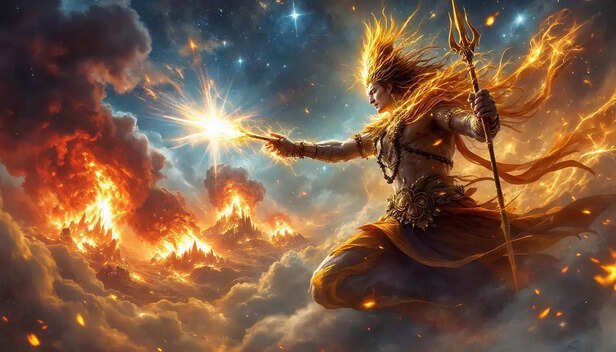
In the Trimurti idea, Brahma is linked with creation, Vishnu with preservation, and Shiva with dissolution. But Hindu philosophy does not treat dissolution as “evil.” It is a cosmic function, like pruning in nature: removal that makes renewal possible. Shiva’s “endings” are what keep reality from becoming stagnant.
This is why Shiva can be called the destroyer and still be revered as deeply benevolent: because what he destroys is often what prevents growth, harmony, and liberation.
The name “Shiva” is widely understood as “auspicious” and “gracious,” while his older Vedic identity “Rudra” carries a more fearsome, storm-like intensity. Hindu tradition preserves both because reality contains both. The same force that can be terrifying to chaos can be protective to sincerity.
So Shiva’s power is not random violence. It is selective intensity: harsh to arrogance, tender to devotion.
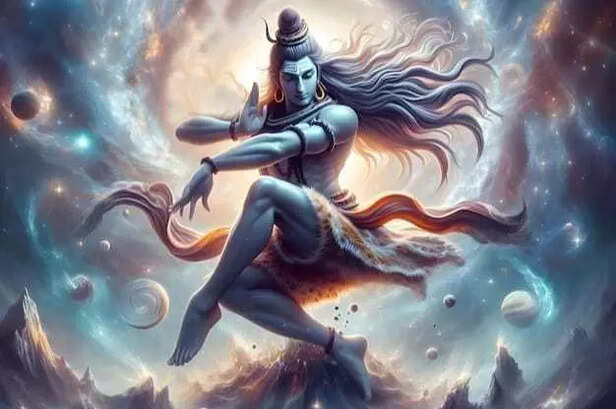
One of the clearest symbols of Shiva’s dual role is Shiva as Nataraja, the cosmic dancer. In this icon, the gestures are read as Shiva’s five activities: creation, protection, destruction, embodiment, and release. The drum signifies creation, the “fear-not” gesture signifies protection, and the flame signifies destruction, all held together in one rhythm.
That’s the philosophy in visual form: the universe is not maintained by preservation alone. It is maintained by balanced cycles, where removal and refuge coexist.
![Shiva Dances He Doesn’t Just Destroy]()
Shiva’s protective dimension is famously expressed in the churning of the ocean of milk narrative: when poison arises that could contaminate and destroy, Shiva contains it in his throat, earning the epithet Neelkantha, the blue-throated one. This myth is remembered not as a spectacle, but as a principle: the protector is the one who can hold danger without letting it spread.
In symbolic terms, Shiva is the capacity to absorb toxicity, fear, and crisis, and still remain steady. Protection here is not the absence of threat. It is mastery over it.
Many Shaiva traditions emphasize that Shiva’s terrifying forms are protective precisely because they are uncompromising against disorder, ignorance, and harmful forces. The protector sometimes appears frightening because protection is not always soft. Some threats do not respond to persuasion, they respond to power that draws a line.
This is why Shiva is invoked in moments of fear: not only to comfort, but to cut through what is dangerous, inside or outside.
Shiva is also associated with time and the vastness that swallows everything. Time destroys youth, certainty, possessions, even identities. Yet time also protects truth: it exposes what is temporary and forces a human being to choose what is real. Shiva as Mahakala is not only “death.” He is the reminder that life is precious because it is impermanent.
In this way, Shiva’s “destruction” becomes protection from delusion. It protects you from building your entire life on what cannot last.
![lord shiva]()
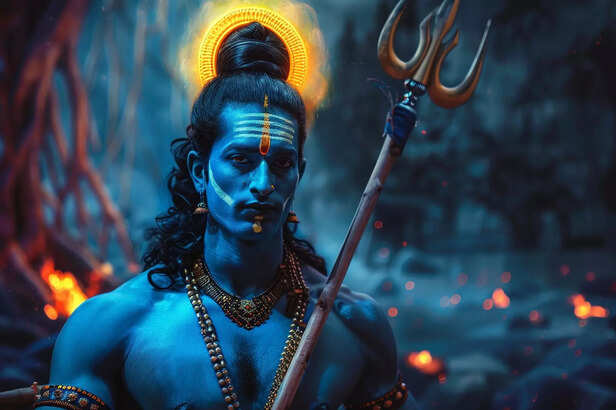
Across Hindu spirituality, the greatest threat is not external. It is inner confusion: ego, craving, and ignorance that distort perception. Shiva’s role repeatedly points toward the removal of this inner knot. When the false self collapses, what remains is clarity, steadiness, and freedom. That collapse feels like destruction, but it functions like protection, because it ends the inner war.
This is why Shiva is strongly linked with meditation, yoga, and inner stillness: not as decoration, but as a technology of transformation.
Another reason Shiva can hold opposites is that his imagery itself holds opposites: solitude and relationship, renunciation and responsibility, stillness and dance. He is not presented as a one-dimensional god. He is the model of integration, suggesting that spiritual maturity is not escaping life, but balancing it without losing your center.
Protection, in that sense, is not only guarding you from harm. It is guarding your wholeness.
सदा वसन्तं हृदयारविन्दे भवं भवानीसहितं नमामि॥
Shiva is often introduced as the Destroyer but devotees also call him Shankara, the auspicious one. That “contradiction” is not a flaw in the tradition. It is the point. In Hindu thought, destruction is not only an ending. It is a necessary force that clears what is decayed, false, or harmful, so life can renew itself. Shiva embodies that paradox fully: fierce enough to dissolve the universe, gentle enough to guard a single seeker’s inner peace.
When we say Shiva is both destroyer and protector, we are really describing one unified power working at two levels: the outer world of change and the inner world of transformation.
Why Shiva Is Both Destroyer and Protector
1) Destruction in Shiva is transformation, not nihilism
Shiva
Image credit : Pixabay
In the Trimurti idea, Brahma is linked with creation, Vishnu with preservation, and Shiva with dissolution. But Hindu philosophy does not treat dissolution as “evil.” It is a cosmic function, like pruning in nature: removal that makes renewal possible. Shiva’s “endings” are what keep reality from becoming stagnant.
This is why Shiva can be called the destroyer and still be revered as deeply benevolent: because what he destroys is often what prevents growth, harmony, and liberation.
2) His very name carries the logic of protection
So Shiva’s power is not random violence. It is selective intensity: harsh to arrogance, tender to devotion.
3) Nataraja shows how creation and protection sit inside destruction
That’s the philosophy in visual form: the universe is not maintained by preservation alone. It is maintained by balanced cycles, where removal and refuge coexist.
4) He protects the world by containing what would poison it
Shiva Dances He Doesn’t Just Destroy
Image credit : Freepik
Shiva’s protective dimension is famously expressed in the churning of the ocean of milk narrative: when poison arises that could contaminate and destroy, Shiva contains it in his throat, earning the epithet Neelkantha, the blue-throated one. This myth is remembered not as a spectacle, but as a principle: the protector is the one who can hold danger without letting it spread.
In symbolic terms, Shiva is the capacity to absorb toxicity, fear, and crisis, and still remain steady. Protection here is not the absence of threat. It is mastery over it.
5) His “fierce” forms are guardians, not merely destroyers
This is why Shiva is invoked in moments of fear: not only to comfort, but to cut through what is dangerous, inside or outside.
6) Mahakala: the destroyer of time who protects meaning
In this way, Shiva’s “destruction” becomes protection from delusion. It protects you from building your entire life on what cannot last.
7) He destroys ego, and that is the deepest protection
lord shiva
Image credit : Freepik
Across Hindu spirituality, the greatest threat is not external. It is inner confusion: ego, craving, and ignorance that distort perception. Shiva’s role repeatedly points toward the removal of this inner knot. When the false self collapses, what remains is clarity, steadiness, and freedom. That collapse feels like destruction, but it functions like protection, because it ends the inner war.
This is why Shiva is strongly linked with meditation, yoga, and inner stillness: not as decoration, but as a technology of transformation.
8) He is both ascetic and householder, protecting balance itself
Protection, in that sense, is not only guarding you from harm. It is guarding your wholeness.