
If Rama Did the Right Thing, Why Did He Bow in Guilt at Rameswaram?
Nidhi | Feb 10, 2026, 16:37 IST

Rameswaram
Image credit : Ai
After killing Ravana, Lord Rama did not mark his victory with celebration. Instead, he travelled to Rameswaram Temple to worship Shiva and seek atonement. This article explores why Rama, despite acting according to Dharma, felt the need for repentance. Drawing from the Ramayana, Puranic traditions, and Hindu philosophy, it explains how righteousness, responsibility, and moral consequence coexist in one of the epic’s most reflective moments.
“न हि धर्मो जयाय केवलम्”
Dharma is not practiced only for victory.
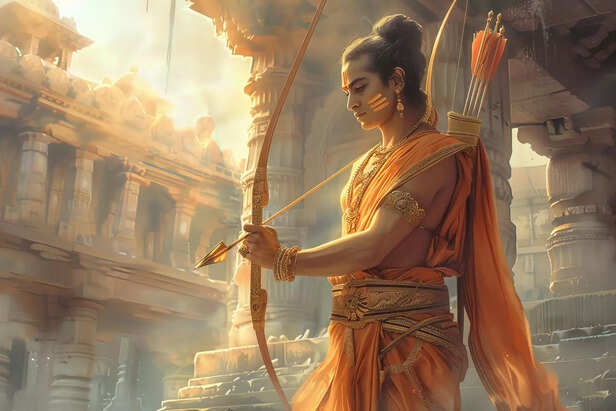
When Rama killed Ravana, the war ended, but the moral journey did not. The Ramayana does not treat Ravana’s death as a moment of unchecked triumph. Instead, it leads Rama to Rameswaram Temple, where he installs a Shiva lingam and seeks purification.
This choice appears contradictory. Ravana was an aggressor. Rama upheld Dharma. Yet Rama bows not in pride, but in humility. The scriptures suggest that killing Ravana, though necessary, carried a spiritual weight that victory alone could not dissolve.
![Rama Chooses Peace Over War]()
In the Ramayana, Rama’s war against Ravana is sanctioned by Dharma. Ravana abducted Sita, violated cosmic order, and had to be stopped. Yet Hindu philosophy never treats Dharma as a moral eraser.
The concept of karma, explained across the Upanishads and epics, makes a clear distinction between justification and consequence. An action may be necessary, even righteous, but it still produces spiritual weight. Rama’s bowing reflects this understanding. Doing the right thing does not mean the action leaves no imprint on the soul.
This idea is deeply relatable. Even today, people make correct but painful decisions and still feel emotional burden afterward.
One of the most cited scriptural explanations comes from the Uttara Kanda of the Ramayana and later Puranic interpretations. Ravana, despite his tyranny, was born a Brahmin and was a learned scholar of the Vedas. In Hindu law texts and Puranas, the killing of a Brahmin is classified as Brahma Hatya, one of the gravest spiritual transgressions.
This does not mean Rama’s action was sinful in intent. It means that the cosmic order still required purification. The Skanda Purana and regional traditions associated with Rameswaram state that Rama worshipped Shiva to absolve the spiritual consequence of Brahma Hatya, not to negate the justice of the war.
This distinction shows a sophisticated moral system where intent and consequence are treated separately.
Most heroic narratives end with triumph. The Ramayana deliberately extends beyond that point. Rama’s journey to Rameswaram happens after Ravana’s death and after Sita’s rescue.
This is significant. Hindu scriptures repeatedly emphasize that Dharma does not conclude with success. In the Mahabharata, Yudhishthira experiences similar moral reckoning after the Kurukshetra war. Victory creates responsibility, not closure.
Rama’s act reminds readers that power and correctness do not free one from introspection. Moral responsibility continues even after justice is served.
The choice of Shiva is not incidental. According to the Shiva Purana, Shiva represents dissolution, detachment, and the transcendence of ego. By worshipping Shiva, Rama symbolically steps out of the role of conqueror and king.
The lingam installed at Rameswaram represents the formless absolute, beyond narratives of hero and villain. Rama does not approach Shiva as a victor seeking validation. He approaches as a human acknowledging limitation within a vast cosmic order.
This moment humanizes Rama. He does not claim moral infallibility simply because he acted righteously.
Modern interpretations often mistake repentance for self doubt. Hindu scripture presents it differently. Repentance is an act of clarity, not confusion.
The Ramayana portrays Rama as someone who understands that moral action requires emotional honesty. He does not suppress the gravity of killing, even when necessary. He faces it directly.
This is a powerful lesson. A person who reflects after acting is stronger than one who hides behind justification. Rama’s bowing shows that Dharma demands inner accountability, not blind confidence.
![Rameswaram, Jan 18 (ANI): Devotees take holy dip at Agni Theertham and perform r...]()
Temples built to commemorate victory usually glorify conquest. Rameswaram does the opposite. Its associated legends, recorded in the Skanda Purana and regional Shaiva texts, describe it as a place of purification and reconciliation.
The geography itself reinforces the idea. Located far from Ayodhya and Lanka, Rameswaram becomes a liminal space between action and reflection. It is where Rama processes what the war required of him.
For devotees, this makes the temple deeply relatable. It speaks to anyone who has done what was necessary but still carries emotional or moral residue.
Rama’s act is often described as seeking forgiveness from Shiva. At a deeper level, it is also about self reconciliation. Hindu philosophy recognizes that living according to Dharma can still leave inner wounds.
Texts like the Bhagavad Gita emphasize equanimity after action. But equanimity is not denial. It comes through acknowledgment. Rama’s worship at Rameswaram represents the healing phase after righteous struggle.
Forgiveness here is not about undoing the past. It is about restoring inner balance.
Dharma is not practiced only for victory.
When Rama killed Ravana, the war ended, but the moral journey did not. The Ramayana does not treat Ravana’s death as a moment of unchecked triumph. Instead, it leads Rama to Rameswaram Temple, where he installs a Shiva lingam and seeks purification.
This choice appears contradictory. Ravana was an aggressor. Rama upheld Dharma. Yet Rama bows not in pride, but in humility. The scriptures suggest that killing Ravana, though necessary, carried a spiritual weight that victory alone could not dissolve.
1. Dharma Does Not Erase the Weight of Action
Rama Chooses Peace Over War
Image credit : Freepik
In the Ramayana, Rama’s war against Ravana is sanctioned by Dharma. Ravana abducted Sita, violated cosmic order, and had to be stopped. Yet Hindu philosophy never treats Dharma as a moral eraser.
The concept of karma, explained across the Upanishads and epics, makes a clear distinction between justification and consequence. An action may be necessary, even righteous, but it still produces spiritual weight. Rama’s bowing reflects this understanding. Doing the right thing does not mean the action leaves no imprint on the soul.
This idea is deeply relatable. Even today, people make correct but painful decisions and still feel emotional burden afterward.
2. The Killing of a Brahmin Carried Spiritual Consequence
This does not mean Rama’s action was sinful in intent. It means that the cosmic order still required purification. The Skanda Purana and regional traditions associated with Rameswaram state that Rama worshipped Shiva to absolve the spiritual consequence of Brahma Hatya, not to negate the justice of the war.
This distinction shows a sophisticated moral system where intent and consequence are treated separately.
3. Victory Is Not the End of Moral Duty
This is significant. Hindu scriptures repeatedly emphasize that Dharma does not conclude with success. In the Mahabharata, Yudhishthira experiences similar moral reckoning after the Kurukshetra war. Victory creates responsibility, not closure.
Rama’s act reminds readers that power and correctness do not free one from introspection. Moral responsibility continues even after justice is served.
4. Worshipping Shiva Represents Surrender of Ego
The lingam installed at Rameswaram represents the formless absolute, beyond narratives of hero and villain. Rama does not approach Shiva as a victor seeking validation. He approaches as a human acknowledging limitation within a vast cosmic order.
This moment humanizes Rama. He does not claim moral infallibility simply because he acted righteously.
5. Repentance Is Shown as Moral Strength, Not Weakness
The Ramayana portrays Rama as someone who understands that moral action requires emotional honesty. He does not suppress the gravity of killing, even when necessary. He faces it directly.
This is a powerful lesson. A person who reflects after acting is stronger than one who hides behind justification. Rama’s bowing shows that Dharma demands inner accountability, not blind confidence.
6. Rameswaram Is a Space of Inner Reckoning, Not Celebration
Rameswaram, Jan 18 (ANI): Devotees take holy dip at Agni Theertham and perform r...
Image credit : ANI
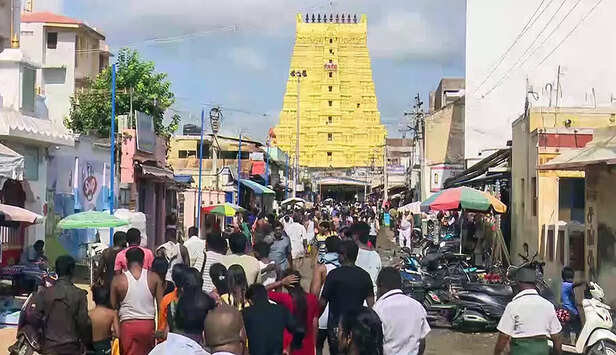
Temples built to commemorate victory usually glorify conquest. Rameswaram does the opposite. Its associated legends, recorded in the Skanda Purana and regional Shaiva texts, describe it as a place of purification and reconciliation.
The geography itself reinforces the idea. Located far from Ayodhya and Lanka, Rameswaram becomes a liminal space between action and reflection. It is where Rama processes what the war required of him.
For devotees, this makes the temple deeply relatable. It speaks to anyone who has done what was necessary but still carries emotional or moral residue.
7. Forgiveness in Hindu Thought Is Also Inward
Texts like the Bhagavad Gita emphasize equanimity after action. But equanimity is not denial. It comes through acknowledgment. Rama’s worship at Rameswaram represents the healing phase after righteous struggle.
Forgiveness here is not about undoing the past. It is about restoring inner balance.