
Why Is Shiva Called Mahakal? The God Who Rules Over Time Itself
Nidhi | Oct 31, 2025, 09:43 IST

Mahadev
Image credit : Times Life Bureau
Why is Lord Shiva known as Mahakal, the ruler of time and death? This article explores the deep meaning behind the title — from its roots in Hindu philosophy to the legend of Mahakaleshwar in Ujjain. Learn how Mahakal represents the timeless, formless power that transcends life and death. Through mythology, temple history, and spiritual symbolism, understand what it truly means when Shiva is called The God Who Rules Over Time Itself.
“कालाय तस्मै नमः” — Salutations to Him who is Time itself.
Time spares no one — kings, gods, and galaxies all bow before it. Every second brings birth, decay, and disappearance. Yet in the heart of this unstoppable flow stands one being untouched, unmoved, and eternal -Shiva, the Mahakal.
To the devotee, he is not just a god but the very force that governs existence. He is the one who witnesses the rise and fall of worlds, who ends time only to begin it again. While every being fears death, death itself fears Mahakal.
The word Mahakal comes from Maha, meaning great, and Kala, meaning time or death. Together, it means “The Great Time” - the one who commands time rather than being ruled by it. To understand why Shiva is called Mahakal is to understand the most profound truth of existence: that the eternal cannot die, and the timeless cannot decay.
1. The
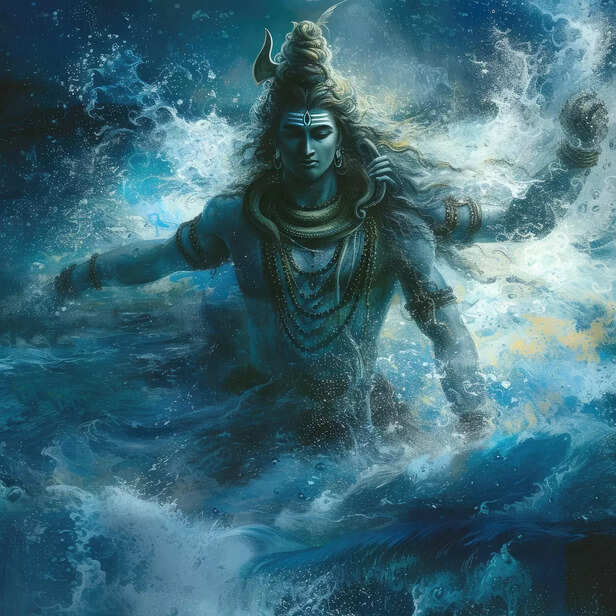
![Shiva]() In Hindu philosophy,Kalarepresents both time and death. Everything in the universe, from galaxies to souls, moves under its command. ButMahakalstands beyond it. Shiva as Mahakal is not just the one who destroys but the one who transcends. He is the stillness that remains when time ceases to flow. TheShiva Puranadescribes Mahakal as the point from which time begins and into which it dissolves again.
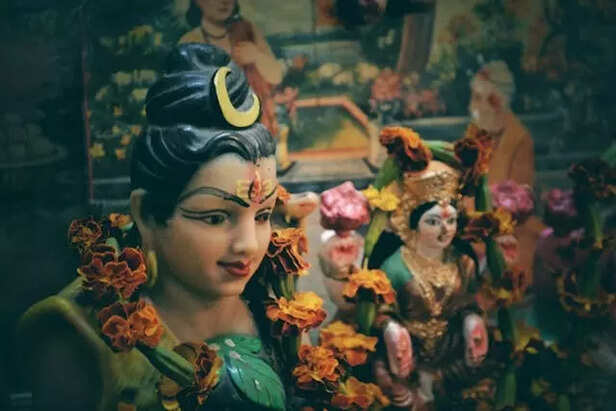
In Hindu philosophy,Kalarepresents both time and death. Everything in the universe, from galaxies to souls, moves under its command. ButMahakalstands beyond it. Shiva as Mahakal is not just the one who destroys but the one who transcends. He is the stillness that remains when time ceases to flow. TheShiva Puranadescribes Mahakal as the point from which time begins and into which it dissolves again. ![Shiva]() According to the Shiva Purana and the legends of Ujjain, a demon named Dushana once disturbed the devotees of Shiva. To protect them, Shiva appeared as Mahakal — a radiant, blazing form that defeated the demon in an instant. Pleased by his devotees’ faith, Shiva promised to stay in Ujjain forever as Mahakaleshwar. That is how Ujjain became one of the twelve Jyotirlingas, where Shiva’s presence as Mahakal continues to be worshipped eternally.
According to the Shiva Purana and the legends of Ujjain, a demon named Dushana once disturbed the devotees of Shiva. To protect them, Shiva appeared as Mahakal — a radiant, blazing form that defeated the demon in an instant. Pleased by his devotees’ faith, Shiva promised to stay in Ujjain forever as Mahakaleshwar. That is how Ujjain became one of the twelve Jyotirlingas, where Shiva’s presence as Mahakal continues to be worshipped eternally.
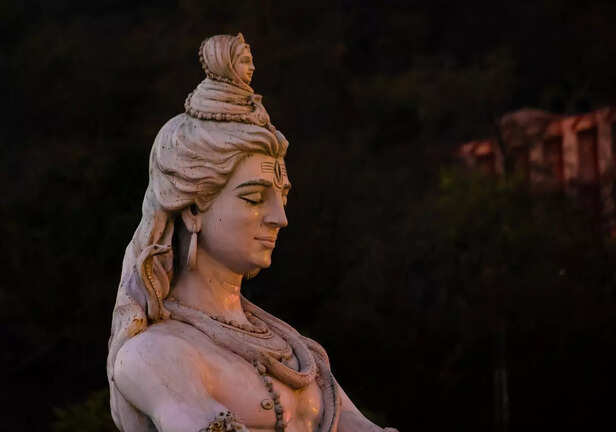
![lord shiva]() TheKatha Upanishadcalls time both creator and destroyer. Yet, even time is said to bow before Shiva. Mahakal represents that state of consciousness which witnesses time but is untouched by it. In this sense, Mahakal is not only the ruler of time but also its origin. Philosophically, this teaches that awareness — the true Self — is timeless, and that realization frees one from fear of death.In Sanskrit, Kala also means death because time and death are two sides of the same truth. Every moment that passes brings transformation. Shiva as Mahakal symbolizes that transformation on the cosmic scale. He is not the end but the process of renewal. This is why Shiva is called Mrityunjaya, the conqueror of death. Mahakal represents the truth that consciousness cannot die, only the forms it inhabits do.
TheKatha Upanishadcalls time both creator and destroyer. Yet, even time is said to bow before Shiva. Mahakal represents that state of consciousness which witnesses time but is untouched by it. In this sense, Mahakal is not only the ruler of time but also its origin. Philosophically, this teaches that awareness — the true Self — is timeless, and that realization frees one from fear of death.In Sanskrit, Kala also means death because time and death are two sides of the same truth. Every moment that passes brings transformation. Shiva as Mahakal symbolizes that transformation on the cosmic scale. He is not the end but the process of renewal. This is why Shiva is called Mrityunjaya, the conqueror of death. Mahakal represents the truth that consciousness cannot die, only the forms it inhabits do.
![Dharma]() Ujjain, one of the holiest cities in India, is home to the Mahakaleshwar temple, one of the twelve Jyotirlingas. The Skanda Purana describes it as the place where Shiva manifested to protect the universe from imbalance. The temple’s famous Bhasma Aarti, performed each dawn with sacred ash, reminds devotees that all matter returns to dust, and from that dust rises new life. Ujjain is not only a pilgrimage site but a symbol of Shiva’s presence in every cycle of destruction and creation.
Ujjain, one of the holiest cities in India, is home to the Mahakaleshwar temple, one of the twelve Jyotirlingas. The Skanda Purana describes it as the place where Shiva manifested to protect the universe from imbalance. The temple’s famous Bhasma Aarti, performed each dawn with sacred ash, reminds devotees that all matter returns to dust, and from that dust rises new life. Ujjain is not only a pilgrimage site but a symbol of Shiva’s presence in every cycle of destruction and creation.
![Lord Shiva]()
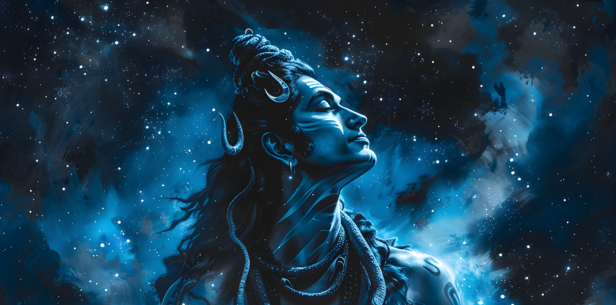
The message of Mahakal is not fear but freedom. By remembering Mahakal, one remembers that everything changes except consciousness. The cycle of creation and destruction is constant, but the awareness within remains eternal. To see life through the eyes of Mahakal is to accept time’s flow without resistance. It is to live fully in the moment, knowing that the eternal is never lost.
Time spares no one — kings, gods, and galaxies all bow before it. Every second brings birth, decay, and disappearance. Yet in the heart of this unstoppable flow stands one being untouched, unmoved, and eternal -Shiva, the Mahakal.
To the devotee, he is not just a god but the very force that governs existence. He is the one who witnesses the rise and fall of worlds, who ends time only to begin it again. While every being fears death, death itself fears Mahakal.
The word Mahakal comes from Maha, meaning great, and Kala, meaning time or death. Together, it means “The Great Time” - the one who commands time rather than being ruled by it. To understand why Shiva is called Mahakal is to understand the most profound truth of existence: that the eternal cannot die, and the timeless cannot decay.
1. The Meaning of Mahakal : The End of Time
Shiva
Image credit : Pixabay
2. The Birth of the Mahakal Form
Shiva
Image credit : Pexels
3. Mahakal as the Lord of Time
lord shiva
Image credit : Pixabay
4. Mahakal and Death as Transformation
5. Ujjain: The Abode of Mahakal
Dharma
Image credit : Freepik
6. The Message of Mahakal: Liberation Through Awareness
Lord Shiva
Image credit : Pixabay
The message of Mahakal is not fear but freedom. By remembering Mahakal, one remembers that everything changes except consciousness. The cycle of creation and destruction is constant, but the awareness within remains eternal. To see life through the eyes of Mahakal is to accept time’s flow without resistance. It is to live fully in the moment, knowing that the eternal is never lost.