
Why Is Shiva Worshipped in Five Directions? Panchamukha Shiva
Nidhi | Feb 26, 2026, 17:49 IST

Lord Shiva
Image credit : Ai
Why does Lord Shiva appear with five faces in some temples? The Panchamukha Shiva form represents the five cosmic directions, five elements, and five divine functions of the universe. Discover the deep spiritual and scriptural meaning behind Shiva’s worship in five directions.
“ईशानः सर्वविद्यानाम् ईश्वरः सर्वभूतानाम्।”
The scriptures declare Shiva as the lord of all knowledge and all beings. Yet in some temples, he is not shown with one calm face, but with five. Four looking across the horizon. One gazing upward into the infinite.
Why would the divine need five faces?
The answer is not artistic creativity. It is philosophy carved into stone. Panchamukha Shiva is a declaration that reality cannot be understood from a single viewpoint. Life is not one dimensional. It is born, sustained, dissolved, concealed, and ultimately liberated. The five faces of Shiva represent this total movement of existence.
When devotees worship Shiva in five directions, they are not multiplying God. They are expanding their understanding of him.
![Shiva Protecting Through Destruction]()
Life does not move in a straight line. It is created, sustained, dissolved, hidden, and renewed again. Shaiva philosophy calls these five movements Srishti, Sthiti, Samhara, Tirobhava, and Anugraha. Panchamukha Shiva embodies these five cosmic functions.
Each face represents one movement of existence. Creation in the east. Preservation in the north. Dissolution in the south. Concealment in the west. Grace rising upward. Together they form a complete cycle, reminding us that destruction is not the end and concealment is not absence. Everything flows within divine order.
The five faces also correspond to earth, water, fire, air, and space. These elements are not abstract ideas. They are the structure of the human body and the world we inhabit.
Earth gives stability. Water gives flow. Fire gives transformation. Air gives movement. Space gives expansion. By worshipping Shiva in five directions, devotees symbolically align themselves with these forces. It is a reminder that the sacred is not separate from nature. It is woven into it.
![Mount Kailash and Mansarovar Lake]()
Most deities are depicted facing one direction. Panchamukha Shiva faces four directions and upward. This is a theological statement. It declares omnipresence.
The east symbolizes beginnings and illumination. The south signifies transformation and the mystery of endings. The north represents knowledge and ascent. The west invites introspection. The upward facing Ishana transcends all directions. It points toward liberation.
Through this form, temples teach that Shiva is not confined to geography. He is the consciousness present in every direction of existence.
Panchamukha Shiva also mirrors the inner journey of awareness. Human experience moves through waking, dreaming, deep sleep, and higher states of awareness. Beyond them lies pure consciousness.
The five faces symbolize these layers. They invite contemplation of who we are beyond our roles and identities. Worship here becomes introspection. The external idol becomes a map of internal awakening.
The number five holds deep meaning in Shaivism. Five syllables of the mantra Namah Shivaya. Five elements. Five senses. Five sheaths described in Vedantic thought. The repetition of five reflects completeness.
Panchamukha Shiva is not multiplication. It is integration. It gathers all aspects of existence into one unified vision. Nothing is outside the divine framework.
The scriptures declare Shiva as the lord of all knowledge and all beings. Yet in some temples, he is not shown with one calm face, but with five. Four looking across the horizon. One gazing upward into the infinite.
Why would the divine need five faces?
The answer is not artistic creativity. It is philosophy carved into stone. Panchamukha Shiva is a declaration that reality cannot be understood from a single viewpoint. Life is not one dimensional. It is born, sustained, dissolved, concealed, and ultimately liberated. The five faces of Shiva represent this total movement of existence.
When devotees worship Shiva in five directions, they are not multiplying God. They are expanding their understanding of him.
1. The Universe Is Not Linear
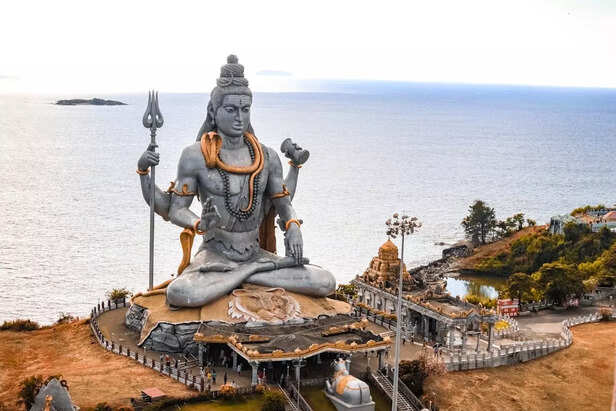
Shiva Protecting Through Destruction
Image credit : Pexels
Life does not move in a straight line. It is created, sustained, dissolved, hidden, and renewed again. Shaiva philosophy calls these five movements Srishti, Sthiti, Samhara, Tirobhava, and Anugraha. Panchamukha Shiva embodies these five cosmic functions.
Each face represents one movement of existence. Creation in the east. Preservation in the north. Dissolution in the south. Concealment in the west. Grace rising upward. Together they form a complete cycle, reminding us that destruction is not the end and concealment is not absence. Everything flows within divine order.
2. The Elements Within and Around Us
Earth gives stability. Water gives flow. Fire gives transformation. Air gives movement. Space gives expansion. By worshipping Shiva in five directions, devotees symbolically align themselves with these forces. It is a reminder that the sacred is not separate from nature. It is woven into it.
3. Presence Beyond Boundaries
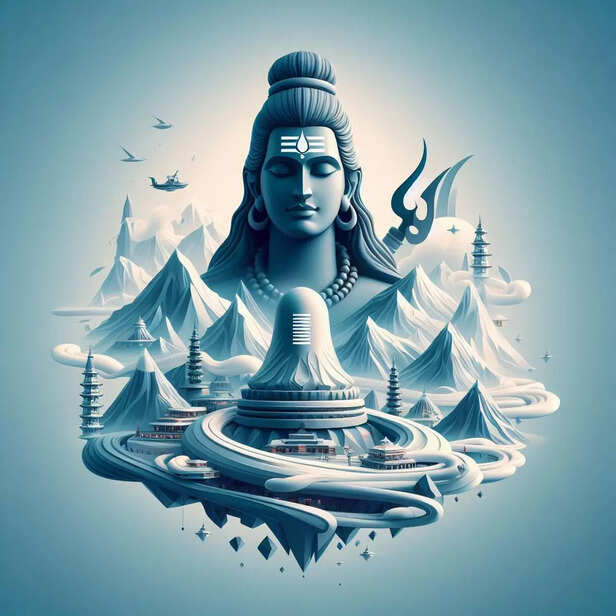
Mount Kailash and Mansarovar Lake
Image credit : Pixabay
Most deities are depicted facing one direction. Panchamukha Shiva faces four directions and upward. This is a theological statement. It declares omnipresence.
The east symbolizes beginnings and illumination. The south signifies transformation and the mystery of endings. The north represents knowledge and ascent. The west invites introspection. The upward facing Ishana transcends all directions. It points toward liberation.
Through this form, temples teach that Shiva is not confined to geography. He is the consciousness present in every direction of existence.
4. Layers of Consciousness
The five faces symbolize these layers. They invite contemplation of who we are beyond our roles and identities. Worship here becomes introspection. The external idol becomes a map of internal awakening.
5. The Power of the Sacred Five
Panchamukha Shiva is not multiplication. It is integration. It gathers all aspects of existence into one unified vision. Nothing is outside the divine framework.