
Why Temples Face East and Not North, South, or West
Nidhi | Nov 11, 2025, 10:02 IST

Hanuman Ji Temple Rituals
Image credit : Freepik
Have you ever wondered why almost every Hindu temple in India faces the east? The answer goes far beyond tradition — it lies in the cosmic principles of Vastu Shastra, solar alignment, and spiritual energy flow. This article explores why ancient architects oriented temples toward the sunrise and what it means in terms of faith, energy, and cosmic balance. Learn how the east-facing design connects devotees with divine consciousness — and why other directions like north, south, or west hold different symbolic powers.
“ऊर्ध्वं मूलमधः शाखमश्वत्थं प्राहुरव्ययम्।”
— Bhagavad Gita 15.1
(“With roots above and branches below, the eternal Ashvattha tree reflects the divine order of creation.”)
When you walk into a temple at sunrise, the first rays of light fall not on the walls, but on the deity’s face. This is no coincidence. Across India, from the smallest village shrine to the grandest Dravidian temple, one thing is almost universal — they face the east.
But why east? The answer lies not merely in religious ritual, but in the intersection of astronomy, philosophy, and sacred geometry. Temples in India were not built as mere places of worship; they were designed as living instruments of cosmic alignment, connecting human consciousness to universal order.
![Temple]()
In almost every ancient culture, east is the direction of the rising sun, the bringer of light, energy, and life. In Vedic philosophy, light (Jyoti) is not just physical brightness — it symbolizes knowledge, awareness, and awakening.
When a devotee enters an east-facing temple, they symbolically move from darkness (ignorance) to light (enlightenment). This journey mirrors the Upanishadic phrase, “Tamaso mā jyotir gamaya” — Lead me from darkness to light.
The temple’s alignment ensures that the first rays of the sun fall on the deity at dawn, energizing the sanctum and connecting the devotee’s consciousness to the cosmic rhythm.
![Temples]() According to Vastu Shastra and Vedic cosmology, each direction is presided over by a divine force. The East belongs to Indra, the king of the Devas, associated with energy, beginnings, and vitality.
According to Vastu Shastra and Vedic cosmology, each direction is presided over by a divine force. The East belongs to Indra, the king of the Devas, associated with energy, beginnings, and vitality.
Thus, orienting temples toward the east was believed to invite divine blessings and harmony with the natural order. When priests perform morning rituals facing east, they align themselves with the realm of the gods — reaffirming humanity’s place within the divine hierarchy of the cosmos.
![Sacred Nandi in Temple Worship]() Indian temple architecture follows astronomical precision. The orientation to the east was not symbolic alone — it was calculated scientifically using the sun’s path, known as the Ecliptic.
Indian temple architecture follows astronomical precision. The orientation to the east was not symbolic alone — it was calculated scientifically using the sun’s path, known as the Ecliptic.
Ancient architects, the Sthapatis, determined the temple’s orientation through the Shanku Yantra, a simple sundial used to trace solar movement. On specific days of the year — often during equinoxes or solstices — the sun’s rays are designed to illuminate the main deity.
For example, in the Sun Temple at Konark, the chariot of Surya is positioned so that sunlight enters the sanctum at sunrise. Similarly, the Meenakshi Temple in Madurai and Virupaksha Temple in Hampi are aligned to allow light to strike the deity at certain times of the year, marking cosmic events through architecture.
In Vedic tradition, life is cyclical, not linear — death leads to rebirth, and every ending marks a new beginning. East, as the direction of sunrise, signifies new life, creation, and the renewal of energy.
By facing east, temples become gateways of rebirth — spiritual and psychological. The act of facing east during prayer mirrors the rebirth of consciousness each morning. It aligns human rhythms with the rhythm of the universe, reminding devotees that the divine is not separate from nature but woven into its cycles.
Temples are not random constructions; they are designed as microcosms of the universe. The journey through a temple mirrors the journey of the soul — from the outer world (body and senses) to the inner sanctum (spirit).
When devotees enter from the east and walk toward the west-facing sanctum, they symbolically move from the rising light into the inner darkness — representing introspection and realization. Inside the sanctum, the divine light awaits.
This architectural symbolism teaches that true light is not outside, but within — the journey inward is what transforms perception into wisdom.
![Temples]() At the heart of Indian architecture lies the Vastu Purusha Mandala, a sacred geometric grid representing the body of the cosmic being — Vastu Purusha.
At the heart of Indian architecture lies the Vastu Purusha Mandala, a sacred geometric grid representing the body of the cosmic being — Vastu Purusha.
In this grid, the head of the cosmic being lies in the East, symbolizing consciousness and awakening. Therefore, placing the temple entrance in the east aligns the devotee’s approach with the flow of spiritual energy — from the head (divine consciousness) toward the heart (devotion).
This directional design ensures that the prana (life energy) of the temple circulates naturally, making the space energetically vibrant. It is not merely aesthetic — it is metaphysical architecture.
Hindu rituals are deeply tied to the movement of the sun. The Sandhya Vandana (prayers at sunrise, noon, and sunset) honors the solar cycle as a reflection of divine consciousness.
By facing east, priests and devotees absorb the vital solar energy during morning rituals. Ancient texts describe this as Surya Arghya — the offering of water to the rising sun, symbolizing surrender to cosmic order.
Temples were designed to amplify these solar energies, creating spaces that enhance meditation, focus, and the subtle exchange between body and cosmos.
![Temple solitude]() Architectural orientation also influences the human psyche. Studies in environmental psychology suggest that morning light regulates circadian rhythm, serotonin levels, and mental clarity.
Architectural orientation also influences the human psyche. Studies in environmental psychology suggest that morning light regulates circadian rhythm, serotonin levels, and mental clarity.
Ancient architects intuitively understood this. By ensuring temples faced east, they allowed the morning sunlight to stimulate energy and calm the mind, setting the tone for spiritual focus.
Thus, temple design harmonized not only with celestial geometry but also with human biology, bridging spirituality and science.
While most temples face east, there are significant exceptions — and even they reveal cosmic reasoning.
— Bhagavad Gita 15.1
(“With roots above and branches below, the eternal Ashvattha tree reflects the divine order of creation.”)
When you walk into a temple at sunrise, the first rays of light fall not on the walls, but on the deity’s face. This is no coincidence. Across India, from the smallest village shrine to the grandest Dravidian temple, one thing is almost universal — they face the east.
But why east? The answer lies not merely in religious ritual, but in the intersection of astronomy, philosophy, and sacred geometry. Temples in India were not built as mere places of worship; they were designed as living instruments of cosmic alignment, connecting human consciousness to universal order.
1. East Represents the Source of Light and Knowledge
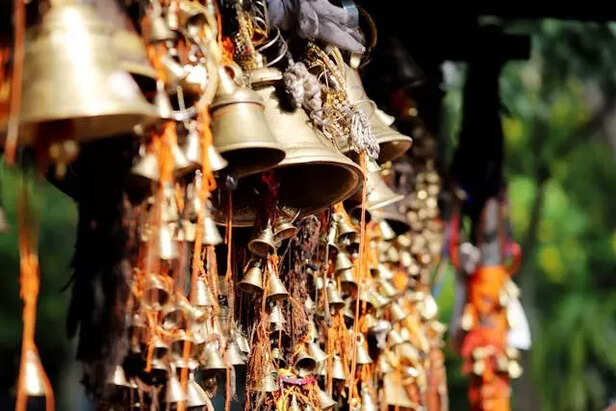
Temple
Image credit : Pexels
In almost every ancient culture, east is the direction of the rising sun, the bringer of light, energy, and life. In Vedic philosophy, light (Jyoti) is not just physical brightness — it symbolizes knowledge, awareness, and awakening.
When a devotee enters an east-facing temple, they symbolically move from darkness (ignorance) to light (enlightenment). This journey mirrors the Upanishadic phrase, “Tamaso mā jyotir gamaya” — Lead me from darkness to light.
The temple’s alignment ensures that the first rays of the sun fall on the deity at dawn, energizing the sanctum and connecting the devotee’s consciousness to the cosmic rhythm.
2. The East Is the Direction of the Devas
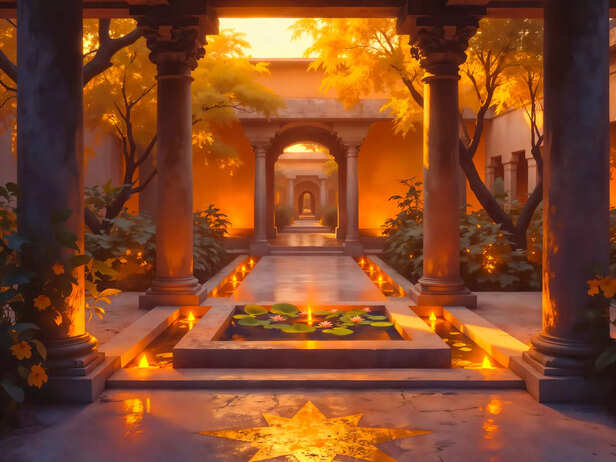
Temples
Image credit : Freepik
Thus, orienting temples toward the east was believed to invite divine blessings and harmony with the natural order. When priests perform morning rituals facing east, they align themselves with the realm of the gods — reaffirming humanity’s place within the divine hierarchy of the cosmos.
3. The Science of Solar Alignment in Temple Design
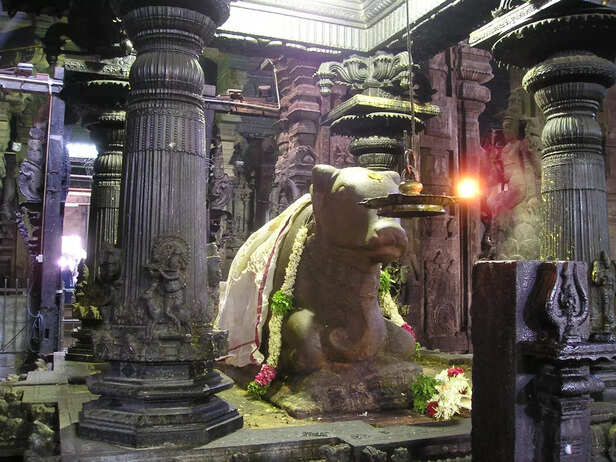
Sacred Nandi in Temple Worship
Image credit : Pixabay
Ancient architects, the Sthapatis, determined the temple’s orientation through the Shanku Yantra, a simple sundial used to trace solar movement. On specific days of the year — often during equinoxes or solstices — the sun’s rays are designed to illuminate the main deity.
For example, in the Sun Temple at Konark, the chariot of Surya is positioned so that sunlight enters the sanctum at sunrise. Similarly, the Meenakshi Temple in Madurai and Virupaksha Temple in Hampi are aligned to allow light to strike the deity at certain times of the year, marking cosmic events through architecture.
4. The East Symbolizes Birth and Renewal
By facing east, temples become gateways of rebirth — spiritual and psychological. The act of facing east during prayer mirrors the rebirth of consciousness each morning. It aligns human rhythms with the rhythm of the universe, reminding devotees that the divine is not separate from nature but woven into its cycles.
5. The East–West Axis Mirrors the Journey of Life
When devotees enter from the east and walk toward the west-facing sanctum, they symbolically move from the rising light into the inner darkness — representing introspection and realization. Inside the sanctum, the divine light awaits.
This architectural symbolism teaches that true light is not outside, but within — the journey inward is what transforms perception into wisdom.
6. Vastu Purusha Mandala and Cosmic Energy Flow
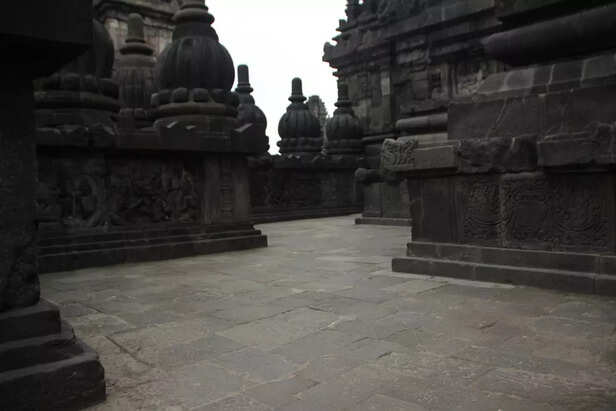
Temples
Image credit : Freepik
In this grid, the head of the cosmic being lies in the East, symbolizing consciousness and awakening. Therefore, placing the temple entrance in the east aligns the devotee’s approach with the flow of spiritual energy — from the head (divine consciousness) toward the heart (devotion).
This directional design ensures that the prana (life energy) of the temple circulates naturally, making the space energetically vibrant. It is not merely aesthetic — it is metaphysical architecture.
7. Morning Rituals and the Sun Connection
By facing east, priests and devotees absorb the vital solar energy during morning rituals. Ancient texts describe this as Surya Arghya — the offering of water to the rising sun, symbolizing surrender to cosmic order.
Temples were designed to amplify these solar energies, creating spaces that enhance meditation, focus, and the subtle exchange between body and cosmos.
8. The East-Facing Entrance and Human Psychology

Temple solitude
Image credit : Freepik
Ancient architects intuitively understood this. By ensuring temples faced east, they allowed the morning sunlight to stimulate energy and calm the mind, setting the tone for spiritual focus.
Thus, temple design harmonized not only with celestial geometry but also with human biology, bridging spirituality and science.
9. Exceptions That Follow the Rule
- West-facing temples (like the Jagannath Temple in Puri) honor the setting sun, symbolizing completion, renunciation, and moksha.
- North-facing temples (like Kedarnath) represent spiritual ascent and connection with divine wisdom.
- South-facing deities (like Kalahasti or Hanuman temples) embody destruction of negativity, as the south is ruled by Yama, the god of death.