
5 Hanuman Temples in South India That Time, War, and Invasions Failed to Break
Riya Kumari | Jan 07, 2026, 17:38 IST

Hanuman temples
Image credit : AI
History usually records who won. Temples record who endured. Across South India, certain Hanuman temples remain untouched not because they were invisible but because faith here learned how to outlast violence, time, and forgetting. These shrines were climbed to, hidden, protected, whispered about, and returned to, not as monuments of conquest, but as shelters of inner strength.
Some places don’t impress you with scale. They don’t shout history. They breathe it. South India’s Hanuman temples are not just survivors of invasions or witnesses to wars; they are spaces where faith learned how to adapt, hide, wait, and return. Each temple carries a different kind of strength: architectural, symbolic, psychological and each offers a distinct experience to the person who stands there quietly long enough. This is not about “miracles” meant to impress. This is about presence: what you feel when stone, belief, and human endurance intersect.
Anjanadri Hill Temple, Hampi (Karnataka)
![Anjanadri Hill Temple]()
Anjanadri is not a temple you arrive at easily. You climb for it. Hundreds of stone steps wind up a barren hill, with nothing dramatic guiding you upward: no grand gates, no ornamentation trying to persuade you. The climb itself becomes the ritual. Breath slows. Thought thins. Ego sheds. This hill is believed to be Hanuman’s birthplace, but what truly makes it special is how unremarkable it chooses to be. The idol is simple. The structure is restrained. The view - vast and quiet, does most of the speaking.
Standing there, surrounded by the ruins of the once-mighty Vijayanagara Empire, something becomes clear:
power does not need permanence to matter. Kings vanished. Cities collapsed. But the idea of service, strength, and devotion born here never left. You don’t leave Anjanadri feeling “blessed.” You leave feeling stripped down, reminded that strength often begins in obscurity.
Suchindram Anjaneya, Kanyakumari (Tamil Nadu)
This is not a temple you immediately see. For centuries, it wasn’t meant to be seen at all. The towering 22-foot Hanuman statue at Suchindram was deliberately buried underground during times of invasion to protect it from destruction. No ceremonies. No protests. Just a quiet decision: hide what matters until the world is safe again. Today, when you stand before this massive granite form, the feeling is unsettling - not because of grandeur, but because of restraint.
Imagine devotion choosing silence over spectacle. Survival over display. The belief here is simple and unsettling:
what is sacred doesn’t always fight back; sometimes it waits. Being here teaches a lesson most people never learn, that preservation is not cowardice. Sometimes, it is wisdom.
Sri Veera Raghava Anjaneya Temple, Thiruvallur (Tamil Nadu)
![Sri Veera Raghava Anjaneya Temple, Thiruvallur (Tamil Nadu)]()
This temple doesn’t emphasize Hanuman’s strength alone, it emphasizes his stillness. The idol here depicts Hanuman in a calm, grounded posture, neither leaping nor roaring. Devotees believe this form stabilizes inner conflict, especially for those facing indecision, mental unrest, or emotional exhaustion. Architecturally, the temple follows classical Dravidian restraint - nothing excessive, everything proportionate. It feels… measured.
People don’t come here to ask for victories. They come here to stop shaking inside. The experience teaches a rarely spoken truth: strength is not always about movement; sometimes it’s about holding yourself together.
Sri Anjaneyar Temple, Nanganallur (Tamil Nadu)
Nanganallur’s Hanuman temple is famous not for age alone, but for continuity. Daily rituals here are rigidly observed, regardless of political change, economic shifts, or urban chaos around it. The idol - tall, upright, commanding, faces Rama directly, reinforcing Hanuman’s defining trait: unbroken orientation toward purpose. What makes this temple special is what you witness, not what you’re told.
Office workers stop by before work. Students come silently. Elderly devotees sit without urgency. The belief here is not mystical; it’s practical: showing up daily changes a person. This temple teaches that devotion is not emotional intensity, it is discipline repeated quietly.
Panchamukha Anjaneya, Rameswaram Region (Tamil Nadu)
The five-faced (Panchamukha) form of Hanuman represents alertness in all directions - physical, psychological, moral, and spiritual. Each face symbolizes a different force guarding the devotee from unseen threats. Standing before this form feels different. It is not comforting. It is watchful. The architecture emphasizes symmetry and alignment, reinforcing the idea that imbalance invites danger.
Devotees believe this temple protects against hidden enemies - not just external, but internal: ego, fear, anger, self-sabotage. The experience here is sobering. You don’t feel “safe”, you feel responsible. As if the deity is asking: Are you aware of what you’re becoming?
What These Temples Really Survived
These temples did not survive because no one tried to destroy them. They survived because faith learned different survival strategies:
Silence instead of resistance
Simplicity instead of dominance
Continuity instead of spectacle
Hanuman is remembered not because he was invincible, but because he was useful to something larger than himself. And maybe that’s why these temples still stand. They don’t teach you how to win wars. They teach you how to remain intact when the world keeps changing. And that is a kind of strength most people only understand after life has tested them.
Anjanadri Hill Temple, Hampi (Karnataka)
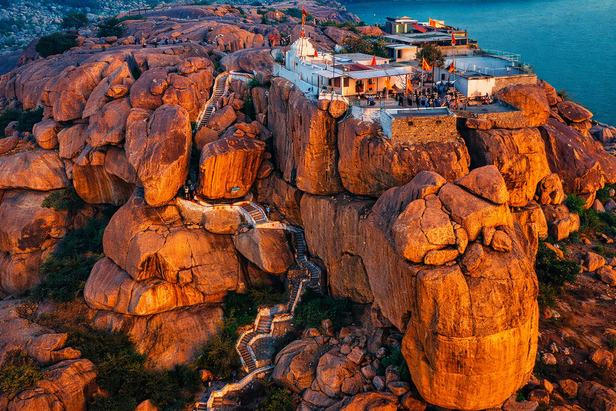
Anjanadri Hill Temple
Image credit : AI
Anjanadri is not a temple you arrive at easily. You climb for it. Hundreds of stone steps wind up a barren hill, with nothing dramatic guiding you upward: no grand gates, no ornamentation trying to persuade you. The climb itself becomes the ritual. Breath slows. Thought thins. Ego sheds. This hill is believed to be Hanuman’s birthplace, but what truly makes it special is how unremarkable it chooses to be. The idol is simple. The structure is restrained. The view - vast and quiet, does most of the speaking.
Standing there, surrounded by the ruins of the once-mighty Vijayanagara Empire, something becomes clear:
power does not need permanence to matter. Kings vanished. Cities collapsed. But the idea of service, strength, and devotion born here never left. You don’t leave Anjanadri feeling “blessed.” You leave feeling stripped down, reminded that strength often begins in obscurity.
Suchindram Anjaneya, Kanyakumari (Tamil Nadu)
This is not a temple you immediately see. For centuries, it wasn’t meant to be seen at all. The towering 22-foot Hanuman statue at Suchindram was deliberately buried underground during times of invasion to protect it from destruction. No ceremonies. No protests. Just a quiet decision: hide what matters until the world is safe again. Today, when you stand before this massive granite form, the feeling is unsettling - not because of grandeur, but because of restraint.
Imagine devotion choosing silence over spectacle. Survival over display. The belief here is simple and unsettling:
what is sacred doesn’t always fight back; sometimes it waits. Being here teaches a lesson most people never learn, that preservation is not cowardice. Sometimes, it is wisdom.
Sri Veera Raghava Anjaneya Temple, Thiruvallur (Tamil Nadu)
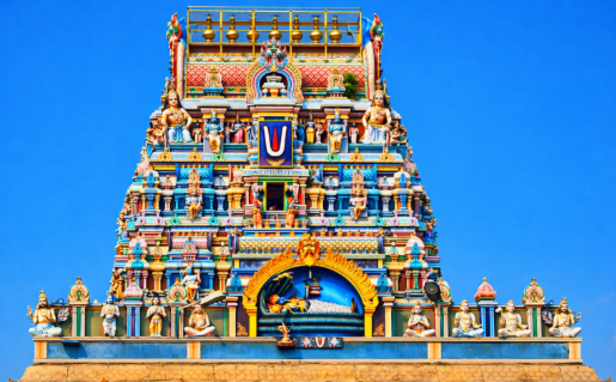
Sri Veera Raghava Anjaneya Temple, Thiruvallur (Tamil Nadu)
Image credit : AI
This temple doesn’t emphasize Hanuman’s strength alone, it emphasizes his stillness. The idol here depicts Hanuman in a calm, grounded posture, neither leaping nor roaring. Devotees believe this form stabilizes inner conflict, especially for those facing indecision, mental unrest, or emotional exhaustion. Architecturally, the temple follows classical Dravidian restraint - nothing excessive, everything proportionate. It feels… measured.
People don’t come here to ask for victories. They come here to stop shaking inside. The experience teaches a rarely spoken truth: strength is not always about movement; sometimes it’s about holding yourself together.
Sri Anjaneyar Temple, Nanganallur (Tamil Nadu)
Nanganallur’s Hanuman temple is famous not for age alone, but for continuity. Daily rituals here are rigidly observed, regardless of political change, economic shifts, or urban chaos around it. The idol - tall, upright, commanding, faces Rama directly, reinforcing Hanuman’s defining trait: unbroken orientation toward purpose. What makes this temple special is what you witness, not what you’re told.
Office workers stop by before work. Students come silently. Elderly devotees sit without urgency. The belief here is not mystical; it’s practical: showing up daily changes a person. This temple teaches that devotion is not emotional intensity, it is discipline repeated quietly.
Panchamukha Anjaneya, Rameswaram Region (Tamil Nadu)
The five-faced (Panchamukha) form of Hanuman represents alertness in all directions - physical, psychological, moral, and spiritual. Each face symbolizes a different force guarding the devotee from unseen threats. Standing before this form feels different. It is not comforting. It is watchful. The architecture emphasizes symmetry and alignment, reinforcing the idea that imbalance invites danger.
Devotees believe this temple protects against hidden enemies - not just external, but internal: ego, fear, anger, self-sabotage. The experience here is sobering. You don’t feel “safe”, you feel responsible. As if the deity is asking: Are you aware of what you’re becoming?
What These Temples Really Survived
These temples did not survive because no one tried to destroy them. They survived because faith learned different survival strategies:
Silence instead of resistance
Simplicity instead of dominance
Continuity instead of spectacle
Hanuman is remembered not because he was invincible, but because he was useful to something larger than himself. And maybe that’s why these temples still stand. They don’t teach you how to win wars. They teach you how to remain intact when the world keeps changing. And that is a kind of strength most people only understand after life has tested them.