Most museum visits in India end the same way: you walked through a lot of rooms, saw a lot of objects behind glass, and remember almost none of them. That failure is not the museum's fault. It belongs to arriving without knowing what you came to see. The Indian Museum in Kolkata, the Chhatrapati Shivaji Maharaj Vastu Sangrahalaya in Mumbai, and the Salar Jung Museum in Hyderabad are three of the oldest public collections in Asia. Each was built around a specific obsession, and each rewards a visitor who knows which room to walk into first.
The Indian Museum, Kolkata: The Bharhut Gallery Alone Is Worth the Train
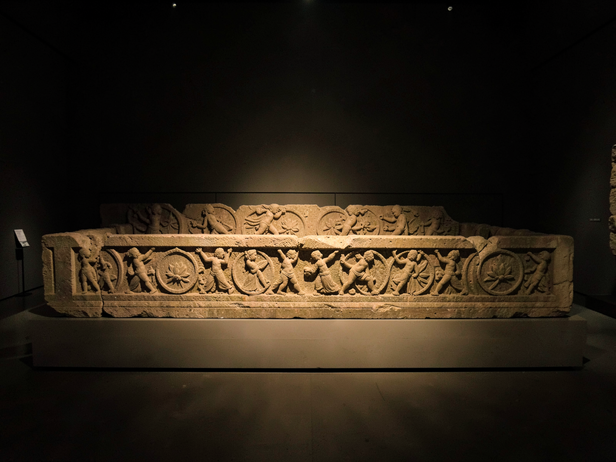
The Indian Museum opened in 1814, which makes it the oldest museum in Asia still operating in its original building. The building itself, a neo-classical structure in the heart of Park Street, is enormous, and most of it is dusty in the way that colonial-era collections become when funding runs thin. Walk past the geology wing. Walk past the textile hall. Go directly to the Bharhut Gallery.The Bharhut railing is a sandstone Buddhist railing carved around the second century BCE, originally from a stupa in Madhya Pradesh. The Archaeological Survey of India moved it to Kolkata in the 1870s. What you are looking at, up close, is one of the earliest surviving examples of narrative stone carving in India, scenes from the Jataka tales, yaksha and yakshi figures, lotus medallions, all carved with a specificity that later, more polished Buddhist sculpture does not always match. The figures are not idealised. They look like people.The Egyptian mummy in the museum's anthropology section gets more Instagram attention. It is a real mummy, and it is fine. The Bharhut railing is irreplaceable.
![Ancient Carved Sandstone Panel]()
Ancient Carved Sandstone Panel
Image credit : AI
I admire this ancient sandstone panel, a highlight of the Indian Museum Kolkata Bharhut gallery, showcasing intricate narrative carvings.
Chhatrapati Shivaji Maharaj Vastu Sangrahalaya, Mumbai: The Jade Room and the Miniatures
The museum on MG Road in Fort opened in 1922, built in an Indo-Saracenic style that mixes Mughal domes with Deccan stonework. The ground floor fills quickly with school groups and tourists who have come to see the Indus Valley seals and the Gandhara sculptures. Both are worth seeing. But the collection that most visitors skip is on the first floor: the decorative arts section, specifically the Mughal jade objects and the miniature paintings.The jade collection includes pieces from the seventeenth and eighteenth centuries, a jade wine cup with a handle carved as a horse's head, a small dagger with a hilt in nephrite inlaid with rubies and gold. These are not display-case curiosities. They were functional objects made for Mughal courts where craft was also political statement. The inlay work on several pieces is fine enough that you need to stand still for a moment before your eyes resolve it.The miniature painting collection is less famous than the ones at the National Museum in Delhi, but it is more accessible. The labels are readable. The scale is human. Several of the Rajput hunting scenes are hung at eye level, which is rarer than it should be.
Salar Jung Museum, Hyderabad: One Man Bought All of This
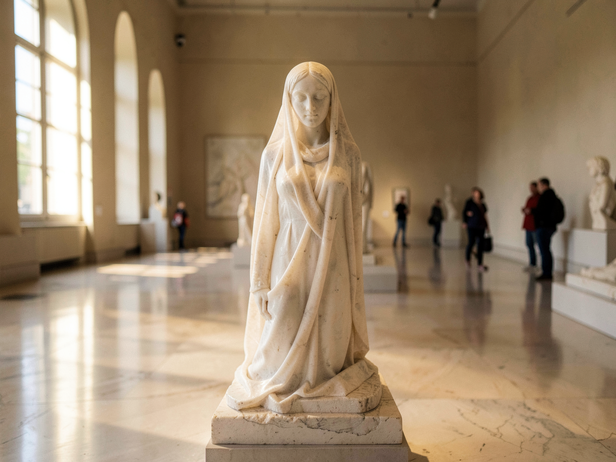
The Salar Jung Museum on the south bank of the Musi river holds approximately 43,000 objects collected almost entirely by one person: Mir Yusuf Ali Khan, the third Salar Jung, who served as Prime Minister of Hyderabad under the Nizam and spent his salary, his inheritance, and much of his working life buying things. He died in 1949. The Indian government acquired the collection and opened it as a public museum in 1951.The breadth is disorienting at first. There are manuscripts in Arabic, Persian, Urdu, Telugu and Sanskrit. There are European oil paintings, Chinese porcelain, Japanese lacquerware, Mughal armour, and a veiled Rebecca, a nineteenth-century Italian marble sculpture of a woman whose veil, carved from the same block of stone, is thin enough to read the expression beneath it. It draws a crowd every hour.What holds the collection together is not a theme but a sensibility. Salar Jung III bought what he found beautiful or strange or technically astonishing, across cultures and centuries, without any curatorial logic beyond his own taste. The result is a museum that feels more like a very large, very well-stocked private house than an institution. That is exactly what it is.The Jade Room and the Children's Section are worth skipping. The manuscript gallery and the arms and armour hall are not.
![Veiled Woman Sculpture]()
Veiled Woman Sculpture
Image credit : AI
I admire the veiled woman sculpture in a sunlit museum hall, a highlight of Indian heritage.
Practical Notes Before You Go
All three museums are closed on specific days: the Indian Museum is closed on Mondays and national holidays; the CSMVS is closed on Mondays; the Salar Jung is closed on Fridays. Entry fees are modest, under two hundred rupees for Indian nationals at each, but the CSMVS charges separately for special exhibitions, which are often the most interesting rooms in the building.Photography rules differ. The Salar Jung permits photography in most galleries without flash. The Indian Museum restricts it in the Bharhut Gallery. The CSMVS prohibits personal photography in some sections; check at the entrance.The best time to visit any of the three is a weekday morning, before eleven. By noon, the light inside the galleries flattens and the school groups arrive. The Salar Jung in particular becomes very loud by early afternoon.None of these museums has a strong café. Eat before you go, or plan for a long gap between the collection and your next meal.