Sultanpur Lodhi does not look like a place that changed the world. The streets are narrow, the autorickshaws are loud, and the Modi Khana, the storehouse where Guru Nanak weighed grain as a young government employee, sits behind a modest gate that most passing trucks ignore. But this is where Guru Nanak spent roughly eighteen years before his disappearance into the Kali Bein rivulet and his emergence, three days later, with the first words of what would become the Guru Granth Sahib. Amritsar gets the pilgrims. Sultanpur Lodhi gets the story.
Sultanpur Lodhi: Where the Mission Began
The town's central gurdwara, Gurdwara Ber Sahib, stands on the bank of the Kali Bein, a seasonal rivulet that was, until the early 2000s, an open drain. The restoration of the Kali Bein, led by Balbir Singh Seechewal, a Sikh environmentalist who organised volunteer kar seva over several years, is itself a story worth knowing before you arrive. The water is clear now, and sadhus and pilgrims wade in at dawn in a quiet that has nothing of the managed spectacle of larger shrines.
The ber tree inside Gurdwara Ber Sahib is said to be the one under which Guru Nanak meditated before his immersion. Whether or not you hold that belief, the tree is old, the shade is real, and the gurdwara's langar hall feeds several hundred people a day with a discipline that makes no distinction between pilgrims and strangers who wandered in from the road. The Modi Khana, a short walk away, has been converted into a museum. The exhibits are modest, reproductions, placards, a few objects, but the building itself, the fact of it, carries weight that no reproduction can dilute.
Sultanpur Lodhi is 145 kilometres from Amritsar by road, roughly two and a half hours. The town has a railway station on the Ferozepur line. Basic accommodation exists; most visitors arrive from Jalandhar or Ludhiana for the day, which is enough time but only just.
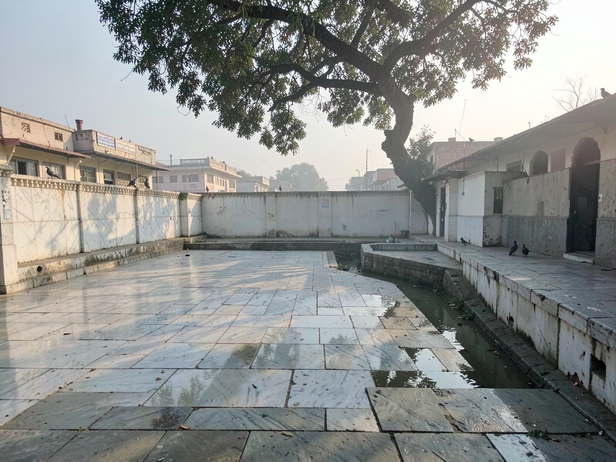
![Gurdwara Courtyard at Dawn]()
Gurdwara Courtyard at Dawn
Image credit : AI
I capture the quiet beauty of a Punjabi gurdwara courtyard at dawn, a peaceful scene on the Sikh pilgrimage circuit Punjab.
Dera Baba Nanak: The Shrine the Border Divided
Dera Baba Nanak sits in Gurdaspur district, about 35 kilometres from Pathankot, at the point where the Ravi once ran wide enough to matter. Guru Nanak is believed to have spent the last years of his life here, and the gurdwara that marks the site, Gurdwara Darbar Sahib, faces west toward Kartarpur, the town on the Pakistani side of the border where he died in 1539.
For seventy years after Partition, Kartarpur Sahib was visible from the rooftop of Dera Baba Nanak's gurdwara through binoculars, close enough to see the white dome, too far to reach. The Kartarpur Corridor, opened in November 2019, changed that. Indian pilgrims can now cross to Kartarpur Sahib on a day visa without a passport, only an OCI card or Indian passport and a registration. The crossing point is at Dera Baba Nanak. If you are making this journey, the corridor is the reason to anchor it here rather than treating Dera Baba Nanak as a detour.
The town itself is small and the gurdwara is the town's gravitational centre. The langar runs continuously. The rooftop view across the Ravi, even now, even with the corridor open, remains one of the stranger experiences a traveller can have in Punjab: a shrine you can see, a border that was not always there, and a river that has shifted its course since 1947 and no longer runs where the maps of that year placed it.
Planning the Circuit: What the Logistics Actually Look Like
The two towns do not sit on the same road. Sultanpur Lodhi is southeast of Amritsar; Dera Baba Nanak is northwest, near the Pakistani border. A circuit that takes in both, plus Amritsar, works best over three days with a car and driver, public transport connects each town to Amritsar but not efficiently to each other.
Day one in Amritsar: the Golden Temple at dawn, Jallianwala Bagh, the Wagah border ceremony at dusk. Day two: drive to Dera Baba Nanak (roughly 80 kilometres from Amritsar, about two hours), visit Gurdwara Darbar Sahib, cross the Kartarpur Corridor if you have registered in advance at the official government portal, return to Amritsar or continue to Pathankot for the night. Day three: drive south to Sultanpur Lodhi (from Amritsar, about two and a half hours; from Pathankot, closer to three), spend the morning at Ber Sahib and the Modi Khana, and return via Jalandhar or Ludhiana to catch an onward train.
The Kartarpur Corridor registration must be done online before travel; same-day slots exist but fill quickly during gurpurabs. The corridor fee as of the last published rate was USD 20 for most visitors, waived for Indian pilgrims of Sikh faith, check the official Integrated Check Post website before you go, as the fee structure has changed more than once.
October through March is the window. Punjab summers are brutal, the monsoon makes the Kali Bein unpredictable, and the light in winter mornings at both gurdwaras is the kind that makes the stonework look like it is generating its own warmth.
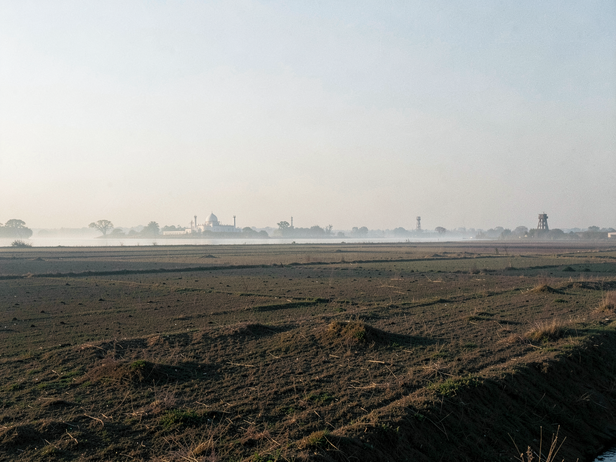
![Punjab Farmland Sunrise]()
Punjab Farmland Sunrise
Image credit : AI
I witness the quiet beauty of Punjab's farmland, a gurdwara dome rising in the mist, near the Kartarpur Corridor.
What Gets Lost When Amritsar Is the Whole Story
The Golden Temple is not a beginning. It was built in the late sixteenth century, consecrated in its current form in the early nineteenth, and it represents a particular moment in Sikh history, the consolidation of a community, the assertion of a centre. Sultanpur Lodhi is where the impulse that eventually built that temple first found its words. Dera Baba Nanak is where the man who spoke those words chose to spend his last years, farming, receiving visitors, and watching the river.
Travelling only to Amritsar is like reading the final chapter of a book and calling it the whole story. The circuit does not require special devotion to complete, it requires only the willingness to spend two extra days and accept that the most significant places are often the ones with the fewest signs pointing to them. The grain scales at the Modi Khana, the ber tree at Kali Bein, the rooftop view at Dera Baba Nanak: these are not supporting acts. They are where the account actually starts.