Morocco does not ease you in. The moment you step out of Marrakech's Jemaa el-Fna at dusk, with the smoke from the food stalls thickening and the call to prayer bouncing off the Koutoubia minaret, the country has already started working on you. The loop described here runs roughly 1,200 kilometres and takes ten to fourteen days at a pace that leaves room for the things that make it worth doing: a slow morning in a riad, a wrong turn in the Draa Valley, one cold night on the edge of the Sahara.
Marrakech: Two Days Minimum, Three if You Can
Fly into Marrakech Menara and stay inside the medina walls. Riads in the Mouassine or Bab Doukkala neighbourhoods cost between ₹4,500 and ₹9,000 a night for a mid-range double and put you within walking distance of everything. The medina is a UNESCO World Heritage Site and its souks are organised by trade in the old guild system, dyers in one lane, leather workers in the next, brass hammerers audible before you see them. The Mellah, the old Jewish quarter near the Bahia Palace, is quieter and less photographed.
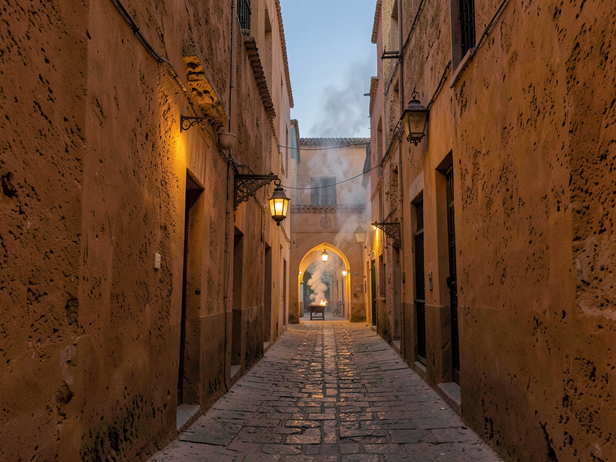
Jemaa el-Fna is the square everyone knows and it earns its reputation at night, not at noon. Sit at one of the terrace cafés on the square's northern edge around 8 pm. The food stalls light up in sequence, the musicians arrive, and the square becomes a different place from the tourist-facing daytime version. Eat the harira, a tomato and lentil soup thickened with flour, from any stall that has a queue of Moroccans at it. The Yves Saint Laurent Museum near the Majorelle Garden is worth a half-day if fashion history interests you; the garden itself is worth an hour regardless.
![Moroccan Medina Dusk]()
Moroccan Medina Dusk
Image credit : AI
Exploring a Moroccan medina street at dusk, a magical journey towards the light. #Morocco travel itinerary
The Tizi n'Tichka Pass and the Road to Ouarzazate
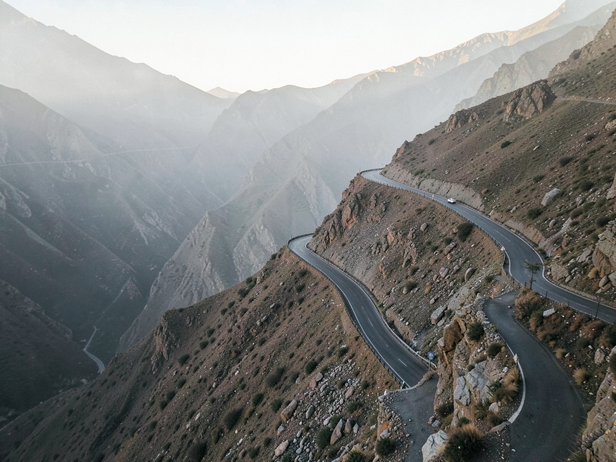
Rent a car in Marrakech. The N9 highway southeast toward Ouarzazate climbs through the High Atlas via the Tizi n'Tichka pass at 2,260 metres above sea level, the highest paved mountain pass in Morocco. The drive from Marrakech to Ouarzazate is roughly 200 kilometres and takes four hours without stops, but stopping is the point. The pass itself is cold even in October, and the landscape shifts from the terracotta palette of the lowlands to bare rock and scrub pine and then back down into the pre-Saharan plateau. Pull over at the top and walk twenty metres off the road. The silence is immediate and total.
Ouarzazate is a working town, not a tourist set piece, though the Atlas Film Studios on its western edge have hosted productions from Lawrence of Arabia to Game of Thrones. The kasbah of Aït Benhaddou, a UNESCO-listed fortified village 32 kilometres northwest of Ouarzazate, is where most visitors stop longest. The pisé towers, built from rammed earth and straw, have been continuously inhabited for centuries. Cross the shallow Ounila River on foot in the dry season; a guide from the village will find you before you need to look for one. Budget a half-day here.
The Draa Valley and the Road to Merzouga
From Ouarzazate, the N9 continues southeast through the Draa Valley, one of the longest river valleys in Morocco. The road follows the Draa River through a string of oasis towns, Agdz, Zagora, M'hamid, where date palms line the riverbanks and the mud-brick architecture of the kasbahs blends into the cliff faces behind them. This stretch is 370 kilometres from Ouarzazate to Merzouga via Rissani, and it takes a full day. Do not rush it. The light on the palmeries in the late afternoon is the kind that makes you understand why painters came here.
Zagora has a famous road sign pointing to Timbuktu, 52 days by camel, that has been photographed so many times it has become a cliché, but it is still accurate in its way. The desert begins to assert itself south of Zagora: the vegetation thins, the road straightens, and by the time you reach the Erg Chebbi dunes outside Merzouga, the landscape has become something that does not look like a country anymore. It looks like a planet.
![Atlas Mountain Pass Majesty]()
Atlas Mountain Pass Majesty
Image credit : AI
My journey through the High Atlas Tizi n'Tichka pass reveals breathtaking scale and rugged Moroccan landscapes.
Merzouga and the Erg Chebbi Dunes
The Erg Chebbi dunes rise to around 150 metres at their highest point and cover roughly 50 square kilometres. Stay at a desert camp rather than a hotel in Merzouga town. The camps range from basic Berber tents with shared facilities at around ₹3,500 per person per night including dinner and breakfast, to luxury glamping setups at ₹12,000 and above. The mid-range camps, fixed tents with proper beds, private bathrooms, no generator noise after 10 pm, are the sweet spot. Book directly with the camp rather than through an aggregator; the price is usually lower and the communication is better.
The camel ride to the camp takes about forty minutes from the dune's edge. Go at sunset, not sunrise. The light on the dunes at dusk is orange-red and the shadows cut deep into the sand ridges. Once the sun drops, the temperature follows it fast, bring a layer even in October. The night sky at Merzouga is the reason the detour exists. The Milky Way is visible to the naked eye with no effort. Orion rises over the dunes around midnight in late October. There is no ambient light for thirty kilometres in any direction.
The Return: Fès or the Atlantic Coast
The loop back north gives you two choices. The faster route cuts through Midelt and Ifrane, Ifrane is a French colonial town built to look like a Swiss village, which is either charming or disorienting depending on your tolerance for architectural non sequiturs, and arrives in Fès in around six hours from Merzouga. Fès el-Bali, the old medina, is larger and older than Marrakech's and considerably less tourist-managed. The tanneries at Chouara are the image everyone associates with Fès: circular stone vats dyed saffron, poppy red, and mint green, viewed from the leather shop terraces above. The smell is real. The shops will offer you a sprig of mint to hold under your nose. Accept it.
The longer return swings northwest to the Atlantic coast at Essaouira, a walled port city with a working fishing harbour, a fortified medina, and a wind that comes off the Atlantic hard enough to make you lean into it. Essaouira is cooler and quieter than Marrakech and the food, grilled sardines, sea urchin in season, argan-oil amlou spread on bread, is different from anything on the inland route. Budget two nights here before flying home from Marrakech, a three-hour drive south.
The loop works because each section earns the next. The mountain pass makes the desert feel earned. The desert makes the return to a walled city feel like a different kind of shelter. Marrakech at the end is not the same place it was at the start, the medina reads differently once you have seen what the country becomes when you leave it.