Most people who land in Indonesia land in Bali and stay there. That is a reasonable holiday. It is not a reasonable way to see Indonesia. Java, the island immediately to the west, holds more history, more geological drama, and more of the country's daily life than Bali has ever claimed, and it takes a forty-minute flight or a two-hour ferry from Gilimanuk to reach it.
The entry point that makes the most logistical sense is Surabaya in the east, fly in, then work westward toward Yogyakarta and onward to Jakarta if the schedule allows. The reverse works too. What does not work is treating Java as a single day trip from Kuta.
Bromo: The Volcano You Reach at 3 a.m.
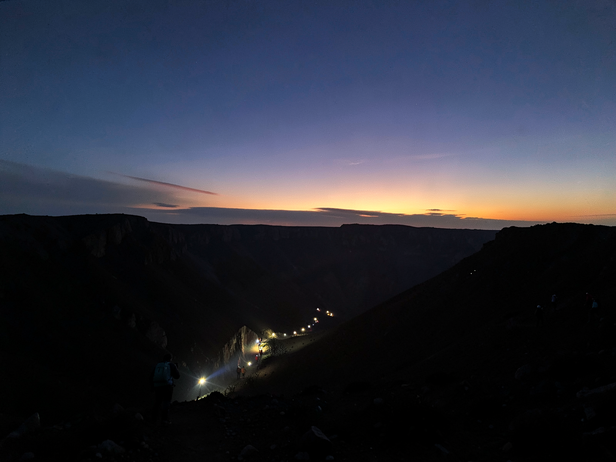
Mount Bromo sits inside the Tengger caldera in East Java, a landscape so stripped of softness it looks like a film set built to suggest another planet. The standard approach is a jeep convoy from Cemoro Lawang village, leaving around 3 a.m. to reach the viewpoint at Penanjakan before sunrise. The light, when it comes, moves across a sea of cloud below the caldera rim and catches the smoke column rising from Bromo's crater. The crater itself is a forty-five-minute walk from the jeep drop-off, across a sand plain and up a metal staircase bolted into the outer wall. Sulphur smell, loose ash underfoot, and a view straight down into something still actively deciding what it wants to do. Entry fees for the Bromo Tengger Semeru National Park run to around IDR 320,000 for foreign visitors on weekdays, higher on weekends. Jeep hire from Cemoro Lawang for the pre-dawn run is typically IDR 450,000 to 600,000 per vehicle, split between however many people you can fit in.
![Volcano Trail at Dawn]()
Volcano Trail at Dawn
Image credit : AI
My pre-dawn trek up the volcano, following headlamp lights towards the glowing vent. A journey beyond Bali.
Ijen: Blue Fire and the Sulphur Miners
Kawah Ijen, further east near Banyuwangi, is the other volcano worth the early start, and the earlier the better. The blue fire that appears in the darkness at the crater's edge is not flame in the conventional sense; it is sulphuric gas igniting as it meets the air, burning at temperatures that make the ground itself appear to glow. By daylight it disappears. The crater lake below it is the largest highly acidic lake in the world, a turquoise so saturated it reads as artificial. The climb to the rim takes about ninety minutes on a maintained trail, steep in the final section. Bring a gas mask, not a cloth one, the sulphur concentration inside the crater is high enough that the miners working the deposits, who carry loads of up to 90 kilograms down the mountain on bamboo poles, develop chronic respiratory damage over years. Watching them work is not a backdrop. It is the point. The closest base town is Banyuwangi, which also has the ferry terminal for crossing to Bali at Gilimanuk, a crossing that takes forty-five minutes and costs under IDR 10,000 for a foot passenger.
Yogyakarta: The City That Runs on Its Own Clock
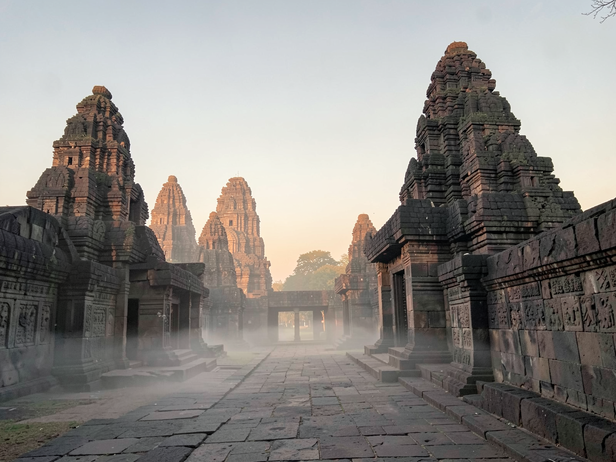
Yogyakarta, Jogja to anyone who has spent a day there, sits in Central Java under the direct shadow of Merapi, one of the most active volcanoes on earth. The city does not appear troubled by this. It runs on batik workshops, wayang kulit performances, and the kind of street food economy where a full bowl of gudeg, the jackfruit stew that defines the local cuisine, costs less than the bus fare that brought you there. The kraton, the walled palace complex of the Sultanate of Yogyakarta, is still a functioning royal court, not a museum. The Sultan's authority runs parallel to the Indonesian state here in a formal arrangement unique in the country. Admission is IDR 15,000. The batik galleries along Jalan Tirtodipuran are worth the walk for the craft itself, not for the sales pitch that follows. Prambanan, the ninth-century Hindu temple compound twelve kilometres east of the city centre, is the largest such complex in Southeast Asia. The central Trimurti temples dedicated to Brahma, Vishnu, and Shiva were damaged in the 2006 earthquake and have been partially restored. The scale is not immediately obvious from the entrance, it becomes clear when you are standing at the base of the Shiva temple, which rises 47 metres, and looking back at the 240 smaller shrines arranged around it.
![Ancient Temple Sunrise Mist]()
Ancient Temple Sunrise Mist
Image credit : AI
I explore the ancient stone temple compound at sunrise, a breathtaking sight with low mist and warm light. A must-see on any Yogyakarta Bromo Borobudur itinerary.
Borobudur: The Other Temple, the One That Rewrites the Scale
Fifty kilometres northwest of Yogyakarta, Borobudur is a ninth-century Buddhist monument built on a natural hill and shaped as a mandala when viewed from above. It is the largest Buddhist temple in the world. The structure has no interior rooms, it is a solid mass of andesite stone, 2 million blocks, with 504 Buddha statues and 2,672 relief panels carved into its galleries. Walking the circuit from the lowest terrace to the top stupa takes about an hour if you stop to read the reliefs, which tell the Jataka tales in stone panels that run, if laid end to end, for nearly five kilometres. Sunrise entry is a separate ticket and worth it, the mist over the surrounding hills at 5:30 a.m. is the version of Borobudur that the photographs have been trying to describe for decades. Standard admission for foreign visitors is around USD 25. The sunrise ticket runs higher and requires advance booking.
The Ferry Logic: Moving Between Islands Without Flying
Java and Bali are connected by the Ketapang-Gilimanuk ferry, which runs twenty-four hours and takes forty-five minutes. Foot passenger fare is under IDR 10,000. Taking a motorbike across costs around IDR 50,000. This is not a tourist service, it is how goods and people move between the islands, and the terminal at Ketapang on the Java side is the kind of functional infrastructure that reminds you how large and operationally complex Indonesia actually is. Further east, the Lombok Strait crossing from Padangbai in Bali to Lembar in Lombok takes four to five hours on the slow ferry and runs multiple times daily. Fast boat services do it in two hours for a higher fare. The Pelni network, Indonesia's national shipping line, connects the outer islands on longer routes, Sulawesi, Flores, Nusa Tenggara, on schedules that run weekly or fortnightly depending on the route. Booking through the Pelni website or at the harbour office is the standard approach. These are not cruise ships. They are working vessels with varying class options, and the economy deck is exactly what it sounds like. The point is that flying is not the only logic available. Java to Bali to Lombok to Flores can be done almost entirely by sea, at a fraction of the airfare, and the crossing itself is part of what you came to see.